
-
by sayum
26 August 2026 1:49 PM







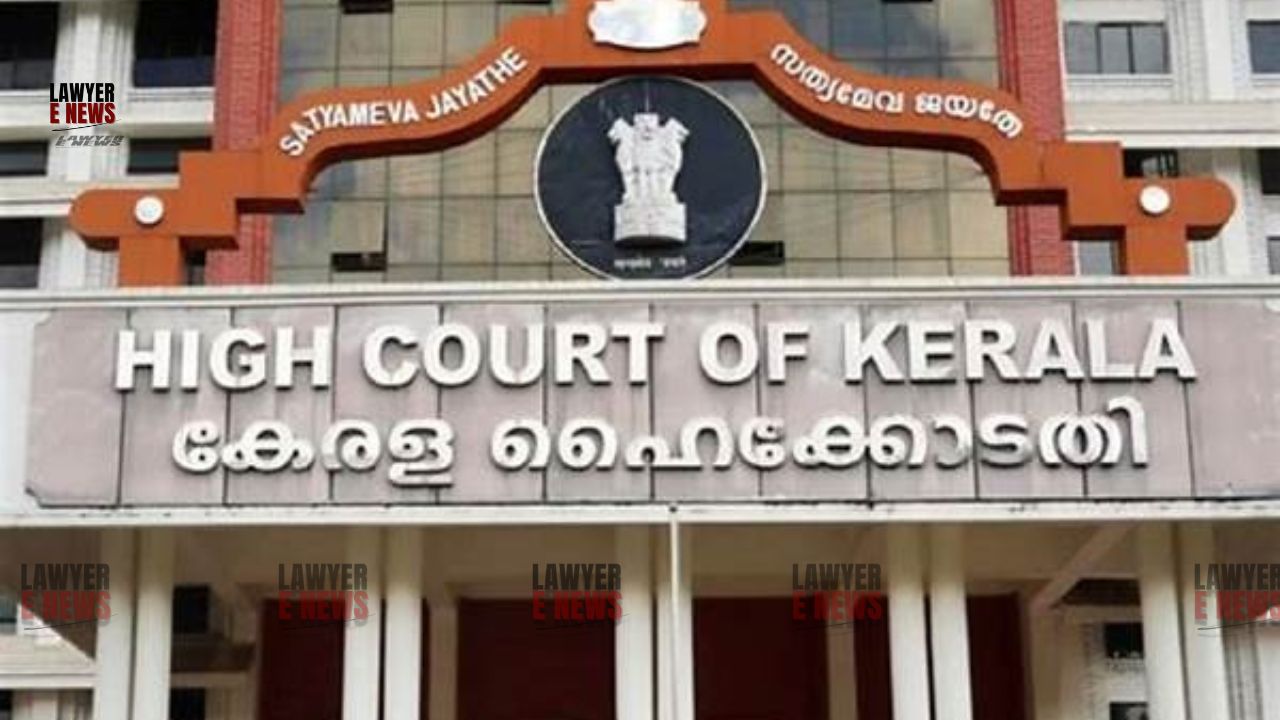
“A teacher, acting in good faith and using reasonable force to enforce discipline, cannot be hauled into criminal proceedings under Section 324 IPC or Section 75 of the JJ Act in the absence of mens rea or injury.” – Kerala High Court
In a significant reaffirmation of the legal boundaries of discipline in educational institutions, the Kerala High Court quashed criminal proceedings initiated against a school teacher who had caned students involved in a physical altercation. Justice C. Pratheep Kumar, sitting in the Court’s criminal original jurisdiction, ruled that the act of the teacher, Abhuthahir, was a bona fide disciplinary intervention lacking any intent to cause harm or cruelty, and hence did not attract criminal liability under either Section 324 of the IPC or Section 75 of the Juvenile Justice (Care and Protection of Children) Act, 2015.
The Court observed:
“The petitioner had used only minimum corporal punishment, that too, only for enforcing discipline in the class. It is evident that he had no intention to cause any hurt to the students beyond what is required for enforcing discipline. His conduct was well within lawful bounds.”
“Teachers Have Implied Authority to Correct—Disciplinary Acts Done in Good Faith Not Criminalised Under Section 75 JJ Act”
In Abhuthahir v. State of Kerala, the petitioner, a school teacher, approached the High Court under Section 528 of the Bharatiya Nagarik Suraksha Sanhita, 2023, seeking to quash proceedings in SC No. 577/2023, pending before the Additional Sessions Judge-I (Special Court), Palakkad. The allegations stemmed from an incident on 16 September 2019, where he allegedly caned three students during a classroom fight.
The charges framed against him under Section 324 IPC (voluntarily causing hurt by dangerous weapons) and Section 75 of the JJ Act (punishment for cruelty to a child) were based on a belated FIR filed on 20 September 2019, four days after the incident.
“Mens Rea Is Missing—Disciplinary Acts Are Protected by Sections 88 and 89 IPC”
Justice Pratheep Kumar meticulously reviewed precedents and statutory provisions to hold that corporal punishment given without malice, disproportionate force, or lasting injury, and intended to correct behaviour in good faith, does not attract criminality.
The Court specifically invoked Sections 88 and 89 of the IPC, which exempt from criminal liability acts done in good faith for the benefit of a child, even if they cause some harm, so long as the harm is not grievous or likely to cause death.
Quoting from K.A. Abdul Vahid v. State of Kerala, 2005 (2) KLT 72, the Court reiterated:
“When a child is sent to school, the parents give an implied authority to the teacher to enforce discipline and correct the students... If a corporal punishment is given in that process, it cannot be said to be an act intended to injure the student.”
Further, citing Rajan @ Raju v. Sub Inspector of Police, 2019 (1) KLT 119, the Court clarified:
“Parents, teachers and other persons in loco parentis are entitled as a disciplinary measure to apply a reasonable degree of force... However, if the punishment is out of spite or if the force is unreasonable or immoderate, it is unlawful.”
“No Injury, No Medical Evidence, No Malicious Intent—Prosecution Based on Suspicion, Not Substance”
On Delay and Absence of Evidence:
The Court was particularly critical of the four-day delay in filing the complaint, during which no medical treatment was sought, and no bodily injury was recorded. The incident occurred at 10 a.m. on 16.09.2019, but the FIR was lodged only at 8:27 p.m. on 20.09.2019, with no explanation for the delay.
From the victim’s own statement, the Court noted:
“The teacher caned only those three children who were engaged in the clash, and that too only on their legs.”
The FIR and the victim’s account revealed that the classroom altercation involved students attacking each other with sticks, prompting the teacher’s intervention using a cane.
Justice Pratheep Kumar held:
“It was quite unfortunate that their parents could not understand the good intention of the petitioner, which led to this unwarranted prosecution.”
The Court held that there was no indication of cruelty, no mens rea, no evidence of disproportionate force, and therefore no offence under Section 324 IPC or Section 75 of the JJ Act.
“Disciplinary Intervention Must Be Measured—But Criminalisation of Every Physical Act Will Paralyse Educational Discipline”
Judicial Balancing of Protection and Discipline:
The judgment reflects a careful balance between protecting children’s rights and preserving teachers’ authority to maintain order. While upholding that uncontrolled or vindictive violence is impermissible, the Court cautioned against blanket criminalisation of all forms of corporal correction.
Quoting from Jomi v. State of Kerala, 2024 (2) KLD 230, the Court affirmed:
“Where there is no malafide intention and the act is aimed at the well-being of the student or for maintaining discipline, the offence under Section 75 JJ Act is not attracted.”
Justice Pratheep Kumar concluded:
“The act of the teacher has to be appreciated in context. Since the teacher in this case used only minimum force, without intent to harm, and in the midst of a violent student altercation, he acted within his legal and professional authority.”
Prosecution Quashed—Court Reaffirms Protective Shield for Bona Fide Disciplinary Acts
In dismissing the criminal case, the Kerala High Court firmly restated that disciplinary authority, when exercised within limits and without malicious intent, is not a ground for prosecution. The decision quashes all proceedings in SC No. 577/2023, arising from Crime No. 585/2019 of Vadakkancherry Police Station, against the petitioner-teacher Abhuthahir.
Justice C. Pratheep Kumar allowed the petition, holding:
“This is a fit case in which further proceedings can be quashed by invoking the inherent power of this Court... The above conduct of the petitioner does not amount to any offence, including the offences punishable under Section 324 IPC and Section 75 of the JJ Act.”
Date of Decision: 16 October 2025





