Judicial Review Is Not A Substitute For Examiner’s Judgment: Delhi High Court Rejects DJSE Candidate’s Plea Over Alteration of Marks Part-Payments Extend Limitation - Each Payment Revives Limitation: Delhi High Court Non-Stamping Renders A Document Inadmissible, Not Void – Defect Is Curable Once Duty Is Paid: Punjab & Haryana High Court Upholds Specific Performance MP High Court Upholds Ladli Behna Yojana Criteria; Rules Registration Deadlines and Age Limits Fall Under Executive Domain Criminal Courts Are Not Recovery Agents: Orissa High Court Grants Bail in ₹3.5 Crore Land Fraud Cases Citing Article 21 and Terminal Illness 304 Part I IPC | Sudden Fight Between Brothers Over Mud House Construction: Jharkhand High Court Converts Murder Conviction To Culpable Homicide When Rape Fails, Section 450 Cannot Stand: Orissa High Court Acquits Accused of House-Trespass After Finding Relationship Consensual Concurrent Eviction Orders Will Not Be Reopened Under Article 227: Madras High Court Section 128 Contract Act | Surety’s Liability Is Co-Extensive: Kerala High Court Upholds Recovery from Guarantors’ Salary Custodial Interrogation Not Warranted When Offences Are Not Punishable With Death or Life: Karnataka High Court Grants Anticipatory Bail to Deputy Tahsildar in Land Records Case Order VIII Rules 3 & 5 CPC | Silence Is Admission: State’s Failure To Specifically Deny Hiring Amounts To Acceptance: JK HC Consumer | No Complete Deficiency In Service — Excess Rainfall Also To Blame: Supreme Court Halves Compensation In Groundnut Seed Crop Failure Case Development Cannot Override The Master Plan: Supreme Court Nullifies Cement Unit CLU In Agricultural Zone Negative Viscera Report Is Not a Passport to Acquittal: Madras High Court Confirms Life Term of Parents for Poisoning Mentally Retarded Daughter Observations Have Had a Demoralising and Chilling Effect: Allahabad High Court Judge Recuses from Bail Matter After Supreme Court’s Strong Remarks Controversial YouTube Remarks On ‘Black Magic Village’ Not A Crime: Gauhati High Court Quashes FIR Against Abhishek Kar “Failure To Specifically Deny Allegations Amounts To Admission”: J&K High Court Reiterates Law Under Order VIII CPC Section 293 Cr.P.C. Does Not Bar Examination of Expert When DNA Report Is Disputed: MP High Court Medical Evidence Trumps False Alibi: Allahabad HC Upholds Conviction In Matrimonial Murder Where Strangulation Was Masked By Post-Mortem Burning Helping Young Advocates Is Not A Favour – It Is A Need For A Better Justice System: Rajasthan High Court Section 82 Cr.P.C. | Mere Non-Appearance Does Not Ipsi Facto Establish Absconding: Punjab & Haryana High Court Sets Aside Order Declaring Student Abroad as Proclaimed Person

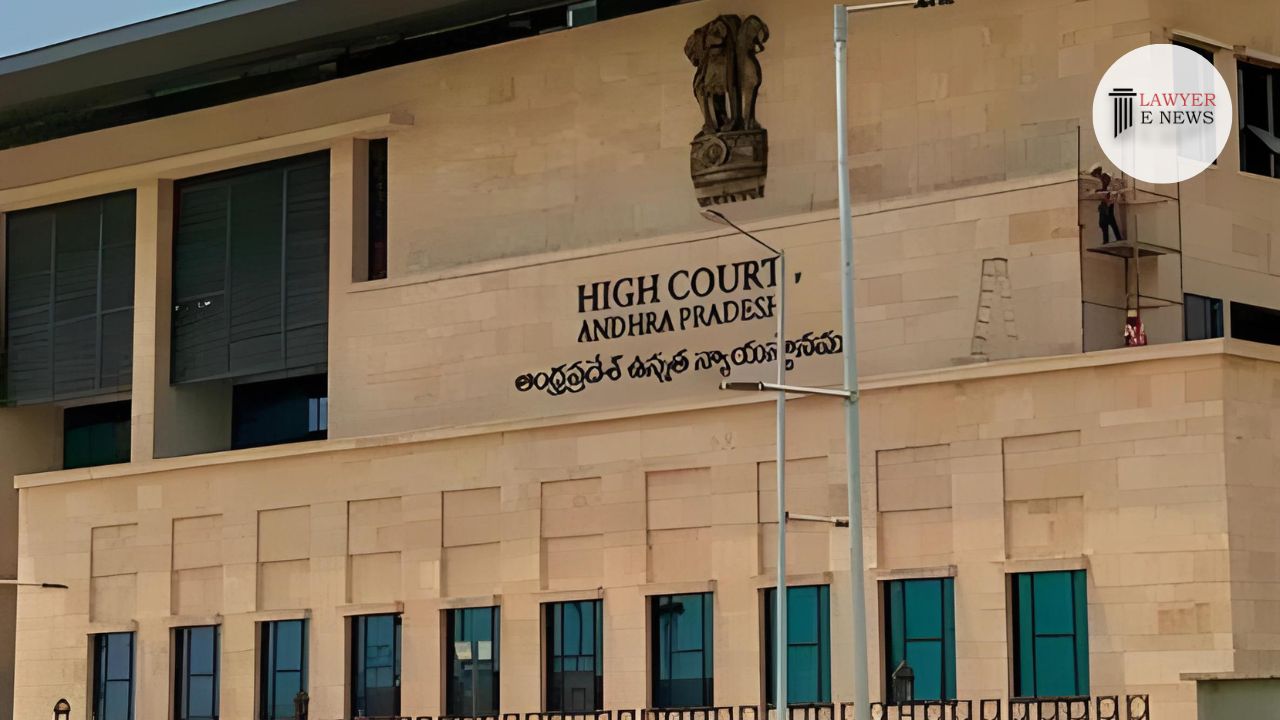
conduct of the Defendant resisting the execution of the sale deed is quite incorrect- Upholds Specific Performance: Andhra High Court

07 May 2024 8:19 AM

By: Admin


In a significant ruling, the High Court of Andhra Pradesh, presided over by Justice T. Mallikarjuna Rao, upheld the trial court's decision in the case of Bogi Rajeswari vs Chintala Srinivasa Kumar [APPEAL SUIT NO. 1134 OF 2016], affirming the specific performance of a sale agreement for immovable property.

The High Court's decision focused on the authenticity of the sale agreement dated May 25, 2009, and the readiness and willingness of the parties to perform their contractual obligations, as mandated under the relevant sections of the Indian Contract Act and the Specific Relief Act.

The appeal was filed by Bogi Rajeswari, challenging the trial court's decree that directed her to execute a sale deed in favor of Chintala Srinivasa Kumar for a property in question. The appellant contested the authenticity of the sale agreement, while the respondent maintained his position on the validity of the agreement and his readiness to perform the contract.

Justice Rao, in his observation, stated, "The conduct of the Defendant resisting the execution of the sale deed is quite incorrect." The Court thoroughly examined the evidence, including the testimonies of the parties and witnesses, and the documents presented. It was concluded that the sale agreement (Ex.A.1) was valid and the appellant had contractual obligations to fulfill.

The Court applied principles from Section 96 of the Code of Civil Procedure, Section 16(3) of the Indian Contract Act, Section 111 of the Indian Evidence Act, and Sections 16(c) and 20 of the Specific Relief Act. It was emphasized that readiness and willingness are crucial factors in specific performance suits.

The Court modified the trial court's decree, directing the respondent to deposit the balance sale consideration with interest. Upon such deposit, the appellant is to execute the sale deed in favor of the respondent. If the appellant fails, the court is authorized to execute the deed. The Court affirmed that the parties would bear their own costs.

Date of Decision : February 8, 2024.

Bogi Rajeswari vs Chintala Srinivasa Kumar

 

Latest Legal News