-
by sayum
10 August 2026 4:11 AM







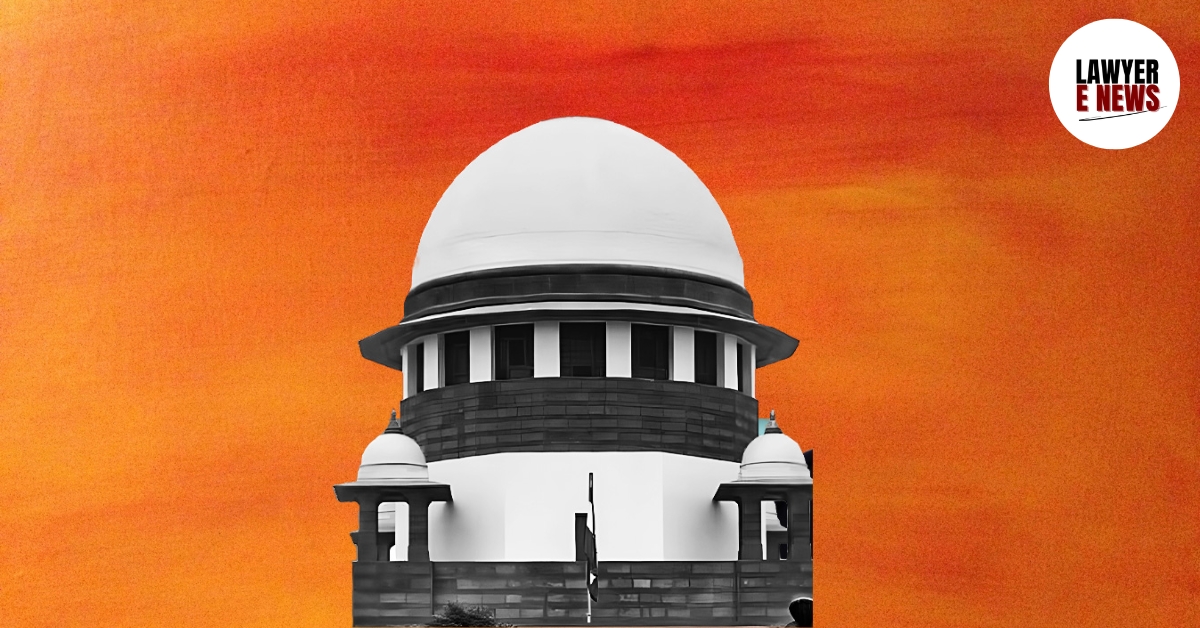
“Heavy-handed enforcement, divorced from market effects, would discourage the long-term capital and expertise the economy urgently needs.” - Supreme Court of India clarifying the bounds of competition law under Section 4 of the Competition Act, 2002. The Court upheld the order of the Competition Appellate Tribunal (COMPAT), which had set aside the penalty and cease-and-desist directions imposed by the Competition Commission of India (CCI) on Schott India for alleged abuse of dominant position. Emphasizing the centrality of an “effects-based standard,” the Court ruled that no appreciable adverse effect on competition (AAEC) was proven, and that procedural lapses — especially denial of cross-examination — had fatally undermined the CCI’s case.
The matter originated from a 2010 complaint by Kapoor Glass against Schott India, the country's leading manufacturer of borosilicate glass tubing used in pharmaceutical containers. Kapoor alleged that Schott India had abused its dominance through exclusionary rebates, tying practices, margin squeezes, and refusals to supply. The CCI found a violation under Section 4 and imposed a ₹5.66 crore penalty. However, COMPAT annulled this order in 2014, prompting appeals by the CCI and Kapoor Glass.
“Dominance Alone Is Not an Offence — It Is the Abuse of Power That Must Be Proven by Effects”
“The true purpose of antitrust laws is to preserve the process of competition… not to humble the successful”
Justice Vikram Nath, writing for the Bench, framed six legal questions, including whether Schott’s volume and functional rebates were abusive, whether its joint venture created a margin squeeze, whether tying occurred, and crucially, whether an effects-based analysis is mandatory under Section 4. On the rebates, the Court ruled: “The slabbed target-rebate scheme employs a neutral, volume-based criterion applicable to all purchasers alike… [and] is objectively justified by demonstrable efficiency considerations.”
Similarly, the 8% “functional rebate” given to converters who met quality and traceability standards was upheld as non-discriminatory: “Every converter prepared to assume the same traceability and quality-promotion obligations received exactly the same economic consideration.”
Regarding the Long-Term Tubing Supply Agreement (LTTSA) with Schott Kaisha, the Court found that: “Schott India is absent downstream; the wholesale-to-retail spread left rivals with sustainable margins; and the market exhibited neither exit nor price elevation.”
On the alleged tying of NGA and NGC tubes, the Court clarified: “Converters were never compelled to buy both; no foreclosure was demonstrated; and… the rebate design is objectively justified.”
“Effects-Based Standard Is a Constitutional and Economic Necessity Under Section 4”
“To equate description with proscription would convert the provision into a strict-liability offence”
Requirement of Competitive Harm
Rejecting the CCI’s reliance on Section 4(2) as a deeming provision, the Court insisted on proof of actual harm: “An effects-based analysis is an obligatory component of every inquiry under Section 4… net competitive harm must be shown before liability can attach.”
The Court drew heavily from Indian and EU competition law precedents, including Intel v. European Commission and Rajasthan Cylinders v. Union of India, to reaffirm that dominance alone is not actionable without demonstrable market harm. It stressed: “Abuse, by definition, is conduct that distorts the competitive process or harms consumers.”
Denial of Cross-Examination and Natural Justice
The Court was especially critical of the procedural flaws in the CCI’s inquiry:
“The proceedings before the DG and the CCI were procedurally defective in a manner that, by itself, could have warranted dismissal of the complaint at the threshold.”
It noted that the CCI's reliance on statements from adverse witnesses — without affording Schott India the opportunity to cross-examine — was a grave violation of natural justice, referencing Andaman Timber Industries and Cadila Healthcare Ltd..
The Court noted: “By electing to proceed on untested assertions, the CCI deprived itself of the material needed for a legally sustainable finding.”
The Supreme Court concluded: “Competition law is not designed to humble the successful or to clip the wings of enterprises that have, through industry and innovation, secured a commanding share of the market.”
Dismissing the appeals, the Court upheld COMPAT’s decision and directed Kapoor Glass to pay ₹5,00,000 as costs to Schott India.
This landmark judgment by the Supreme Court sets a strong precedent for effects-based scrutiny in competition law and serves as a stern caution against procedural shortcuts by regulatory bodies. It firmly draws the line between dominance and abuse, reinforcing that economic efficiency, not just market power, must be the touchstone of liability under the Competition Act.
Date of Decision:13/05/2025