-
by sayum
14 August 2026 3:21 PM







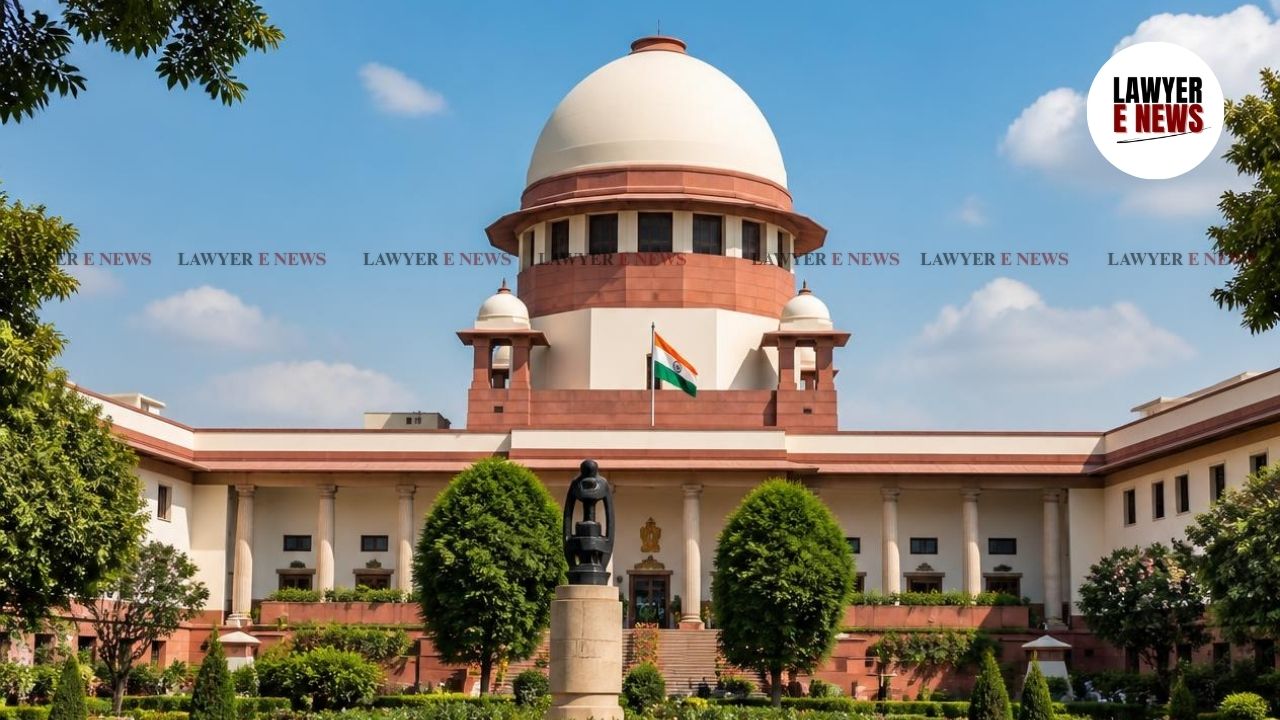
"No Resolution Plan can succeed if uncertain or unquantified claims are permitted to linger and resurface against the Successful Resolution Applicant years after approval." Supreme Court, in a significant ruling dated July 17, 2026, held that all legal proceedings, including civil suits and arbitrations initiated by operational creditors, stand abated and extinguished once a Resolution Plan is approved under Section 31(1) of the Insolvency and Bankruptcy Code, 2016 (IBC).
A bench of Justices Manoj Misra and Manmohan observed that a successful resolution applicant cannot be burdened with "hydra-headed" unquantified claims surfacing years after the approval of the plan, as it fundamentally violates the doctrine of a clean slate.
Prior to the initiation of the Corporate Insolvency Resolution Process (CIRP) against Bhushan Steel Limited, certain operational creditors had instituted a civil suit for recovery and invoked arbitration for unpaid dues. During the CIRP, the resolution professional admitted their disputed claims at a notional value of Re. 1. Tata Steel Limited, the Successful Resolution Applicant, subsequently challenged orders passed by the Bombay High Court and the Punjab and Haryana High Court, which had permitted these prior recovery proceedings to continue despite the ultimate approval of the resolution plan.
The primary question before the court was whether operational creditors may enforce claims for past dues by way of a civil suit or arbitration subsequent to the approval of a Resolution Plan. The court was also called upon to determine if the explicit terms of an approved resolution plan can legally extinguish sub-judice claims that have not crystallised into quantifiable debts by the date of approval.
Doctrine Of Clean Slate Emphasised
The Court strongly reiterated the legislative intent behind the IBC, noting that a prospective resolution applicant must know exactly what is to be paid in order to take over and run the business of the corporate debtor. The bench noted that permitting pending litigations to continue would completely derail the financial calculations upon which resolution plans are based.
"Such a situation would be akin to a hydra-headed recurrence and is antithetical to the ‘clean slate’ principle."
Approved Plan Bound All Stakeholders
Analysing the approved plan submitted by Tata Steel, the Court noted that the liquidation value of the corporate debtor was nil, meaning there was no legal obligation to pay anything to operational creditors. Despite this, the resolution applicant voluntarily provided a corpus of Rs. 1,200 crore to settle operational debt. The Court observed that the plan's clauses explicitly stipulated that all legal proceedings relating to the period prior to the effective date would stand immediately, irrevocably, and unconditionally withdrawn, abated, and extinguished.
Notional Value Does Not Keep Claims Alive
The operational creditors argued that by admitting their claims at a notional value of Re. 1, the resolution professional intended to keep the claims alive pending final adjudication by civil courts or arbitrators. The Supreme Court rejected this contention, observing that the final list of creditors explicitly removed earlier notes that had subjected the liability to the outcome of pending disputes. The bench clarified that the claims stood quantified at Re. 1 with finality, rejecting the creditors' argument that a "face value reservation mechanism" should have been applied to safeguard their pending litigations.
Claims Must Crystallise Before CoC Approval
The Court held that under Regulation 12(2) of the CIRP Regulations, as applicable at the relevant time, a corporate debtor’s liability towards operational creditors must be crystallised and quantified by the date the Committee of Creditors (CoC) approves the plan. The judges observed that allowing subsequent increases in verified claims based on future arbitral or civil awards would disrupt the pro-rata distribution already finalised and implemented by the successful applicant.
"The Code does not adequately account for the position of small operational creditors, including MSMEs and statutory local bodies, who stand significantly disenfranchised under the present framework by being placed at the bottom of the repayment waterfall."
Plight Of Small Operational Creditors Highlighted
Before parting with the judgment, the Court added a significant afterword expressing concern over the disproportionate impact of the IBC on Micro, Small and Medium Enterprises (MSMEs). The bench acknowledged that while the distinction between financial and operational creditors rests on an intelligible differentia, small entities are often ill-equipped to absorb even minor financial setbacks. The Court observed that the Law Commission and the Legislature may usefully examine the matter to ensure a fair and balanced repayment mechanism alongside an efficient insolvency regime.
Consequently, the Supreme Court allowed the civil appeals and set aside the impugned judgments of the High Courts. The Court formally dismissed the pending civil suit for recovery and the arbitration proceedings initiated by the operational creditors, bringing absolute finality to the resolution applicant's financial obligations under the approved plan.
Date of Decision: 17 July 2026