-
by sayum
27 August 2026 3:32 PM







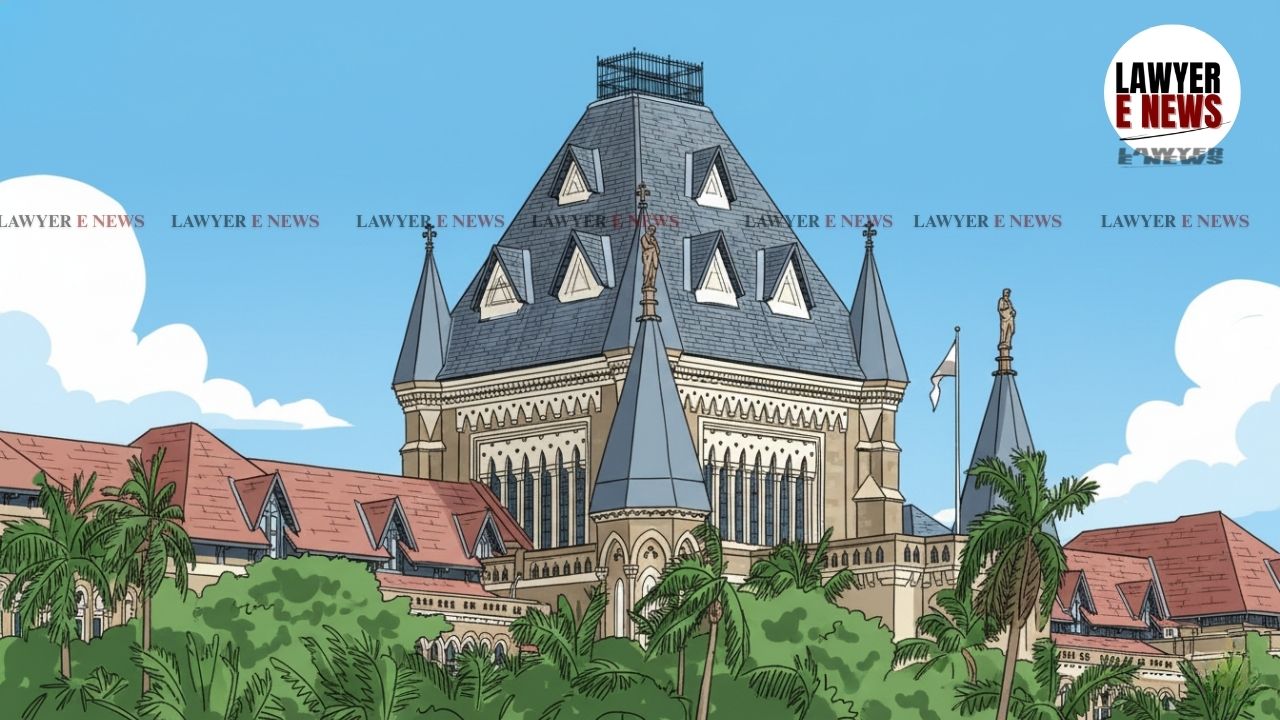
"Jurisdiction under Section 263 of the Act can be exercised by the CIT only when it is a case of lack of enquiry and not one of inadequate enquiry," Bombay High Court, in a significant ruling dated May 4, 2026, held that the Commissioner of Income Tax (CIT) cannot invoke revisionary jurisdiction under Section 263 of the Income Tax Act merely to conduct a "fishing and roving enquiry" where the Assessing Officer (AO) has already taken a plausible view after due verification.
A bench of Justice G. S. Kulkarni and Justice Aarti Sathe observed that the power of revision is not a tool to substitute the Commissioner's judgment for that of the AO, especially when the assessee has provided detailed responses during the original assessment.
The Respondent-Assessee, Impact Foundation (India), is a Section 25 non-profit company registered as a charitable institution. For the Assessment Year 2017-18, the AO passed an order under Section 143(3) assessing the income at 'Nil' after scrutinizing the utilization of Rs. 6 crores from accumulated funds. The CIT (Exemptions) later sought to revise this order, claiming the AO failed to verify third-party details or the "correctness" of the expenditure, thereby making the order erroneous and prejudicial to the Revenue.
The primary question before the court was whether the CIT could invoke Section 263 when the AO had already conducted inquiries and accepted a plausible explanation from the assessee. The court was also called upon to determine if the CIT must conduct its own inquiry before declaring an order "erroneous" and whether Explanation 2 to Section 263 can be invoked without being mentioned in the show-cause notice.
Twin Conditions For Invoking Section 263
The Court emphasized that for the Commissioner to exercise powers under Section 263, two specific conditions must be satisfied: the order must be erroneous, and it must be prejudicial to the interests of the Revenue. Citing the Supreme Court’s landmark judgment in Malabar Industrial Co. Ltd. vs. CIT, the bench noted that if an AO reaches a conclusion that is legally sustainable, the CIT cannot interfere simply because it prefers a different view.
"There must be some prima facie material on record to show that the tax which was lawfully exigible has not been imposed or that by the application of the relevant statute on an incorrect or incomplete interpretation a lesser tax than what was just has been imposed."
Inadequate Inquiry vs. Lack Of Inquiry
The Bench drew a sharp distinction between a total "lack of inquiry" and an "inadequate inquiry." The Court noted that the Respondent-Assessee had furnished comprehensive details via letters dated January 30, 2019, and December 3, 2019, including Form 10, board resolutions, and a breakdown of fund utilization. Since the AO scrutinized these documents and accepted the claim, the High Court held that the CIT’s dissatisfaction with the depth of the inquiry did not grant it jurisdiction to revise the order.
Commissioner Cannot Remand For 'Fishing Inquiries'
The Court observed that the CIT (Exemptions) did not conduct any independent verification to prove that the AO’s findings were actually wrong. Instead, the Commissioner merely directed the AO to re-examine the issues. The bench held that the CIT cannot remand a matter simply to find out if an order is erroneous; rather, the Commissioner must first record a clear finding that the order is unsustainable based on his own inquiry.
"The Commissioner cannot remand the matter to the Assessing Officer to decide whether the findings recorded are erroneous... The CIT must himself conduct an enquiry and determine it to be so."
Invocation Of Explanation 2 Requires Prior Notice
The Court addressed the Revenue’s reliance on Explanation 2 to Section 263, which deems certain orders "erroneous" if passed without necessary inquiries. Relying on the Supreme Court’s decision in PCIT vs. Shreeji Prints Pvt. Ltd., the bench ruled that if the show-cause notice does not explicitly mention the invocation of Explanation 2, the Commissioner cannot rely on it in the final revision order. Failing to confront the assessee with this provision violates the principles of natural justice.
Timing Of Taxability Under Section 11(3)
Regarding the merits of the accumulation of funds, the Court noted that the amount of Rs. 14.51 crores accumulated in AY 2016-17 was to be utilized by March 31, 2021. Therefore, any taxability arising from non-utilization under Section 11(3)(c) could only be examined in AY 2022-23. The CIT’s attempt to tax the non-utilization in the relevant AY 2017-18 was found to be legally misplaced.
AO Is Not Required To Write Elaborate Epitomes
The Court reiterated that an assessment order does not need to deal with every query raised during proceedings in exhaustive detail. If queries were issued and the assessee responded, the AO’s silence on those points in the final order implies satisfaction, not a lack of application of mind. The bench noted that requiring an AO to incorporate reasons for every accepted claim would turn an assessment order into an "epitome" rather than a legal determination.
"This section does not visualise a case of substitution of the judgment of the Commissioner for that of the Income-tax Officer... simply because, according to him, the order should have been written more elaborately."
The High Court concluded that the ITAT was justified in setting aside the revisionary order as the CIT had acted on "mere conjectures, suspicions, and surmises." The bench held that since the AO had taken a plausible view after conducting inquiries, the assessment order was neither erroneous nor prejudicial to the Revenue. The appeal was dismissed, and no substantial question of law was found to arise.
Date of Decision: 04 May 2026