-
by sayum
05 November 2026 2:10 PM







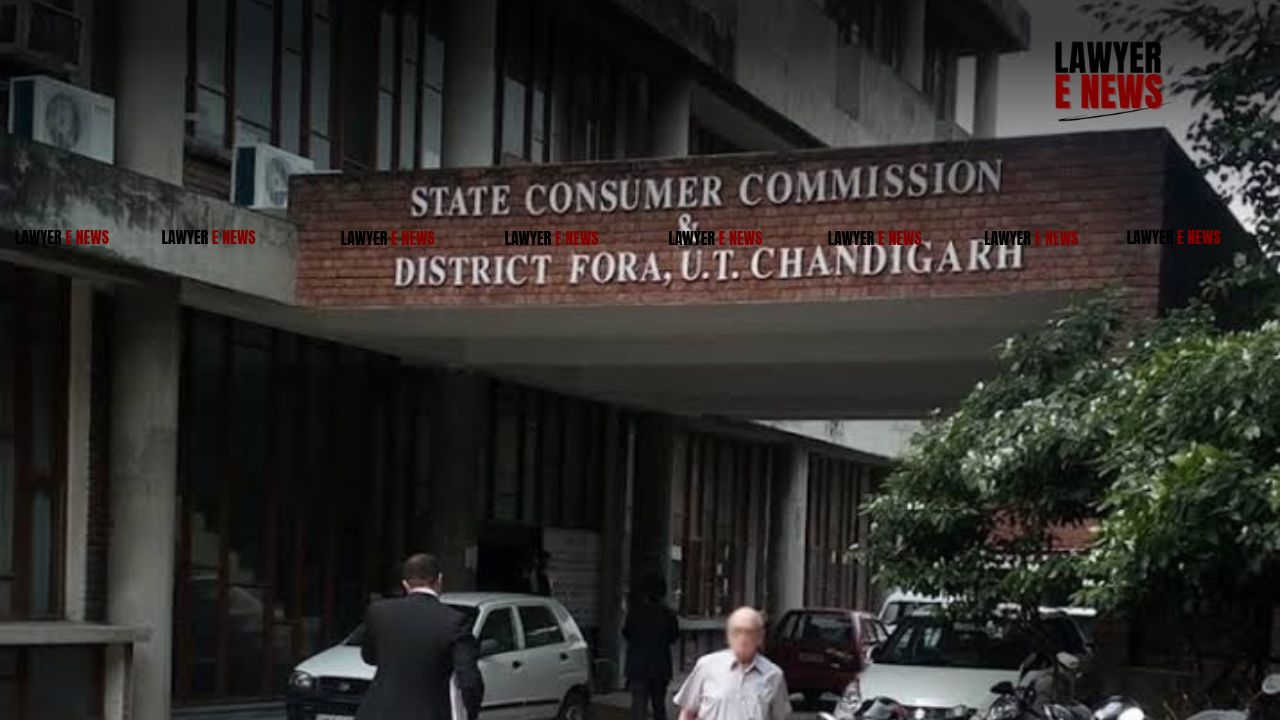
"The aforesaid demands, without adequate disclosure or justification, amounted to the imposition of unreasonable charges, obligations and conditions upon the Complainant, thereby placing her at a distinct disadvantage." State Consumer Disputes Redressal Commission (SCDRC), U.T. Chandigarh, in a significant ruling, held that a car dealership's practice of demanding inconsistent and unjustified charges for insurance and registration, without adequate disclosure, constitutes an "unfair contract" under the Consumer Protection Act, 2019.
A bench comprising Justice Raj Shekhar Attri (President) and Member Preetinder Singh observed that such conduct is "one-sided, lacks transparency, and falls within the mischief sought to be remedied" by the consumer protection statute.
The complainant booked a Maruti Grand Vitara from Autopace Network Pvt. Ltd., paying an initial booking amount and subsequently arranging bank finance which disbursed the entire sale consideration directly to the dealer. Despite receiving the full payment and completing insurance formalities, the dealer delayed delivering the vehicle for weeks, prompting the pregnant complainant to approach the Commission. The vehicle was ultimately delivered to the complainant only after the Commission passed interim orders directing the dealership to do so.
The primary question before the Commission was whether the inconsistent demands for ancillary charges by the dealer constituted an "unfair contract" under Section 2(46) of the Consumer Protection Act, 2019. The Commission was also called upon to determine whether the delay in delivering the fully paid vehicle amounted to a deficiency in service.
Jurisdiction Over Unfair Contracts
The Commission first addressed the issue of its pecuniary jurisdiction, noting that while standard complaints before the State Commission generally require the consideration to exceed rupees fifty lakhs, complaints against "unfair contracts" under Section 47(1)(a)(ii) of the Consumer Protection Act, 2019 (CPA) have a distinct threshold of up to ten crore rupees. Relying on the Supreme Court's judgment in M/s Texco Marketing Pvt. Ltd. v. Tata AIG General Insurance Company Ltd., the bench affirmed its statutory power to declare unfair contractual terms as null and void, regardless of the standard pecuniary limits.
Imposition Of Unreasonable Charges
Examining the invoice and estimated charges, the Commission found a glaring lack of consistency and transparency in the dealer's pricing structure. The bench noted that the dealer quoted three different amounts towards the insurance premium and demanded highly inflated permanent registration charges without any credible explanation. It was further observed that charges for extended warranty and loyalty cards were imposed without disclosing to the consumer that they were optional in nature.
"Such conduct is one-sided, lacks transparency, and falls within the mischief sought to be remedied by the provisions relating to 'unfair contracts' under the Consumer Protection Act, 2019."
Concluded Contract And Unjustified Delay
Rejecting the dealer's defence that paying a mere booking amount of Rs. 11,000 did not create a vested right to delivery, the Commission held that a concluded contract had indeed come into existence. The bench pointed out that the financing bank had disbursed Rs. 14.28 lakhs directly to the dealer, the insurance policy was generated, and the specific chassis number had been allotted by the manufacturer. The Commission ruled that once the sale consideration was substantially received, the dealer was under a corresponding contractual obligation to deliver the vehicle within a reasonable time.
Deficiency In Service And Harassment
The Commission strongly condemned the dealer's failure to deliver the vehicle despite being in possession of both the car and the full sale consideration. Noting that the complainant was forced to escalate the matter to the National Consumer Helpline and ultimately the consumer forum, the bench found a clear deficiency in service under Section 2(11) of the CPA. The court highlighted that the unjustified delay caused severe, avoidable inconvenience, harassment, and mental agony to the pregnant complainant.
Negligence In Vehicle Scrappage
The court also addressed the complainant's grievance regarding the surrender of her old vehicle under the exchange and scrappage programme. The bench found that the dealer had processed incorrect scrappage particulars, exposing the complainant to potential legal complications. The Commission ruled that misleading a consumer regarding vehicle scrappage and failing to maintain correct statutory records squarely amounts to an unfair trade practice and gross negligence.
Allowing the complaint, the Commission directed the dealer to pay interest on the deposited amount of Rs. 14.39 lakhs for the delayed period, along with Rs. 2,50,000 as compensation for mental agony, pregnancy hardship, and breach of contractual obligations. The dealer was additionally ordered to pay Rs. 50,000 for its deficient service regarding the old vehicle's scrappage, alongside Rs. 25,000 in litigation costs.
Date of Decision: 17 July 2026