Limitation | Delay Condonation Cannot Be An Act Of Generosity: Supreme Court Refuses To Condone 31-Year Delay To Challenge Decree Sentence Suspension In Murder Cases Only Under Exceptional Circumstances; Presumption Of Innocence Erased Upon Conviction: Supreme Court Inquiry Commission Report Cannot Be Used For Disciplinary Action If Statutory Right To Cross-Examine Denied: Gauhati High Court Use Of Trademark On Website Accessible In India Constitutes Domestic Use, Geo-Blocking Mandatory For Territorial Restrictions: Delhi High Court Civil Court Jurisdiction To Interfere With DRT Proceedings Is Absolutely Barred Even For Third Parties: Madras High Court Adding a Prefix Can’t Erase Deceptive Similarity – Delhi High Court Orders Removal of ‘ARUN’ from Trademark ‘AiC ARUN’ Cannot Resile From Mediated Settlement After Taking Benefits: Supreme Court Quashes Wife's DV Case, Grants Divorce Absolute Indemnity Obligation Triggers Immediately Upon Court-Directed Deposit, Not On Final Appeal: Supreme Court Magistrate Directing Investigation Under Section 156(3) CrPC Only Requires Prima Facie Satisfaction Of Cognizable Offence: Supreme Court Cancellation Of Sale Deed Under Specific Relief Act Not A Pre-Condition To Initiate Criminal Case For Forgery: Supreme Court Amalgamated Company Cannot Claim Set-Off Of Predecessor's Losses Under Kerala Agricultural Income Tax Act Without Specific Statutory Provision: Supreme Court Overlapping Split Chargesheets May Raise Double Jeopardy Concerns, Supreme Court Notes While Granting Bail To Former Jharkhand Minister Supreme Court Grants Bail To Convicted Ex-Jharkhand Minister Facing Overlapping Prosecutions From Split Chargesheets Electricity Act Appellate Authority Is A Quasi-Judicial Body Subject To High Court’s Supervisory Jurisdiction: Madhya Pradesh High Court Mere Discrepancy In Date Of Birth Across Certificates Doesn't Amount To Fraud If No Undue Advantage Is Derived: Allahabad High Court Interest Earned On Funds Temporarily Parked Pending Project Deployment Cannot Be Taxed As 'Income From Other Sources': Delhi High Court Reference Court Cannot Set Aside Collector's Award Or Remand Matter For Fresh Determination: Allahabad High Court Administrative Transfer Causing Revenue Loss Defies Court Process: Calcutta High Court Strikes Down Ferry Ghat Handover Government Can Resume Leased Land For Public Purpose; 'Substantial Compliance' Of 60-Day Notice Sufficient: Kerala High Court Revenue Can't Cite Pending Litigation to Justify One Year of Adjudication Inaction: Karnataka High Court

Calcutta High Court: Stridhan Recovery and Gifted Money Claims Evaluated

07 May 2024 8:19 AM

By: Admin


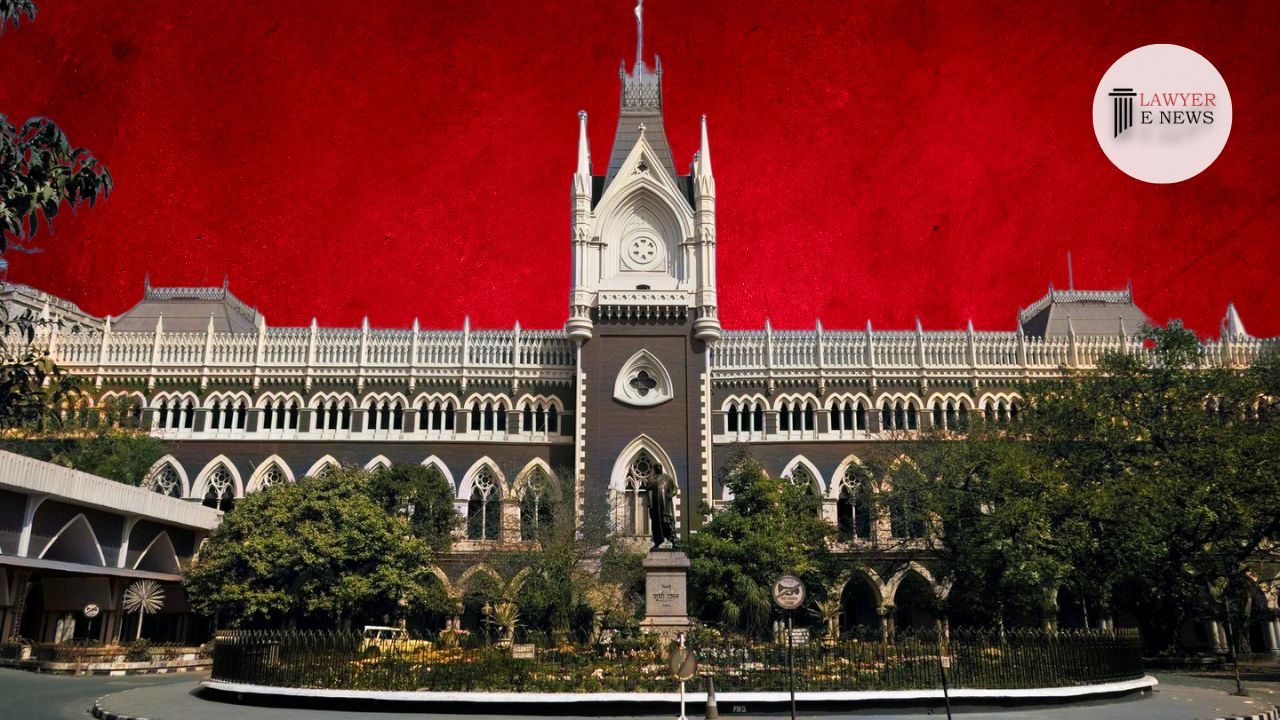
In a significant ruling, the Calcutta High Court, comprising Justices Partha Sarathi Chatterjee and Tapabrata Chakraborty, delivered a meticulous judgment shedding light on the intricacies of stridhan recovery and claims regarding gifted money. The court meticulously examined the evidence and legal aspects surrounding the case, offering valuable insights into the application of legal principles.

The judgment, which delves into the realms of civil law, revolves around a dispute involving the recovery of stridhan articles and money gifted for specific purposes. The Honorable Bench's observations in this case have brought forth important insights into the interpretation of legal provisions and the distinction between civil and criminal proceedings.

In the observations, Justice Partha Sarathi Chatterjee highlighted the importance of evaluating evidence meticulously, stating, "Witnesses are of three types, namely, wholly reliable, wholly unreliable, and neither wholly reliable nor wholly unreliable. In the first two, conclusions may be arrived at by accepting or rejecting evidence, but in the case of the third, the court has to be circumspect and look for corroboration in material particulars by reliable testimony, direct or circumstantial."

Furthermore, Justice Tapabrata Chakraborty emphasized the need for careful consideration of evidence's consistency, stating, "The evidence of PW-1 is not consistent to the full extent. Her evidence relating to ornaments has not found support in evidence of PW-2, and there is no documentary evidence to corroborate the evidence of PW-1. In cross-examination, her evidence has been shaken to some extent."

The judgment addressed the application of Order 2 Rule 2 of the Code of Civil Procedure, 1908, as well as the provisions of Sections 3, 91, and 92 of the Indian Evidence Act, 1872. The court explored the concept of constructive res judicata and the impact of evidence in different legal proceedings, drawing on legal precedents to elucidate its conclusions.

Honourable Bench set aside part of the decree and dismissed a cross-objection, allocating costs accordingly. The court provided comprehensive guidelines for decree issuance and the transmission of records.

Date of Decision: 11 August 2023

Sanjay Pareek & Ors. vs Smt. Madhushree Sharma (Pareek)       

Latest Legal News