-
by sayum
25 August 2026 12:32 PM







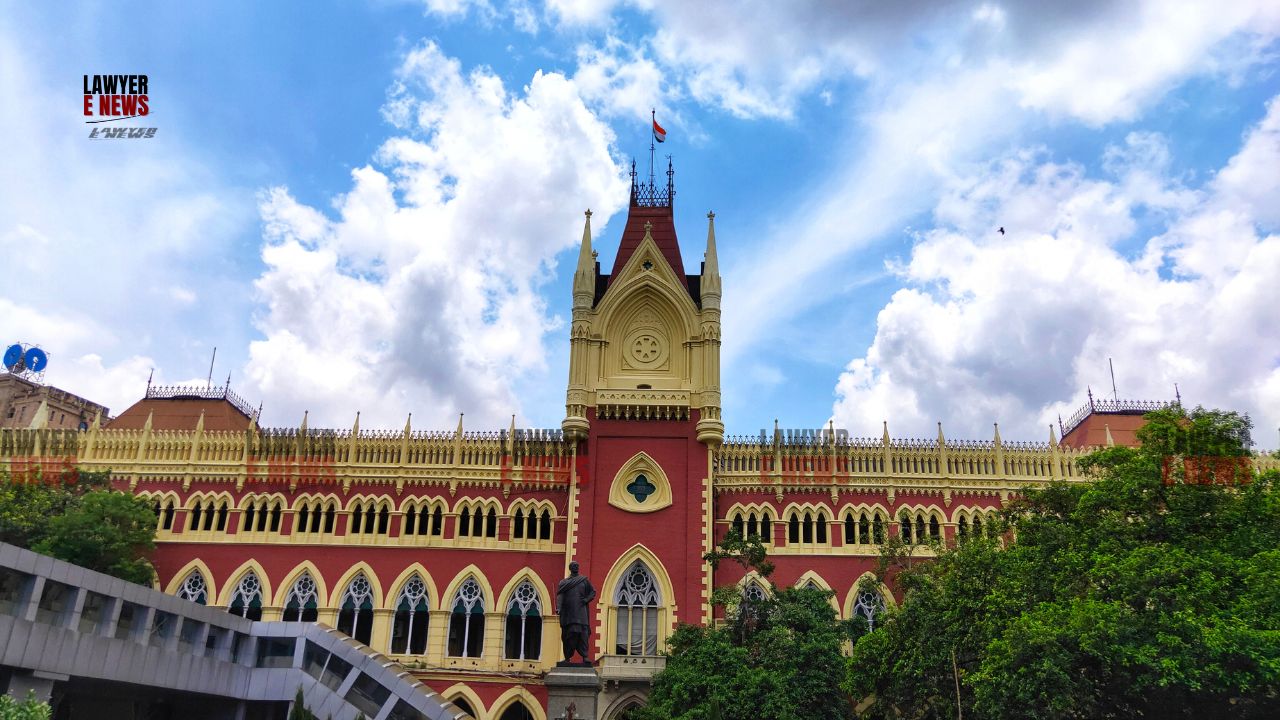
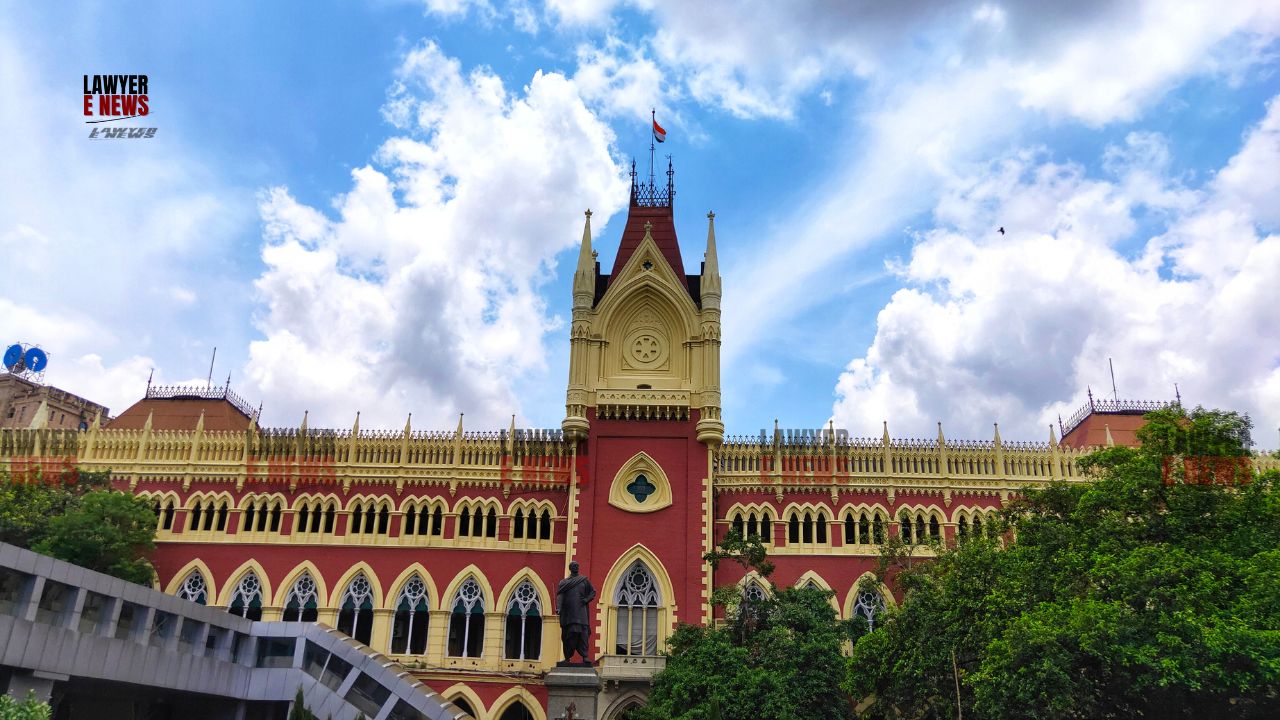
Cr.P.C. Lacks Explicit Provisions for Voice Sample Collection – Calcutta High Court delivered a significant judgment in Subhash Chandra Balasaria v. The State of West Bengal, ruling that the Chief Judicial Magistrate, Alipore, erred in directing the investigating officer to collect a witness's voice sample under Section 349 of the Bharatiya Nagarik Suraksha Sanhita (BNSS). Justice Suvra Ghosh set aside the order, holding that since the case was initiated under the Criminal Procedure Code, 1973 (Cr.P.C.), the provisions of BNSS were inapplicable. The court further noted that there is no explicit provision in Cr.P.C. allowing a Magistrate to compel a witness to provide a voice sample, adding that the issue should be decided by a larger bench.
“BNSS Provisions Cannot Override Cr.P.C. in Pending Cases”
The case arose from an ongoing investigation under CGR 2040 of 2021, where the Chief Judicial Magistrate, Alipore, on November 4, 2024, had directed the investigating officer to act in compliance with Section 349 of BNSS and collect the voice sample of the petitioner, Subhash Chandra Balasaria.
Challenging this order, the petitioner argued that BNSS was inapplicable, relying on Section 531(2)(a) of BNSS, which states: “If, immediately before the date on which this Sanhita comes into force, there is any appeal, application, trial, inquiry, or investigation pending, then such proceedings shall continue in accordance with the provisions of the Code of Criminal Procedure, 1973, as if this Sanhita had not come into force.”
Justice Suvra Ghosh, agreeing with this contention, observed: “Section 349 of the BNSS cannot be invoked in the proceeding before the learned Chief Judicial Magistrate, Alipore. The direction given by the Magistrate in the order impugned dated 4th November, 2024, upon the investigating officer to act in compliance with Section 349 of the BNSS is not tenable in law.”
“No Explicit Statutory Authority for Collecting Voice Samples from Witnesses”
The court further examined whether the Cr.P.C. provides any statutory basis for compelling a witness to provide a voice sample. While Section 311A of Cr.P.C. empowers a Magistrate to order a person to provide specimen signatures or handwriting, the provision does not extend to voice samples.
Referring to the Supreme Court’s decision in Ritesh Sinha v. State of U.P. (2019), the court noted that the Supreme Court had acknowledged the lack of legislative clarity on this issue. Justice Ghosh quoted the apex court’s observation: “The compulsion to give a voice sample does in some way involve an invasion of the rights of the individual and to bring it within the ambit of the existing law would require more than reasonable bending and stretching of the principles of interpretation.”
The Supreme Court had further noted: “If the legislature, even while making amendments in the Criminal Procedure Code (Act 25 of 2005), is oblivious and despite express reminders chooses not to include voice sample either in the newly introduced Explanation to Section 53 or in Sections 53-A and 311-A Cr.P.C., then it may even be contended that in the larger scheme of things, the legislature is able to see something which perhaps the court is missing.”
Justice Ghosh reiterated that no such legislative amendment has been made till date, making it impermissible to compel a witness—as opposed to an accused—to provide a voice sample in an investigation.
“Voice Sample Collection from Witnesses: Issue Pending Before a Larger Bench”
The court also acknowledged that a coordinate bench of the Calcutta High Court had previously referred this very issue to a larger bench in Mukul Roy v. State of West Bengal (2019 SCC OnLine Cal 4341). The reference posed three crucial legal questions: “Whether Section 311A read with Sections 53 and 53A of Cr.P.C. along with Section 5 of the Identification of Prisoners Act, 1920, empowers a Magistrate to compel a witness to give a voice sample.”
“Can the principle laid down by the Hon’ble Supreme Court in Ritesh Sinha v. State of U.P. (2019) be applied to witnesses in the course of investigation?”“Whether a witness, even in the course of an investigation, can be compelled to give evidence that could subsequently emerge as a ground for including him as an accused in the final investigation report.”
Justice Ghosh highlighted that since the reference remains undecided, judicial propriety demands awaiting the larger bench’s verdict before making a ruling on the matter. The court held: “Since the issue which has fallen for consideration before this Court has been referred to a larger Bench and is still pending, judicial propriety demands that the prayer of the petitioner herein should abide by the decision of the appropriate Bench.”
“Investigative Agencies Cannot Rely on Article 142 Rulings to Bypass Legislative Gaps”
The opposite party (defacto complainant) and the State had relied on Pravinsinh Nrupatsinh Chauhan v. State of Gujarat (2023) and Tarak Nath Gupta v. State of Delhi (2023 SCC OnLine Del 6475), where the Supreme Court, using Article 142, had directed Magistrates to collect voice samples for investigation.
However, Justice Ghosh pointed out that Article 142 powers are unique to the Supreme Court and do not create a binding precedent for lower courts in the absence of statutory backing. The court held: “The authority relied upon by the private opposite party/defacto complainant is with regard to the power of the Hon’ble Supreme Court under Article 142 of the Constitution of India and is not applicable to any other Court.”
Final Judgment: Magistrate’s Order Quashed, Voice Sample Collection to Await Larger Bench Decision
The Calcutta High Court ultimately quashed the Chief Judicial Magistrate’s order dated November 4, 2024, directing voice sample collection under Section 349 of BNSS. Justice Ghosh ruled:
“As the order impugned dated 4th November, 2024, directing the investigating officer to act in terms of Section 349 of the BNSS is bad in law, the said order is quashed/set aside.”
The court concluded that the issue of voice sample collection must await the decision of the larger bench and disposed of the revisional application (CRR 105 of 2025) accordingly.
This ruling underscores the inapplicability of BNSS provisions to pending cases under Cr.P.C. and highlights the absence of statutory authority to compel a witness to provide a voice sample. By deferring to a larger bench, the court has ensured that the matter is resolved through a more comprehensive judicial analysis rather than an ad-hoc judicial interpretation.
The judgment also serves as a reminder that Supreme Court rulings under Article 142 cannot override legislative gaps in Cr.P.C., reinforcing the principle that courts should not act as lawmakers.
With technological advancements in forensic evidence, whether the legislature will explicitly amend Cr.P.C. to allow voice sample collection remains an open question. Until then, this ruling provides a crucial precedent for future cases involving forensic evidence collection from witnesses.
Date of decision: 03/03/2025