-
by sayum
19 August 2026 8:35 AM







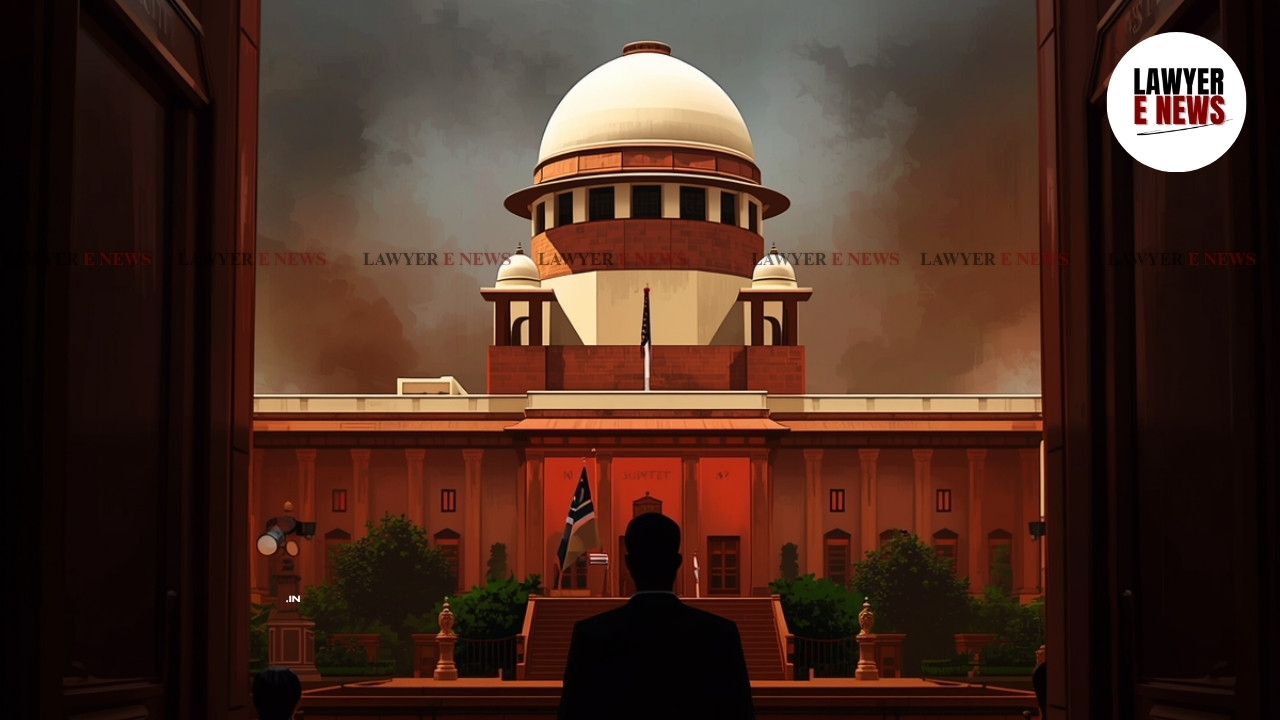
"A CAG audit is not designed to perform the role of a criminal investigation. An audit may verify accounts, test compliance, and record deficiencies. It cannot, however, conduct searches and seizures, trace beneficial ownership and related-party links through layered entities, examine the money trail...", Supreme Court of India, in a significant ruling dated April 06, 2026, held that a Comptroller and Auditor General (CAG) audit cannot act as a substitute for a criminal investigation in cases alleging systemic corruption and nepotism in public procurement.
A bench comprising Justices Vikram Nath, Sandeep Mehta, and N.V. Anjaria observed that while an audit can highlight financial deficiencies, the discovery of money trails and criminal culpability requires the statutory powers of an independent investigating agency.
A public interest litigation was filed by the Save Mon Region Federation alleging massive irregularities, favouritism, and the bypassing of competitive tenders in the award of public works contracts in Arunachal Pradesh. The petitioners alleged that high-value contracts were repeatedly awarded to firms closely related to the Chief Minister and his political associates through the arbitrary use of a "work order" system. In response, the State government sought to rely on a recent CAG report, arguing that the financial anomalies were now within the exclusive domain of legislative scrutiny and did not warrant a separate criminal probe.
The primary question before the court was whether the existence of a CAG audit and subsequent legislative scrutiny precludes a constitutional court from ordering a criminal investigation into public procurement anomalies. The court was also called upon to determine whether the repeated absence of crucial tender documents and work vouchers, as flagged by the audit, justified an independent probe by the Central Bureau of Investigation.
Audit Mechanism Does Not Displace Constitutional Scrutiny
The State had attempted to deflect the plea for a CBI probe by arguing that the CAG report now lay within the exclusive domain of the Governor and the State Legislature. Rejecting this broad defence, the Supreme Court clarified that legislative scrutiny through the Public Accounts Committee is undoubtedly an important mechanism of financial accountability. However, the bench firmly ruled that this process does not displace the constitutional role of the Court when allegations before it implicate arbitrariness in public procurement and the prima facie misuse of public office.
The Court stressed that proceedings under Article 32 of the Constitution are not rendered infructuous merely because an audit report is also capable of being examined in the legislative domain. The bench noted that the CAG report forms part of the material that must be assessed for the limited purpose of determining whether an independent investigation is warranted to secure the integrity of public procurement.
Limits Of A CAG Audit In Unearthing Crime
Focusing on the functional limitations of financial audits, the bench drew a sharp legal distinction between administrative compliance and criminal investigation. The Court highlighted that while an audit is highly effective at verifying accounts and recording procedural deficiencies, it is fundamentally ill-equipped to uncover active criminality, collusion, or the deliberate destruction of public records. The bench observed that tracing beneficial ownerships and layered corporate entities goes far beyond the remit of an auditor.
"A CAG audit is not designed to perform the role of a criminal investigation. An audit may verify accounts, test compliance, and record deficiencies. It cannot, however, conduct searches and seizures, trace beneficial ownership and related-party links through layered entities, examine the money trail, identify the persons responsible for custody and disappearance of files, or determine whether the facts disclose the commission of cognizable offences."
Need To Trace Money Trails And Missing Records
The judgment took serious note of the CAG report's own findings, which highlighted the non-production of vouchers worth crores of rupees and the routine unavailability of comparative bid statements. The bench noted that such missing records are not neutral clerical facts, but strong indicia of systemic manipulation that demand independent verification. To identify the specific individuals responsible for the custody and disappearance of these crucial files, the Court found it imperative to invoke the powers of an agency equipped with statutory tools of criminal investigation.
CBI Probe Ordered To Ensure Impartiality
Concluding that the allegations involved persons occupying high constitutional and political offices in the State, the Court held that an investigation by local state agencies would naturally fail to inspire public confidence. The bench emphasised that where public power is allegedly used to confer private economic advantages, the investigation must not only be fair but must also appear transparently fair to the public. The institutional proximity of the persons accused necessitated an agency entirely independent of the State executive.
Disposing of the writ petition, the Supreme Court directed the CBI to register a preliminary enquiry within two weeks and conduct a time-bound investigation into the award of the Arunachal Pradesh public works contracts spanning from 2015 to 2025. The ruling establishes a crucial precedent that structural audit mechanisms cannot be weaponised as a shield against criminal probes when the rule of law and public trust are severely implicated.
Date of Decision: 06 April 2026