-
by sayum
25 August 2026 6:11 AM







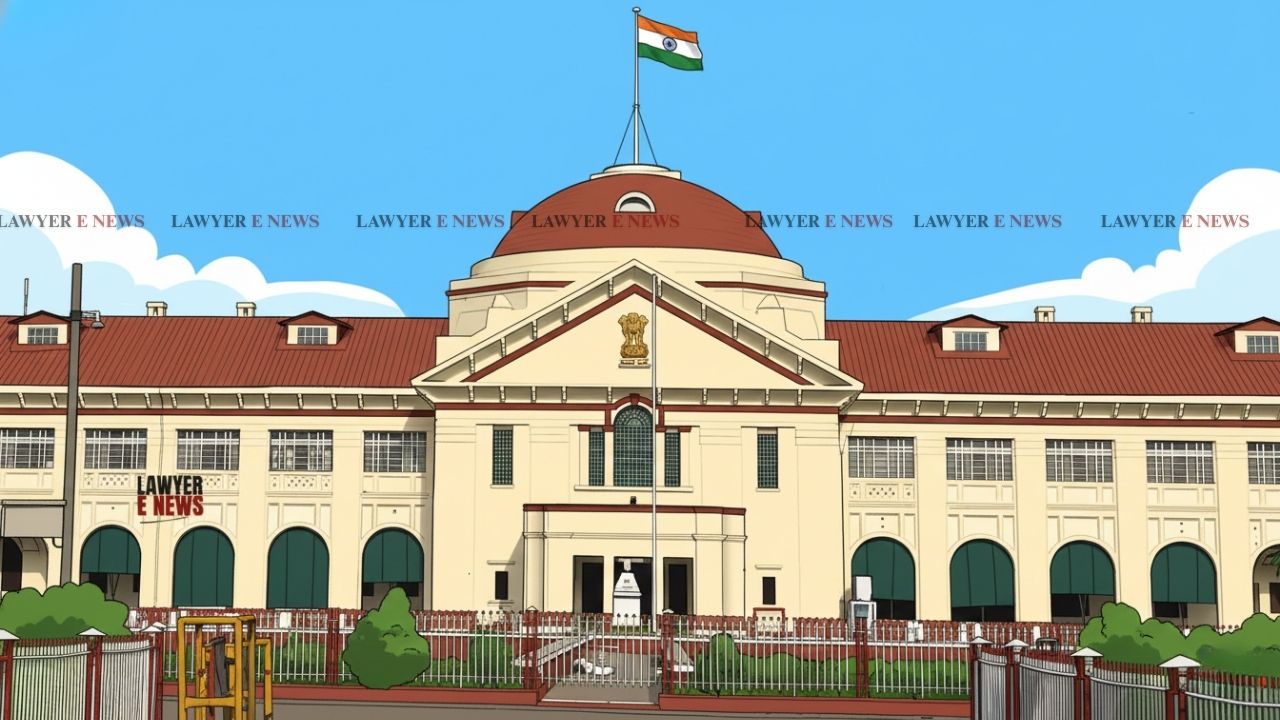
“Whether a Property Is Benami or Falls Under Exceptions Cannot Be Decided Without Trial”, In a pivotal ruling Patna High Court set aside a trial court's decision that had rejected a civil suit under Order VII Rule 11(d) of the Code of Civil Procedure, 1908, on the ground that it was barred by Section 4 of the Prohibition of Benami Property Transactions Act, 1988.
Justice Ramesh Chand Malviya held that "the nature of the transaction, including whether it is benami or falls under exceptions, is a mixed question of law and fact", and such determination requires trial—not summary rejection.
Declaring that “power under Order VII Rule 11(d) CPC is drastic and must be sparingly exercised”, the Court clarified that "no suit can be dismissed at the threshold merely because it alleges a benami transaction unless it is ex facie barred on the face of the plaint".
“The Court Cannot Reject a Suit by Determining the Merits of a Benami Claim at the Threshold” – Pleas in Written Statement Are Irrelevant at This Stage
The Court reiterated settled principles that only the plaint and documents filed with it can be considered while deciding an application under Order VII Rule 11(d). Quoting the Supreme Court's judgment in Dahiben v. Arvindbhai Kalyanji Bhanusali, the High Court emphasized:
“The power conferred on the Court to terminate a civil action is, however, a drastic one, and the conditions enumerated in Order 7 Rule 11 are required to be strictly adhered to.”
It further observed that the Trial Court had gone far beyond the permissible scope of Order VII Rule 11(d) by evaluating the truthfulness of pleadings and prematurely applying the bar under Section 4 of the Benami Act:
“If the allegations in the plaint prima facie show a cause of action, the Court cannot embark upon an enquiry whether the allegations are true in fact.”
“Statutory Bar Under Section 4 Depends on Evidence – Exceptions Under Sections 2(8) and 2(9) Cannot Be Ignored”
At the heart of the dispute was the plaintiff’s claim that he purchased land in 1980 using his own funds, but owing to government service restrictions, the sale deeds were executed in the names of his close relatives (defendants 1 and 2). He alleged continuous possession, construction of residential and commercial structures, and collection of rent from tenants, asserting that the defendants were merely name-lenders.
The suit, filed in 2011, sought a declaration of title and confirmation of possession. However, it was dismissed by the Trial Court under Order VII Rule 11(d), holding it to be barred by Section 4 of the 1988 Act.
The High Court, however, held that the existence of a benami transaction and its qualification under the statutory exceptions in Sections 2(8) and 2(9) requires a factual inquiry, and cannot be determined at the initial stage:
“Whether a property is benami and whether it falls in the exception under sub-section (9) of Section 2 are issues to be decided on the basis of evidence and not merely on the averments in the plaint.”
Relying on the Supreme Court’s judgment in Shaifali Gupta v. Vidya Devi Gupta, the Court warned against a mechanical application of Section 4:
“In such circumstances, whether a property is a benami, has to be considered not in the light of Section 4 of the Benami Act alone but also in connection with Sections 2(8) and 2(9)… the issue… is again an issue to be decided on the basis of evidence and not simply on mere averments.”
“Suit Cannot Be Rejected on Ground of Limitation Where Cause of Action Is in Dispute” – Delay and Possession Are Factual Issues
The defendants had also argued that the plaintiff’s suit was barred by limitation, asserting that the transaction was made in 1980, but the suit was filed only in 2011. The High Court, however, dismissed this objection, stating that limitation in such cases is a mixed question of law and fact, and cannot be adjudicated under Order VII Rule 11(d):
“Law is well settled that a plaint cannot be rejected… if the issue of limitation is a mixed question of fact and law, such as, the date of knowledge of a cause of action, as it requires a full trial and evidence.”
The Court further held that delay alone does not extinguish title, particularly when the plaintiff pleaded continuous possession, reliance on original sale deeds, and active construction over the land.
Trial Court's Premature Conclusion Termed Legal Error – Parties Must Be Allowed to Prove or Disprove Benami Nature
The Trial Court had sided with the defendant's contention that since the suit was filed after the enforcement of the Act in 1988, Section 4 squarely barred the claim, regardless of the date of transaction.
The High Court categorically overruled this view, noting that mere filing of suit post-1988 does not ipso facto trigger Section 4, especially when the alleged transaction occurred in 1980 and when the plaintiff remains in possession:
“The learned Trial Court erred in rejecting the plaint by conclusively applying Section 4 of the Act without trial – determination of benami nature and statutory bar requires full adjudication.”
Relying on the precedent of R. Rajagopal Reddy v. Padmini Chandrasekharan, the Court reminded that Section 4 does not have retrospective application, and whether the suit is caught by it depends entirely on evidence.
"Court Must Proceed on Meaningful Reading of the Plaint, Not on Inference or Disputed Facts"
Justice Ramesh Chand Malviya underscored that “a plaint must be read as a whole and its averments presumed to be true” while testing under Order VII Rule 11. It is only where the suit is ex facie barred by law, that rejection is warranted. In this case, he held:
“If the statements in the plaint are taken to be true, it cannot be said that it does not disclose a cause of action. This is a matter of trial, the result of which would depend upon the evidence adduced.”
The Court also refused to dismiss the appeal on grounds such as non-joinder of parties, prior mutation orders, or possession claimed by subsequent purchasers, stating these were all issues requiring evidentiary adjudication, not grounds for summary rejection.
Appeal Allowed – Suit Restored for Full Trial
Setting aside the judgment and decree dated 04.06.2012 passed by the Sub-ordinate Judge, Sitamarhi, the High Court restored Title Suit No. 196 of 2011 to the trial court's docket, directing:
“The learned Trial Court shall adjudicate the suit on its own merits in accordance with law and uninfluenced by the observations made by this Court in this judgment.”
The Trial Court record was ordered to be returned forthwith and both parties were directed to appear for trial proceedings.
Date of Decision: 28 January 2026