-
by sayum
01 August 2026 2:00 PM







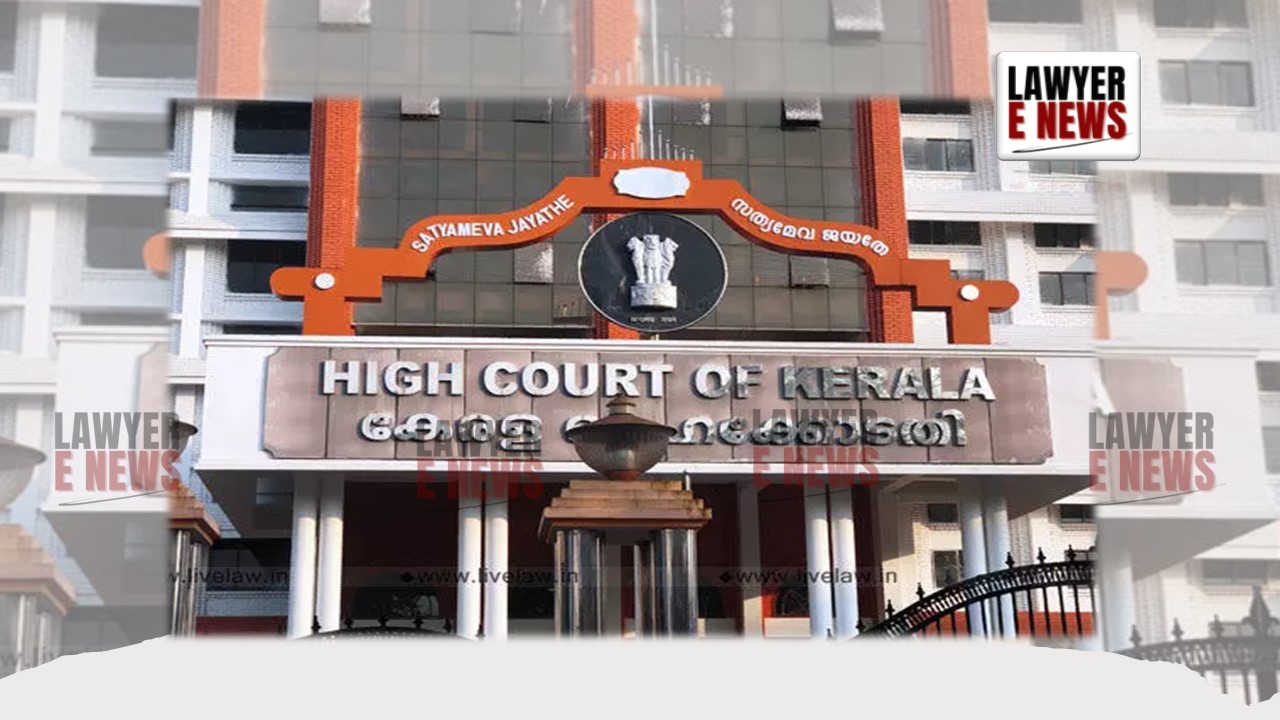
Kerala High Court held that educational certificates of aspiring lawyers must be verified by universities and boards without charging fees, as mandated by a Supreme Court directive in WP(C) No. 82/2023.
The appeal was filed by Alan Benny, a law graduate, challenging the imposition of a ₹2,500 fee by the Bar Council of Kerala for certificate verification as a condition for enrollment. The Court modified the earlier Single Judge’s interim order, exempting Benny from paying the fee and directing the Bar Council to proceed with enrollment while verifying his certificates.
Alan Benny, a 26-year-old aspiring advocate from Thodupuzha, Idukki, applied for enrollment with the Bar Council of Kerala. During the process, he was required to pay a ₹2,500 fee for verifying his SSLC, Plus Two, Degree, and LLB certificates. Benny challenged this requirement, citing a Supreme Court ruling that prohibited charging fees for certificate verification by educational institutions and examination boards.
The Bar Council of Kerala defended its fee requirement, referencing a 2017 circular by the Bar Council of India that stipulated the ₹2,500 charge for certificate verification.
Justice Ziyad Rahman A.A. highlighted the Supreme Court's ruling in WP(C) No. 82/2023, which unequivocally directed educational boards and universities to verify certificates free of cost upon requisition by Bar Councils.
“The obligation to verify certificates without fees rests squarely on universities and boards. Bar Councils cannot impose additional financial burdens on applicants.”
The Court examined the Bar Council of India’s 2017 circular, which mandated a ₹2,500 fee for verification. Justice Rahman held that this circular conflicted with the Supreme Court's directions and the Advocates Act, 1961.
“Fee requirements for enrollment cannot exceed statutory stipulations under Section 24(1)(f) of the Advocates Act. Imposing additional charges is impermissible.”
While granting Benny relief from the fee requirement, the Court directed the Bar Council to expedite verification processes to avoid unnecessary delays in enrollment. It allowed Benny’s enrollment to proceed even if verification was incomplete, subject to revocation if the certificates were found invalid.
“Enrollment must not be hindered by administrative delays. Verification can follow, but rights of genuine candidates must be protected.”
The Court modified the earlier order, exempting Benny from paying the ₹2,500 fee and directing the Bar Council of Kerala to verify his certificates without charges. Benny was permitted to enroll in the upcoming enrollment session, with the condition that his enrollment could be revoked if his certificates were later found invalid.
This ruling reinforces the principle that aspiring lawyers should not face unnecessary financial hurdles in the enrollment process. It underscores the judiciary’s commitment to ensuring compliance with Supreme Court directives, promoting fairness, and preventing arbitrary practices in professional regulatory bodies.
Date of Decision: December 31, 2024