Employees Cannot Pick Favourable Terms and Reject the Rest: Bombay High Court Upholds SIDBI’s Cut-Off Date for Pension to CPF Optees Rules of the Game Were Never Changed: Delhi High Court Upholds CSIR’s Power to Prescribe Minimum Threshold in CASE-2023 Resignation Does Not Forfeit Earned Pension: Calcutta High Court Declares Company Superannuation Benefit as ‘Wages’ Under Law Fraud Vitiates Everything—Stranger Can File Independent Suit Against Compromise Decree: Bombay High Court Refuses to Reject 49-Year-Old Challenge at Threshold Mere Long Possession By One Co-Owner Does Not Destroy The Co-Ownership Right Of The Other: Madras High Court State Cannot Hide Behind An Illegal Undertaking: Punjab & Haryana High Court Questions Denial Of Retrospective Regularization Article 21-A Cannot Be Held Hostage to Transfer Preferences: Allahabad High Court Upholds Teacher Redeployment to Enforce Pupil–Teacher Ratio Arbitrator Cannot Rewrite Contract Or Travel Beyond Pleadings: Punjab & Haryana High Court Quashes ₹5.18 Crore Award Director’ in GeM Clause 29 Does Not Mean ‘Independent Director’: Gujarat High Court Sets Aside Technical Disqualification Section 25(3) Is Sacrosanct – Removal of a Trademark Cannot Rest on a Defective Notice: Delhi High Court Not Every Broken Promise Is Rape: Delhi High Court Draws Clear Line Between ‘Suspicion’ and ‘Grave Suspicion’ in False Promise to Marry Case Section 37 Is Not A Second Appeal On Merits: Delhi High Court Refuses To Re-Appreciate Evidence In Challenge To Arbitral Award Recovery After Retirement Is Clearly Impermissible: Bombay High Court Shields Retired Teacher From ₹2.80 Lakh Salary Recovery Paying Tax Does Not Legalise Illegality: Bombay High Court Refuses to Shield Alleged Unauthorized Structure Beneficial Pension Scheme Cannot Be Defeated By Cut-Off Dates: Andhra Pradesh High Court Directs EPFO To Follow Sunil Kumar B. Guidelines On Higher Pension Claims Equity Aids the Vigilant, Not Those Who Sleep Over Their Rights: Punjab & Haryana High Court Refuses to Revive 36-Year-Old Pay Parity Claim Students Cannot Be Penalised For Legislative Invalidity: Supreme Court Protects Degrees Granted Before 2005 Yash Pal Verdict Restructuring Without Fulfilment of Conditions Cannot Defeat Insolvency: Supreme Court Reaffirms Default as the Sole Trigger Under Section 7 IBC Section 100-A CPC Slams The Door On Intra-Court Appeals In RERA Matters”: Allahabad High Court Declares Special Appeal Not Maintainable Mental Distance Between ‘May Be’ and ‘Must Be’ Is Long: Patna High Court Acquits Six in Murder Case Built on Broken Chain of Circumstances Where Corruption Takes Roots, Rule of Law Is Replaced by Rule of Transaction: Punjab & Haryana High Court Denies Bail to DIG Harcharan Singh Bhullar Mere Voter List and Corrected SSC Certificate Cannot Prove Paternity: Andhra Pradesh High Court Rejects 21-Year-Old Bid for DNA Test in Partition Appeal Section 147 NI Act Makes Offence Compoundable At Any Stage: Karnataka High Court Sets Aside Concurrent Convictions in Cheque Bounce Case After Settlement Bald Allegations of Adultery Based on Suspicion Cannot Dissolve a Marriage: Jharkhand High Court Once a Document Is Admitted in Evidence, Its Stamp Defect Cannot Be Reopened: Madras High Court

Bail Denied For Posting Offensive Social Media Content against PM Narinder Modi

07 May 2024 8:19 AM

By: Admin


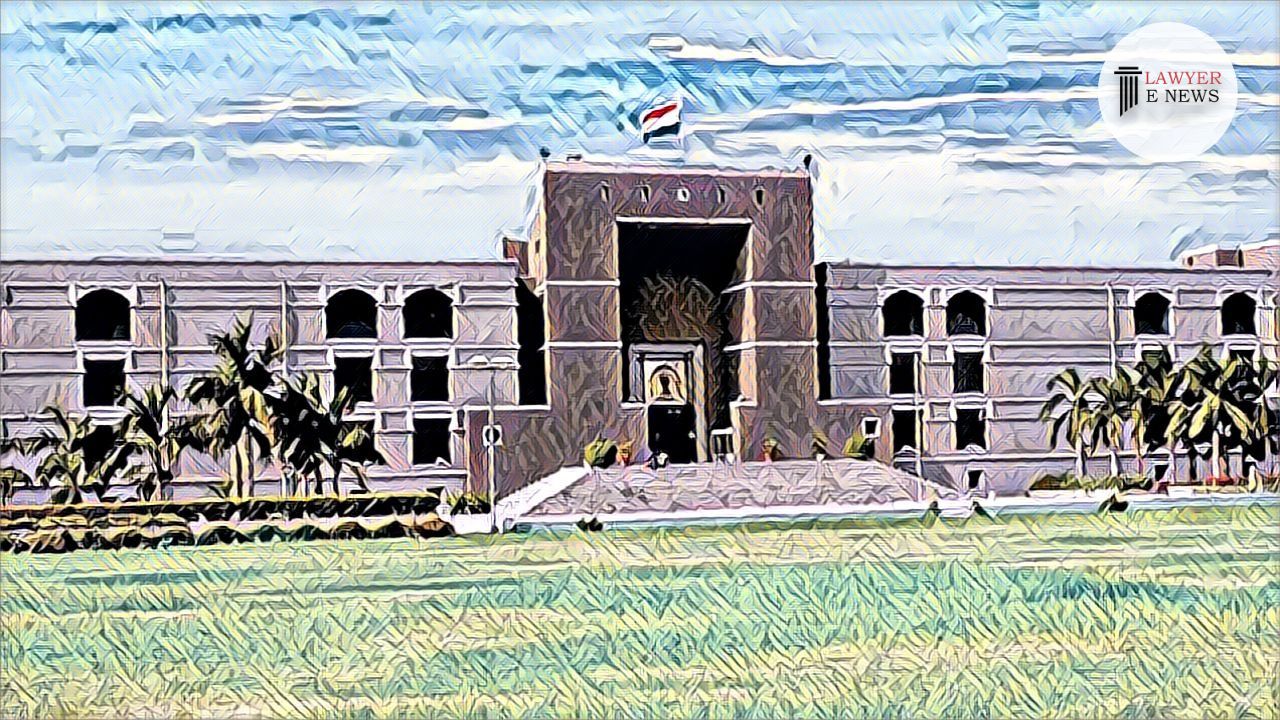
Ahmedabad, Gujarat: In a significant ruling, the High Court of Gujarat, presided over by Honourable Mr. Justice Nirzar S. Desai, denied bail to an individual accused of posting offensive and abusive content on social media platforms against PM Narinder Modi. The judgment, delivered on 6th June 2023, highlights the court's concerns over the potential for communal unrest and disturbance of peace in society.

The applicant had filed a regular bail application under Section 439 of the Code of Criminal Procedure, 1973, in connection with a First Information Report (FIR) registered at Sikka Police Station, Jamnagar District. The charges against the applicant included offenses under various sections of the Indian Penal Code, including Sections 120 (B), 153 (A), 283 (2) (A), 294 (B), 295 (A), 298, 469, 500, 501, and 505 (2), as well as Section 67 of the Information Technology Act.

The court's oral order emphasized the offensive nature of the content posted by the applicant, which included derogatory remarks against the Honorable Prime Minister and his late mother, as well as the presence of obscene and pornographic material on the applicant's Facebook page. Justice Nirzar S. Desai stated, "The present applicant who is an Indian Citizen has made all the attempts to destabilize the peace in the society, and prima facie, the posts made by the present applicant seem to be agenda driven." The court further highlighted the potential damage caused by the applicant's posts on social media, noting that they could influence and harm communal harmony.

Considering the seriousness of the offenses and the potential for recurrence, the court denied bail, stating, "If such a person is granted bail, there are all the chances that he may commit such an offense once again." The court also emphasized the need to expedite the trial in light of the maximum punishment being five years.

Date : 06/06/2023

AFSALBHAI KASAMBHAI LAKHANI Versus STATE OF GUJARAT

Latest Legal News