-
by sayum
17 August 2026 3:17 PM







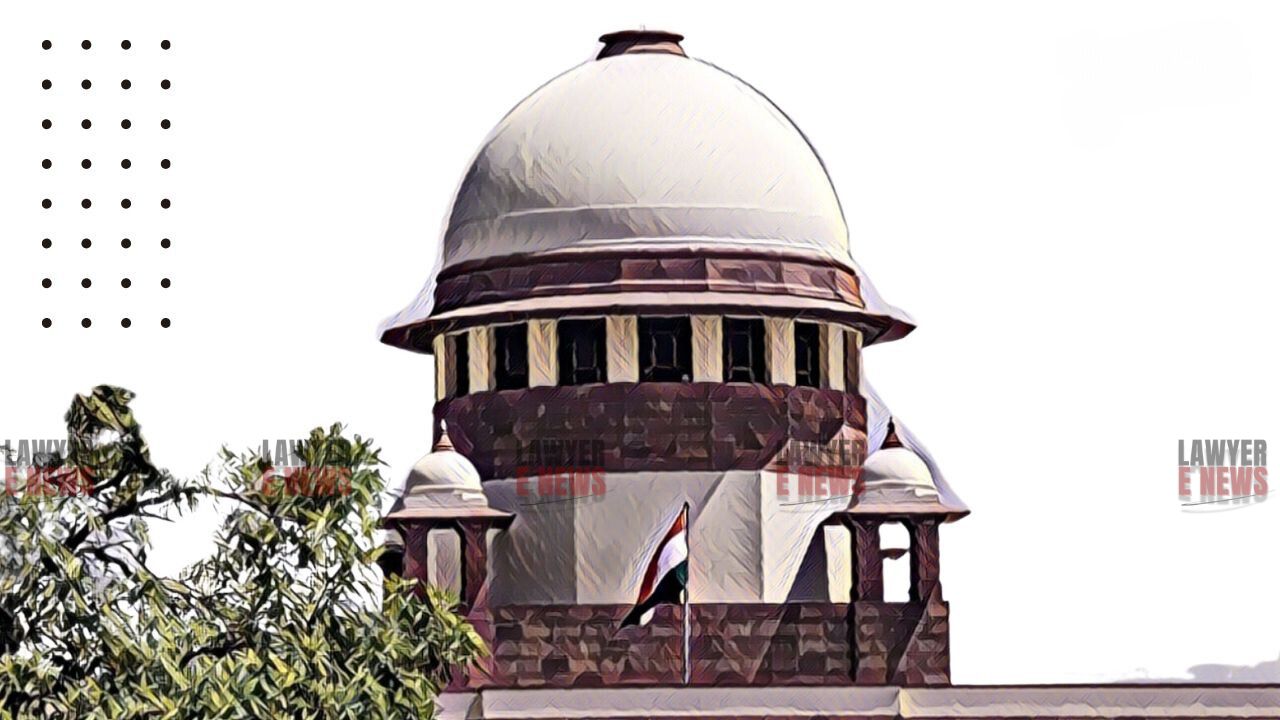
"Auction purchasers are entitled to fair compensation when deprived of their funds due to procedural delays, even when no fault lies with them," – Supreme Court On October 18, 2024, the Supreme Court of India, in Salil R. Uchil v. Vishu Kumar & Ors., Civil Appeal No. 11693 of 2024 (arising out of SLP (C) No. 5464 of 2023), modified the Karnataka High Court’s order and directed that the appellant be compensated with 6% annual interest on Rs. 81,20,000 from July 21, 2019, until the date of refund. The Supreme Court overturned the previous direction of paying 5% solatium, stating it was inadequate to compensate the appellant for the prolonged deprivation of his money after the auction was set aside.
Auction Set Aside Despite No Fault of the Appellant
The case arose when the 4th respondent, a co-operative bank, initiated recovery proceedings against the 1st, 2nd, 5th, and 6th respondents for defaulting on a Rs. 25,00,000 loan. The property of the 1st and 2nd respondents was auctioned on July 22, 2019, and the appellant, Salil R. Uchil, was the highest bidder, offering Rs. 81,20,000. After the sale was confirmed and the amount deposited by the appellant, the borrowers filed a writ petition in the Karnataka High Court, seeking to set aside the auction.
Although the borrowers did not file their application to set aside the auction within the 30-day period stipulated under Rule 38 of the Karnataka Cooperative Societies Rules, 1960, the High Court still set aside the auction on equitable grounds. The Court reasoned that the borrowers had deposited Rs. 25,61,400 within three months of filing the writ petition, covering their outstanding debt. The High Court ordered that the entire auction amount be refunded to the appellant, along with an additional 5% of the deposit as compensation.
Appellant Seeks Adequate Compensation for Deprivation of Funds
The appellant challenged this decision, arguing that the 5% compensation was inadequate. He had been deprived of the use of Rs. 81,20,000 since July 21, 2019, when he deposited the money after winning the auction. He sought interest on the sum from the date of deposit until the date of refund, claiming he was unfairly deprived of the use of his funds for several years.
Supreme Court: 6% Interest to be Paid Instead of 5% Compensation
The Supreme Court agreed with the appellant, finding that the 5% compensation awarded by the High Court was insufficient. The Court emphasized that since the appellant had no fault in the matter and was deprived of his money for an extended period, he was entitled to receive fair compensation in the form of interest.
"The appellant must be compensated as he was deprived of using the amount of Rs. 81,20,000 from July 21, 2019, till the date of actual refund due to no fault on his part. The auction, though valid, was set aside on equitable grounds, and thus the appellant should not suffer financial loss as a result."
The Court noted that the amount was transferred to the 4th respondent (the bank) on October 13, 2022, and thus directed the bank to pay simple interest at 6% per annum on the Rs. 81,20,000 for the entire period the funds were withheld.
No Illegality in Auction, But Compensation is Required: The Supreme Court observed that there was no illegality in the auction process itself. The High Court had set aside the auction sale not based on any violations of rules but on equitable grounds. Therefore, the appellant was entitled to adequate compensation for the period his funds were held.
Interest as Fair Compensation: The Court found that the 5% solatium ordered by the High Court was inadequate to compensate the appellant for the prolonged period in which he was deprived of his funds. The appellant was entitled to interest for the entire period to ensure fair compensation.
Liability to Pay Interest on 4th Respondent (Bank): Even though the auction amount was held by the 3rd respondent (the Assistant Registrar and Recovery Officer), the Court held that the 4th respondent bank, which initiated the auction, was liable to pay the interest. Since the auction was conducted at the bank’s instance, it was responsible for compensating the appellant.
The Supreme Court’s final order included the following directions:
a) The previous direction to pay 5% solatium to the appellant was set aside.
b) The 4th respondent (the co-operative bank) was directed to pay simple interest at 6% per annum on the sum of Rs. 81,20,000 from July 21, 2019, until the date of actual refund.
c) The entire interest amount was to be paid by the 4th respondent within six weeks.
The Supreme Court allowed the appeal in part, modifying the High Court’s judgment to ensure fair compensation for the appellant. By awarding interest on the deposited amount, the Court ensured that the appellant was not financially disadvantaged by the delays in refunding his money after the auction was set aside.
Date of Decision: October 18, 2024
Salil R. Uchil v. Vishu Kumar & Ors.