-
by sayum
19 August 2026 5:31 AM







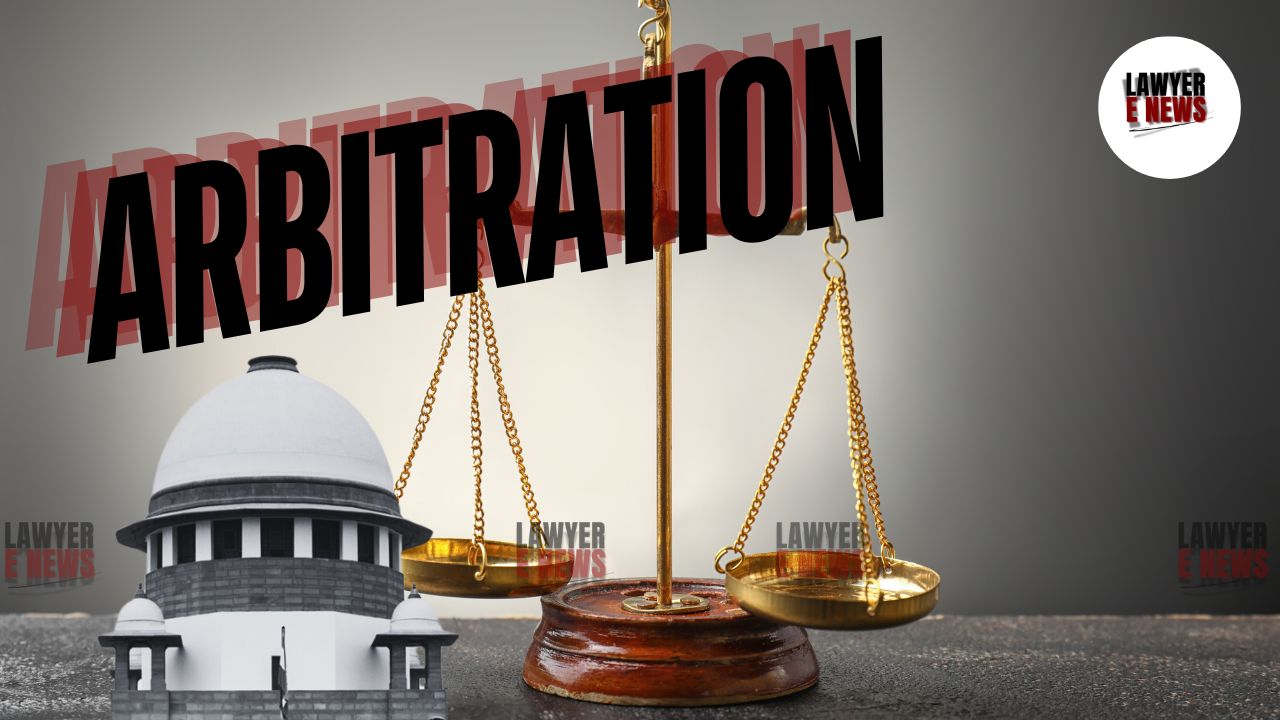
Supreme Court of India, in the case of Punjab State Civil Supplies Corporation Ltd. v. M/s Sanman Rice Mills & Ors., reinstated an arbitral award that had been set aside by the Punjab and Haryana High Court. The High Court had overreached its jurisdiction under Section 37 of the Arbitration and Conciliation Act, 1996, by reappraising evidence and substituting its view with that of the arbitrator. The Supreme Court restored the original award and emphasized the limited scope of interference in arbitration matters.
The dispute arose from an agreement between Punjab State Civil Supplies Corporation Ltd. and M/s Sanman Rice Mills, under which the corporation supplied paddy to the rice mill for milling. A shortfall of 35,110.39 quintals of rice led to a claim by the corporation for ₹7.16 crore. The rice mill paid ₹5 crore through cheques, leaving ₹2.16 crore in dispute. The matter was referred to arbitration, and on November 8, 2012, the arbitrator awarded ₹2.67 crore with interest to the corporation. The rice mill challenged the award under Section 34, but the Additional District Judge upheld it.
However, the rice mill's appeal under Section 37 led the Punjab and Haryana High Court to set aside both the Section 34 ruling and the arbitral award, prompting the corporation's appeal to the Supreme Court.
The Supreme Court focused on whether the Appellate Court had exceeded its powers under Section 37 of the Arbitration and Conciliation Act by setting aside a valid arbitral award.
Limited Scope of Court Intervention: The Court reiterated that Sections 34 and 37 restrict judicial intervention in arbitration proceedings, emphasizing that reappraising evidence or substituting views is beyond the scope of appellate powers. The Court noted:
“The appellate power under Section 37 of the Act is not akin to the normal appellate jurisdiction...and the court cannot reappraise evidence or substitute its view for that of the arbitrator.”
Public Policy and Illegality: The Court emphasized that an arbitral award can only be set aside if it conflicts with the public policy of India or contains patent illegality. In this case, the High Court’s interference was unwarranted as the award did not violate any substantive laws or contractual terms.
The Supreme Court criticized the High Court for acting as if it were conducting a full appellate review rather than adhering to the narrow grounds for intervention under arbitration law. Justice Pankaj Mithal, delivering the judgment, noted:
“Merely for the reason that the view of the Appellate Court is a better view than the one taken by the arbitral tribunal is no ground to set aside the award.”
The Court restored the November 8, 2012, arbitral award and set aside the January 10, 2017, judgment of the High Court. The Supreme Court emphasized that allowing such interference undermines the core purpose of arbitration—providing a swift and final resolution to disputes.
The Supreme Court reaffirmed the finality of arbitral awards, restricting appellate interference to instances of clear legal violations. The arbitral award of ₹2.67 crore was reinstated in favor of Punjab State Civil Supplies Corporation Ltd., with the Court stressing that arbitration proceedings should not be disturbed unless absolutely necessary.
Date of Decision: September 27, 2024
Punjab State Civil Supplies Corporation Ltd. v. M/s Sanman Rice Mills & Ors.