-
by sayum
19 August 2026 8:35 AM







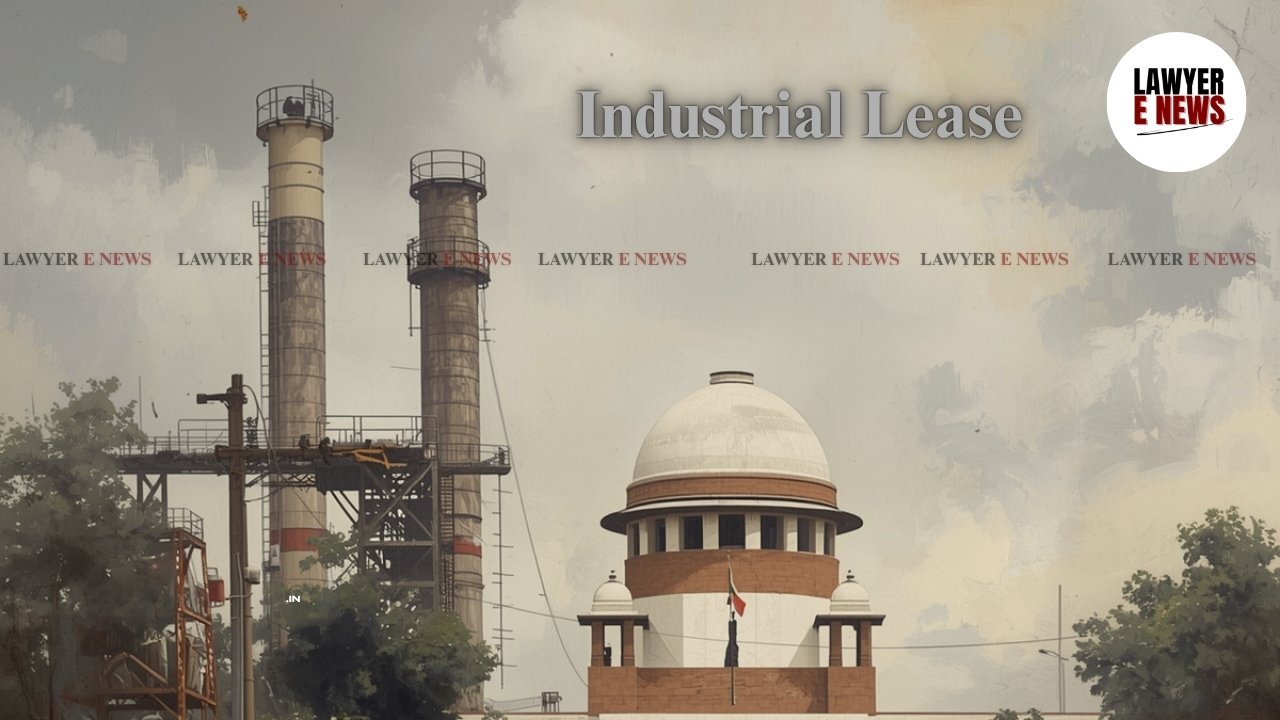
"Appellant-company, being a well-established corporate entity, cannot be allowed to take refuge behind the veil of ignorance, " Supreme Court, in a significant ruling dated April 06, 2026, held that the core purpose of establishing industrial areas is defeated if allottees keep large tracts of subsidised land unutilised for years.
A bench of Justices Vikram Nath, Sandeep Mehta, and N.V. Anjaria upheld the cancellation of a 33-acre industrial plot allotted to M/s. Piaggio Vehicles Pvt. Ltd. by the Uttar Pradesh State Industrial Development Authority (UPSIDA).
The industrial plot in Surajpur was originally allotted to another entity in 1985 and was officially transferred to Piaggio's predecessor in 2001. A formal lease deed executed in 2002 mandated the construction of an industrial unit within six months, but the company failed to commence production even after six years and ignored multiple compliance notices. Consequently, UPSIDA cancelled the lease and forfeited the premium in August 2008. The Allahabad High Court dismissed Piaggio's writ petition under Article 226 of the Constitution in 2009, prompting the present appeal.
The primary question before the court was whether the cancellation of the lease deed and the refusal of authorities to extend the time for setting up the industrial unit was arbitrary and contrary to the U.P. Industrial Area Development Act, 1976. The court was also called upon to determine whether the appellant-company was entitled to equitable restoration of the plot under the extraordinary jurisdiction of Article 136 of the Constitution of India.
Purpose Of Industrial Corridors
The Court extensively analysed the foundational objectives behind establishing industrial corridors, emphasising that such zones are deliberately created to generate revenue, create employment opportunities, and foster overall economic development. It noted that state authorities provide immense support and public resources to make these projects viable.
"The allottees, in turn, are granted large tracts of land at subsidised rates, supported by infrastructural developments intended to transform the area into a wholesome productive industrial hub," the bench observed.
Strict Compliance With Lease Terms Mandated
To achieve these salutary objectives, the Court stressed that allottees are strictly mandated to comply with the terms and conditions of their allotment, particularly the timebound schedules for project implementation. The bench carefully perused Clauses 3(e) and 3(o) of the lease deed executed in March 2002, which explicitly required the lessee to put the demised premises to industrial use within six calendar months.
No Concrete Steps Taken By Appellant
Evaluating the appellant's conduct, the Court found that from 2001 until the cancellation in 2008, the company completely failed to demonstrate any bona fide intent to establish a full-scale manufacturing unit. The bench rejected the company's claim of having operated a testing facility in the pre-existing structures, noting that not a single new brick was laid by Piaggio on the subject land.
Corporate Entity Cannot Feign Ignorance
During the hearings, the appellant conceded that it did not possess an approved layout plan for the construction, yet argued that it must have been submitted to authorities for other basic clearances. The Court found this submission to be entirely fallacious and legally untenable.
"The appellant-company, being a well-established corporate entity, cannot be allowed to take refuge behind the veil of ignorance," the Court sharply remarked.
Intentional Evasion Of Extension Conditions
The bench thoroughly examined the correspondence between UPSIDA and the appellant regarding the requests for a time extension. It observed that UPSIDA had conditionally offered an extension subject to the payment of fees and the submission of an affidavit in a strictly prescribed format. The appellant not only delayed the fee payment but deliberately submitted an affidavit that omitted mandatory declarations.
The omitted clauses would have legally bound the company to commence construction within three months and start production within nine months, failing which the plot would be automatically cancelled. The Court noted that this omission was calculated, as the company was undeniably aware it could not start production within the stipulated timeframe.
Equitable Relief Denied For Callous Conduct
Addressing the appellant's plea for discretionary relief and restoration of the plot, the Court ruled that the lackadaisical conduct of the company thoroughly disentitled it from any equitable consideration. The bench highlighted that the company delayed the development of the plot by almost seven years, far exceeding the mandatory six-month period prescribed under the lease.
"Equities cannot work in favour of the litigants whose conduct is callous, laconic and in clear violation of the applicable rules and regulations."
Courts Loath To Interfere In Commercial Decisions
The appellant had strongly urged that as a premier electric vehicle manufacturer, it should be granted the plot under the State's Electric Vehicle Policy, even offering to pay over Rs 10 crores in outstanding dues. The Court rebuffed this argument, noting UPSIDA's submission that plots of similar measurement in the Surajpur industrial area were now fetching auction revenues of nearly Rs 300 crores.
The bench concluded that the decision to grant an industrial plot at a concessional rate is entirely within the policy domain of the State Government. The Court emphatically stated that in exercising its extraordinary jurisdiction under Article 136, it would be loath to substitute its own discretion for the commercial wisdom of the State authorities.
The Supreme Court dismissed the appeal, finding no error or infirmity in the High Court's judgment warranting interference. The appellant was directed to hand over vacant and peaceful possession of the subject plot to UPSIDA within thirty days. Concurrently, the Court ordered that the Rs 10.95 crore deposit made by the company in the Supreme Court Registry be refunded along with accrued interest.
Date of Decision: 06 April 2026