-
by sayum
14 August 2026 3:21 PM







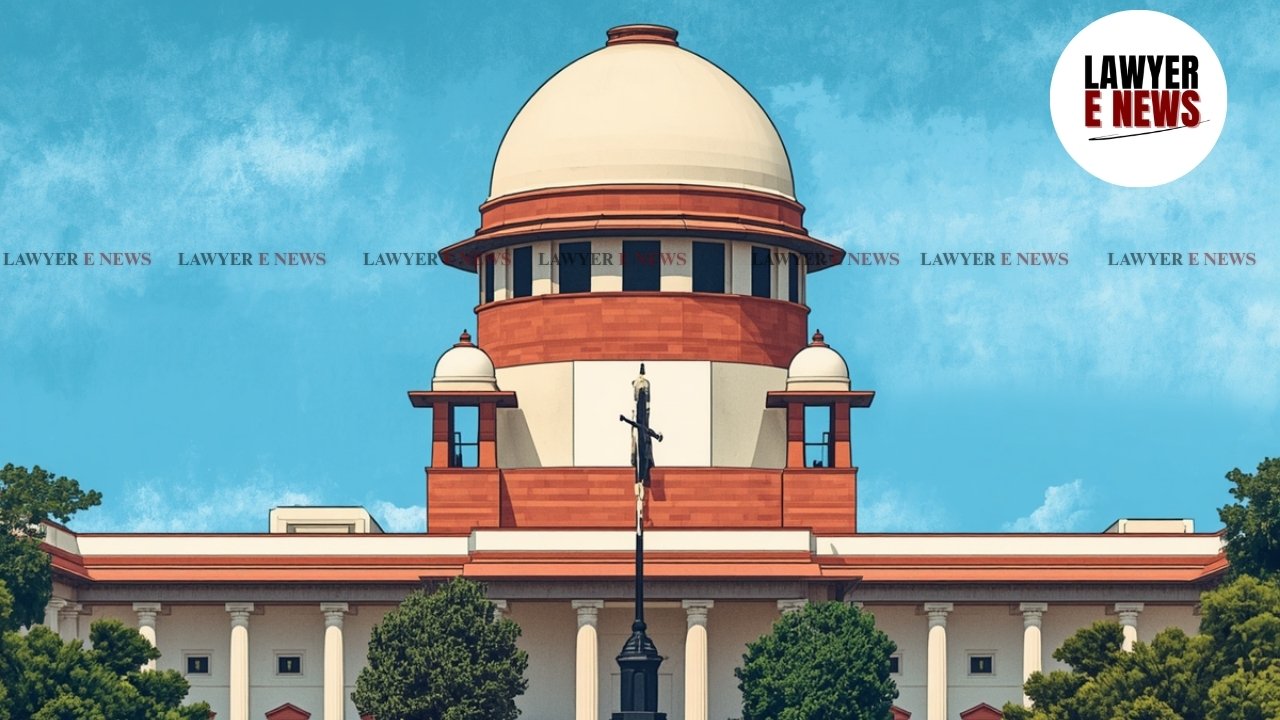
"The stipulation for refund operates as a deterrent reinforcing the obligation to perform, and not as a substitute for it. It protects the purchaser’s minimum entitlement in the event of default, without in any manner curtailing his right to insist upon performance." Supreme Court, in a significant ruling dated July 14, 2026, held that the mere absence of an express clause enabling enforcement through a court in an Agreement to Sell does not bar the relief of specific performance.
A bench of Justices K.V. Viswanathan and Alok Aradhe observed that such clauses often act as deterrents rather than alternatives to performance. The Court clarified that unless the contract provides an express option to pay a sum in lieu of performance, specific performance remains an available remedy under the Specific Relief Act, 1963.
The dispute arose from an Agreement to Sell dated June 22, 2003, where the appellant sought to purchase an undivided half share of factory land in Jalandhar from the respondent for Rs. 12.5 lakh. After paying substantial earnest money and securing extensions, the appellant filed a suit for specific performance when the respondent failed to execute the sale deed. While the Trial Court granted only a refund of earnest money, the First Appellate Court decreed specific performance, which was subsequently reversed by the High Court of Punjab & Haryana.
The primary question before the court was whether the absence of an express enforcement clause and the presence of an earnest money refund clause barred a decree for specific performance. The court also examined the scope of a High Court’s jurisdiction under Section 100 of the CPC to disturb concurrent findings of fact regarding the genuineness of a transaction.
Earnest Money Refund Clause Is A Deterrent, Not An Option To Walk Away
The Court addressed the High Court's reasoning that the absence of an express enforcement clause allowed the respondent to "walk away" by merely refunding the earnest money. The bench noted that the clause in question provided for a refund if the deed could not be executed for "certain reasons," which the High Court misconstrued as an elective option for the seller.
The bench emphasized that such a construction cannot be sustained on the plain terms of the agreement or the settled position of law. It observed that the stipulation for refund protects the purchaser's minimum entitlement without curtailing the right to insist upon the actual performance of the contract.
Principles Under Section 23 Of The Specific Relief Act 1963
Relying on Section 23 of the Specific Relief Act, 1963, the Court explained that a contract may be specifically enforced even if a sum is named as payable in case of breach. The provision, which re-enacts principles from the 1877 Act, states that specific performance is the rule unless the court is satisfied the sum was intended as an alternative to performance.
The Court referred to Sir Edward Fry’s "Treatise on the Specific Performance of Contracts" to distinguish between sums intended as penalties to secure performance and those intended as an "election" to pay money instead of performing. The bench noted that the respondent had received a substantial part of the consideration and twice extended the time for execution, reinforcing the obligation to perform.
High Court Transgressed Limits Of Section 100 CPC By Re-Appreciating Evidence
The Supreme Court found that the High Court had improperly interfered with concurrent findings of fact regarding the execution of the agreement and the appellant's readiness and willingness. It noted that the First Appellate Court is the final court of fact and its findings cannot be disturbed in a second appeal merely because a different view is possible.
The bench observed that the High Court displaced the findings on the genuineness of the transaction without recording any finding of perversity. This exercise was deemed impermissible in law, as the High Court reopened findings of fact that were conclusively established by the lower courts.
"A transfer of an undivided share is a legally recognised and enforceable transaction in its own right, the only consequence being that the transferee’s remedy for actual enjoyment of the property lies in a suit for partition."
Undivided Share In Joint Property Is A Valid Subject Of Sale
The Court rejected the High Court’s suspicion regarding the genuineness of the transaction based on the property being an undivided share. The bench clarified that a co-owner’s share is a valid and marketable subject matter of transfer and does not require the consent or signature of other co-sharers to be genuine.
The High Court had erred by treating joint ownership as a circumstance casting doubt on the transaction. The Supreme Court reiterated that any issue regarding the mode of enjoyment or actual possession following the decree has no bearing on the enforceability of the underlying Agreement to Sell itself.
Suppression Of Collateral Transaction Does Not Prove Fraud
The bench also addressed the respondent's plea of fraud, which alleged that signatures were obtained on blank papers for travel documentation. The Court noted that the respondent failed to produce any expert evidence to prove superimposition and admitted his signatures on three separate documents executed over several years.
The Court held that the suppression of a peripheral financial transaction in the plaint might affect the appellant's credibility on that specific matter but does not establish fraud regarding the main agreement. It observed that an omission bearing on a collateral transaction cannot replace the positive proof of fraud required by law.
The Supreme Court concluded that the High Court exceeded its jurisdiction under Section 100 CPC and misinterpreted the earnest money clause. The bench set aside the High Court's judgment and restored the decree for specific performance passed by the First Appellate Court. The appeals were allowed with no order as to costs, ensuring the appellant's right to the property was upheld.
Date of Decision: July 14, 2026