-
by sayum
25 August 2026 11:12 PM







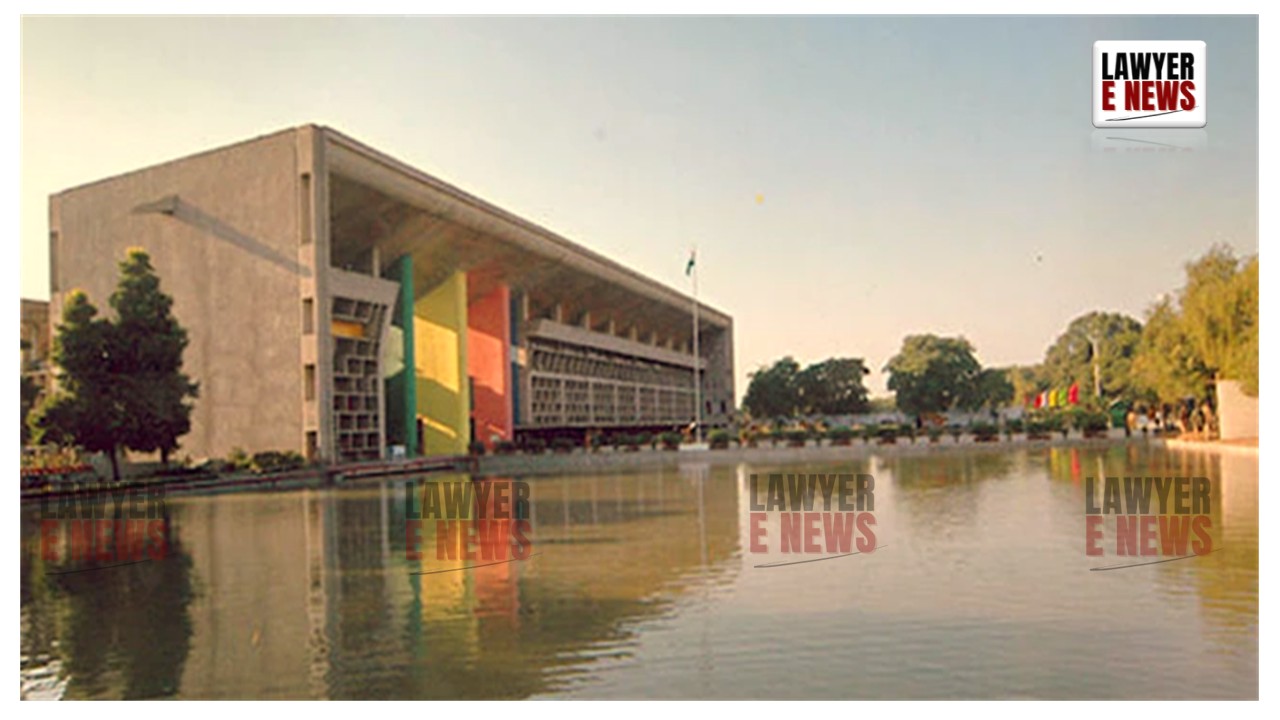
In a significant ruling Punjab & Haryana High Court dismissed an appeal seeking a letter of administration on the basis of an unregistered Will, upholding the decision of the Additional District Judge, Chandigarh. The Court ruled that "a Will is a solemn document that must stand judicial scrutiny, and mere admission of signatures does not establish its validity, especially when suspicious circumstances surround its execution."
Rejecting the appellant’s claim that his late father, Col. Sarwan Singh Dhaliwal, executed a Will in his favor, the Court found that "the attesting witness was unreliable, his testimony contradicted prior statements, and the propounder failed to dispel doubts about the authenticity of the document."
"A Will Must Be Proved With Unimpeachable Evidence" – High Court Dismisses Untrustworthy Witness
The appellant relied on an unregistered Will allegedly executed on January 26, 1990, claiming that his father had signed it in the presence of two attesting witnesses. The Court found the testimony of Malkiat Singh, one of the attesting witnesses, unreliable, noting that "for a Will to be accepted, the attesting witness must be truthful and consistent. In this case, Malkiat Singh’s testimony was riddled with contradictions, casting serious doubt on the legitimacy of the Will."
Examining the evidence, the Court observed that "Malkiat Singh provided conflicting statements regarding the execution of the Will and had earlier made contradictory declarations in a separate civil case at Patiala. A witness who contradicts himself on material facts cannot be relied upon to prove the authenticity of a Will."
Referring to Supreme Court precedents, the Court ruled that "a Will must be proved like any other document, satisfying a prudent mind beyond all doubt. When the attesting witness is found to be unreliable, the very foundation of the Will collapses."
"Suspicious Circumstances Cannot Be Ignored" – High Court Questions the Genuineness of the Will
The Court emphasized that "when a Will is surrounded by suspicious circumstances, the burden on the propounder increases significantly. A shaky signature, unnatural disposition of property, or the exclusion of legal heirs without clear reasoning raises legitimate doubts that must be addressed before probate can be granted."
Examining the facts, the Court found that "the execution of the Will was not supported by independent corroboration, and the alleged bequests conflicted with a prior settlement among the legal heirs. These factors create a strong presumption against its validity."
The Court further noted that "if a Will is to override natural succession, it must be free from doubt, and its execution must be demonstrated with certainty. In this case, the appellant failed to clear the cloud of suspicion surrounding the document."
"Natural Succession Prevails When a Will is Unreliable" – High Court Highlights Prior Property Settlement
The Court took judicial notice of a compromise decree passed by the Civil Judge (Junior Division), Patiala, in 2015, which settled inheritance rights among the legal heirs. The appellant’s claim that the disputed properties were exclusively bequeathed to him was inconsistent with the prior agreement that distributed the estate among all heirs.
Observing that "the conduct of the parties reflects acceptance of natural succession over the terms of the Will," the Court held that "when the legal heirs themselves acknowledge inheritance through mutual settlement, an unregistered Will with questionable execution cannot override such understanding."
"A Will That Fails to Inspire Confidence Must Be Rejected" – High Court Refuses Letter of Administration
Dismissing the appeal, the High Court ruled that "mere admission of signatures does not validate a Will. The propounder must establish that the testator executed it with full knowledge and free will, which has not been demonstrated in this case."
Emphasizing that "a Will must stand the test of judicial conscience before it can override natural inheritance rights," the Court concluded that "when key witnesses contradict themselves, and the bequests appear unnatural, probate cannot be granted merely on the strength of a disputed document."
The Punjab & Haryana High Court has reaffirmed that "suspicious circumstances surrounding a Will must be dispelled before it can be given legal effect. A Will that fails to inspire confidence in the Court cannot be relied upon to disrupt the natural order of succession."
By rejecting an untrustworthy witness and highlighting inconsistencies in the appellant’s claims, the Court has ensured that "fraudulent or dubious Wills do not deprive rightful heirs of their inheritance." This ruling sets a strong precedent for succession disputes, emphasizing that probate courts must scrutinize Wills with the highest degree of caution.
Date of Decision: 17 February 2025