-
by sayum
20 October 2026 1:07 PM







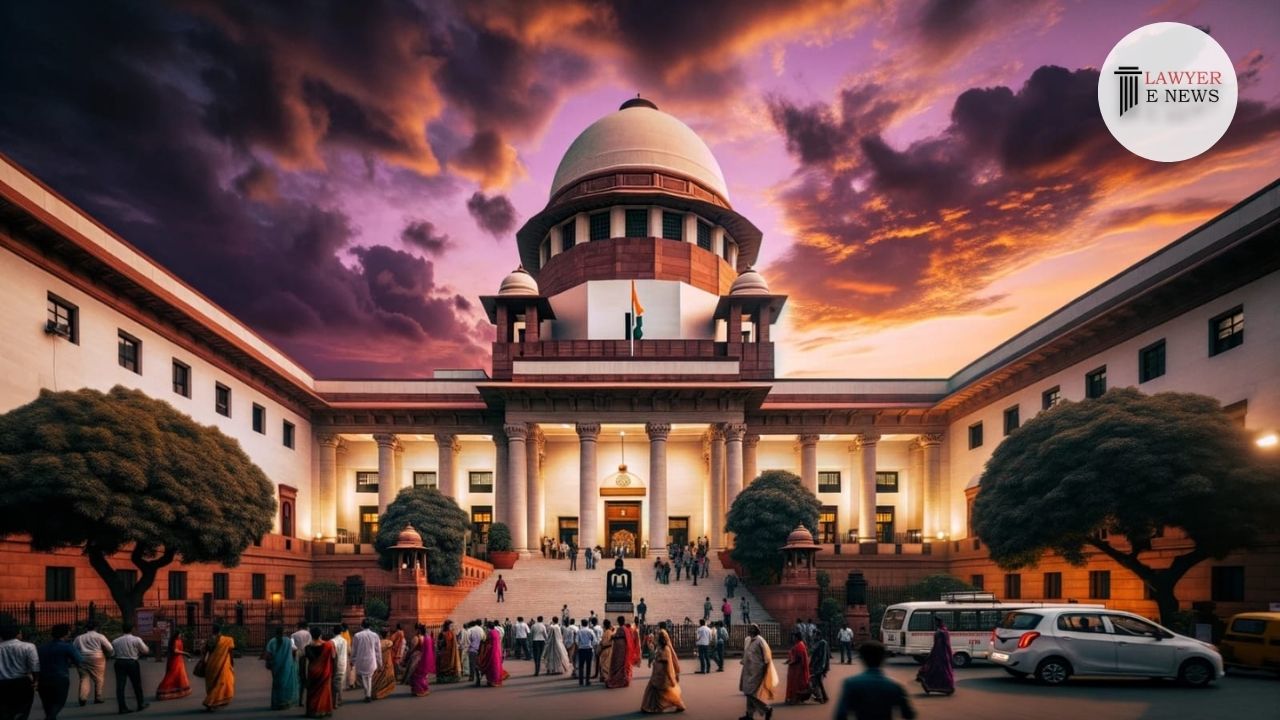
In a landmark judgment, the Supreme Court of India has taken a compassionate approach in a civil appeal related to motor accident compensation. The apex court invoked Article 142 of the Constitution to direct an insurance company to pay compensation to the claimant, despite the trailer involved in the accident being uninsured.
The appellant, a 20-year-old laborer identified as Dhondubai, suffered severe injuries resulting in the amputation of her left lower limb in a road accident involving a tractor and a trailer. While the tractor was insured, the trailer was not. The initial compensation was awarded by the Motor Accidents Claim Tribunal (MACT) and was later enhanced by the High Court. However, the High Court exonerated the insurance company, stating that it had no liability as the trailer was not insured.
The Supreme Court, under the bench comprising Hon'ble Mr. Justice A.S. Bopanna and Hon'ble Mr. Justice Prashant Kumar Mishra, questioned whether the Court should exercise its power under Article 142 of the Constitution to direct the Insurance Company to pay the compensation.
The judgment read: "In such circumstance, it would not be possible for the claimant to recover the amount from the owner. Therefore, in that circumstance, we direct that the respondent-Insurance Company shall pay the amount awarded by the High Court as compensation with the accrued interest and recover the same from the owner of the vehicle."
The Court took note of the claimant's young age and the life-altering consequences of her injuries, including "prejudice to the marriage prospects and to lead a normal life."
The Court relied on a similar case, Oriental Insurance Company Ltd. Vs. Brij Mohan & Ors., to make its decision. In that case, the Court had invoked Article 142 considering the difficult circumstances faced by the claimant.
This judgment is likely to set a precedent for future cases involving uninsured vehicles and opens up avenues for a more compassionate approach to justice, where circumstances warrant it.
The Court directed that the amount should be deposited before the MACT within six weeks from the date of receipt of a copy of this judgment, and then disbursed to the claimant.
Legal experts suggest this judgment will have long-lasting effects on how courts view insurance liability and compensation in motor accident cases.
Date of Decision: 28-08-2023
DHONDUBAI vs HANMANTAPPA BANDAPPA GANDIGUDE