-
by sayum
27 August 2026 3:32 PM







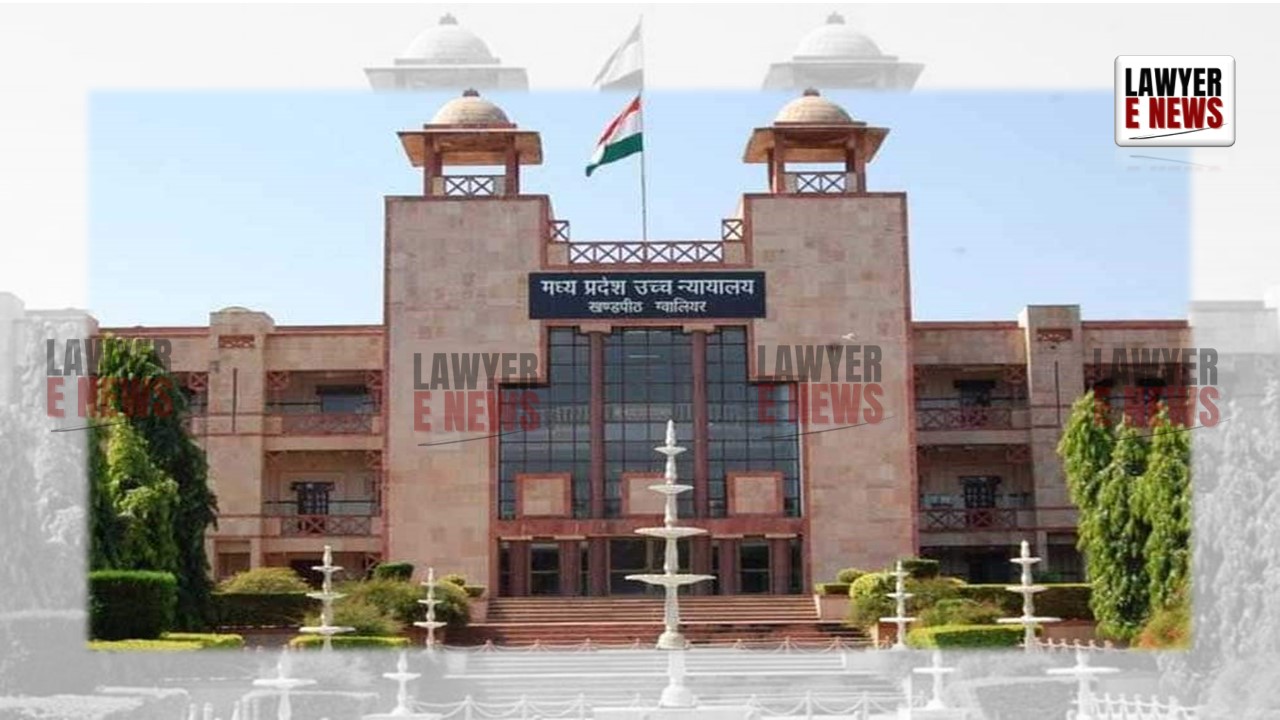
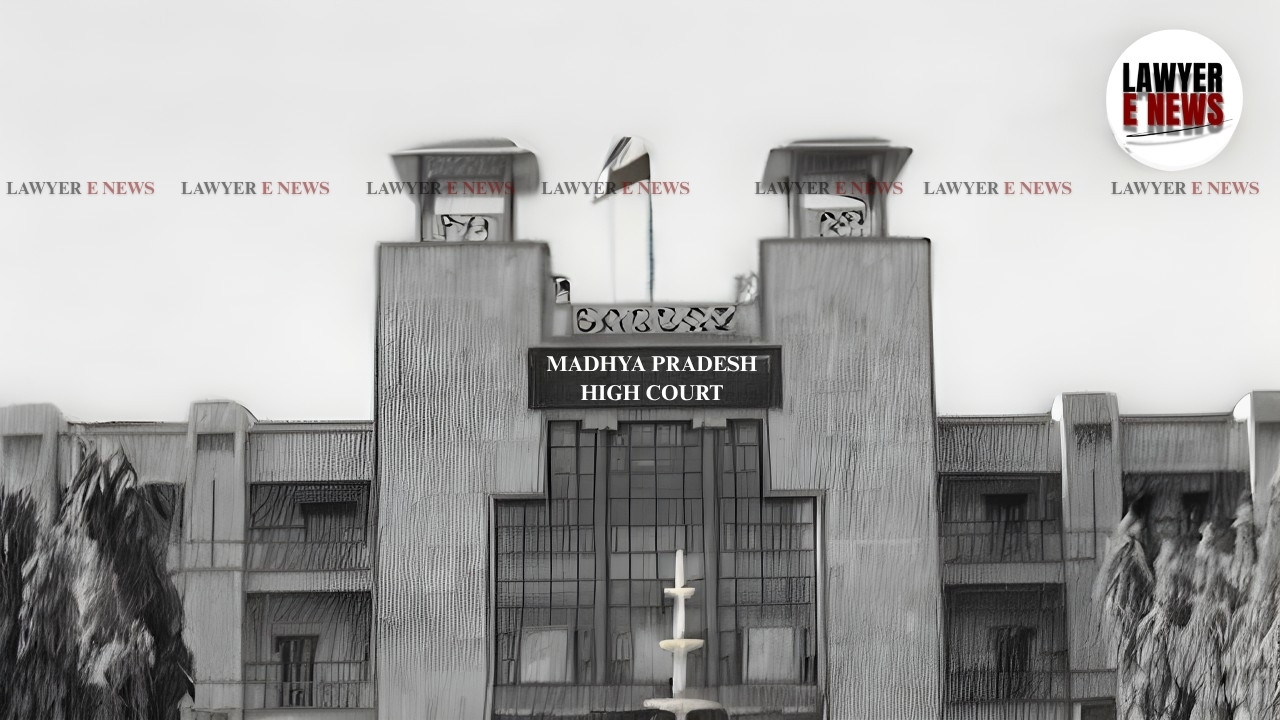
"A truthful and reliable dying declaration may form the sole basis of conviction, even though it is not corroborated... the percentage and degree of burns would not, by itself, be decisive of the credibility of dying declaration." Madhya Pradesh High Court, in a significant ruling, held that a dying declaration can form the sole basis for conviction if it is found to be voluntary, truthful, and coherent, even without corroboration.
A bench of Justice G.S. Ahluwalia and Justice Pushpendra Yadav observed that the requirement of a doctor’s fitness certificate is a "rule of caution" rather than a mandatory condition. The Court emphasized that the mental state of a declarant depends on the degree of burns rather than the mere surface area affected.
The appellant, Charanjeet, was convicted under Section 302 IPC for the murder of his wife, Priya Dhanuk, whom he allegedly set on fire after pouring kerosene oil on her on December 4, 2013. The deceased survived for five days with 90% burn injuries and provided two consistent dying declarations before succumbing to her injuries. The appellant challenged the Trial Court's life imprisonment sentence, arguing that the deceased was not in a fit state of mind and that the death was an accident caused by a bursting stove.
The primary question before the Court was whether a person with 90% burn injuries is capable of making a coherent and voluntary dying declaration. The Court was also called upon to determine if a conviction could be sustained solely on dying declarations when the parents of the deceased and other independent witnesses had turned hostile during the trial. Finally, the Court examined whether the non-explanation of incriminating circumstances by the accused under Section 313 CrPC prejudiced the trial.
Legal Validity Of Dying Declarations Without Corroboration
The Court reiterated the established legal principle that a dying declaration is admissible on the principle of necessity and carries great weight because a person on their deathbed is unlikely to speak falsely. The bench noted that if the court, upon strict scrutiny, finds the statement to be reliable and free from blemish, there is no rule of law requiring independent corroboration.
The judges observed that the law does not provide for a prescribed format or procedure for recording such declarations. What is essentially required is the satisfaction of the person recording the statement that the maker was in a fit state of mind. The bench emphasized that while a Magistrate's presence is preferred for authenticity, the absence of a doctor's certificate is not fatal if the recorder is satisfied with the declarant's mental condition.
"The situation in which a man is on the deathbed is so solemn and serene, is the reason in law to accept the veracity of his statement. It is for this reason the requirements of oath and cross-examination are dispensed with."
Percentage Of Burns vs. Degree Of Burns
Addressing the appellant's contention that 90% burn injuries rendered the deceased incapable of speaking, the Court relied on Modi’s Medical Jurisprudence to distinguish between the extent of superficial burns and the degree of depth. The Court held that a person suffering from extensive burns is not necessarily reduced to a state of unconsciousness or mental impairment.
The bench noted that it is the degree of burn—ranging from simple redness to deep muscle and bone charring—that affects the state of mind. Since the medical evidence showed the deceased remained conscious and coherent, her 90% burn status did not invalidate her statements. The bench observed that physical injuries alone are not determinative of mental fitness.
"It is not the extent of superficial burn which effects the state of mind of the patient, but it is the degree of burn which effects the state of mind of the patient."
Rejection Of The Accidental Stove Burst Theory
The Court meticulously examined the spot map and seizure memos to evaluate the appellant's defense that the deceased died due to a stove burst. The bench found that no kerosene oil was present on the floor or walls of the kitchen, which would be expected if a pressurized stove had actually burst. Furthermore, the stove was found outside the kitchen while its pump and washer were found inside.
The bench concluded that the theory of a stove burst was a fabrication aimed at creating false evidence. The Court noted that the burnt pieces of the deceased's clothing were found in the bedroom, not the kitchen, further undermining the accident theory. The absence of any burn injuries on the appellant’s hands suggested he made no attempt to save his wife, which is inconsistent with an accidental fire.
"Theory of bursting of stove as projected by the appellant, is not supported by any circumstance found on the spot... The factum of giving an information about their presence in police station, Behat itself is a suspicious circumstance."
Section 106 Evidence Act And Conduct Of The Accused
The Court highlighted the appellant’s failure to explain how his wife suffered burn injuries within the privacy of their home, a fact within his special knowledge under Section 106 of the Evidence Act. The bench observed that the appellant’s immediate abscondence and the fact that he did not take his wife to the hospital were critical links in the chain of circumstantial evidence.
While acknowledging that absconding by itself is not conclusive proof of guilt, the Court held that when coupled with other circumstances, it assumes significant importance. The appellant's failure to offer any explanation for his absence during such a tragedy pointed toward a guilty mind.
Scope Of Section 313 CrPC and Exclusion Of Evidence
The Court addressed a procedural lapse where the Forensic Science Laboratory (FSL) report was not put to the appellant during his examination under Section 313 CrPC. The bench held that since the appellant was not given an opportunity to explain the findings of the FSL report, that specific piece of evidence must be excluded from consideration to avoid prejudice.
However, the Court clarified that the omission to question the appellant specifically about his abscondence did not vitiate the trial. Since the appellant had already raised a plea of alibi and attempted to explain his whereabouts, no prejudice or miscarriage of justice was established by the omission.
"A conviction based on the accused’s failure to explain what he was never asked to explain is bad in law... However, where such an omission has occurred it does not ipso facto vitiate the proceedings."
Refusal To Convert Charge To Culpable Homicide
The Court rejected the appellant's plea to convert the conviction from murder to culpable homicide not amounting to murder. The bench held that pouring kerosene and setting a person ablaze demonstrates a clear intention to cause death in a gruesome manner. The lack of repentance and the failure to attempt to extinguish the fire further solidified the intent required for a murder conviction under Section 302 IPC.
The High Court dismissed the appeal and affirmed the life imprisonment sentence. The Court concluded that the two consistent dying declarations, recorded by a doctor and a Tahsildar respectively, were reliable and sufficient to prove the appellant's guilt beyond reasonable doubt despite the hostility of the victim's family members.
Date of Decision: 16 April 2026