-
by sayum
21 October 2026 5:27 PM







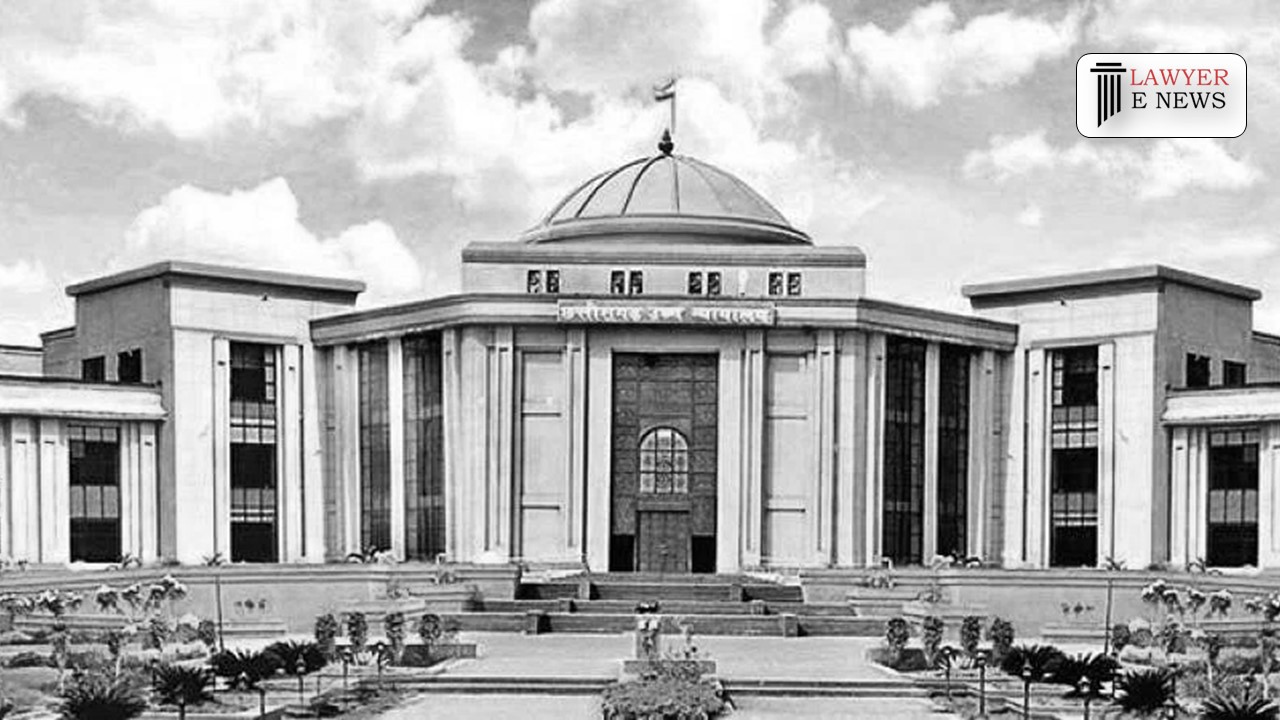
The Chhattisgarh High Court has ruled that a widowed daughter-in-law may claim maintenance from her father-in-law if the latter is in possession of estates or coparcenary properties in which the widowed daughter-in-husband law's had rights and interests. A Division Bench of Justices Goutam Bhaduri and Deepak Kumar Tiwari reaffirmed, "It is a well-established principle of law that the manager of a joint Mitakshara family is required by law to maintain all male members of the family, their wives, and their children, and on the death of one of the male members, he is required to maintain his widow and his children."
On July 11, 2008, the respondent married the son of the appellant. The respondent's husband passed away on June 21, 2012. According to the respondent, there was a significant change in the behaviour of her in-laws towards her after the death of her husband, and she was nearly abandoned by her family. She was subsequently transported to her parents' residence.
The respondent further argued that her husband's bank passbook and ATM card were retained by her in-laws. The respondent also asserted that the appellant owned 11.78 acres of ancestral property and 3.97 acres of agricultural land. Additionally, her late husband's rights are vested in three shops and a house located in different locations. According to the respondent, she lacked a source of income to support herself; therefore, Rs 7,000 per month was requested for her maintenance.
In the impugned order, the family court evaluated the evidence and ordered the appellant to pay Rs. 2,500 per month for the maintenance of the respondent. As a result, the appellant filed an appeal against the aforementioned order.
Mr. Sanjay Patel, counsel for the appellant, argued that in order to receive maintenance from the father-in-law, the daughter-in-law must demonstrate that she has no source of income and is unable to receive maintenance from her husband's estate. He argued that the respondent failed to prove these facts with credible and persuasive evidence.
In addition, he argued that the document filed under Order 41 Rule 27 of the CPC before the High Court demonstrates that the respondent's name is already recorded on the land titles. Therefore, it was suggested that she can support herself with these properties, and the father-in-law cannot be compelled to pay maintenance. In support of his position, he cited the Chhattisgarh High Court's decisions in Dayali Sukhlal Sahu v. Anju Bai Santosh Sahu, 2010 (3) CGLJ 459 and Parwati v. Danpatra Singh and Others.
Mr. Sourabh Sahu, the respondent's attorney, argued that the respondent is unable to support herself and that the property held by the appellant as a manager is a coparcenary property in which the respondent's deceased husband's right was vested. Since the amount of maintenance was not paid from her husband's estate, he argued that she was entitled to receive maintenance from her father-in-law.
According to Section 19 of the Hindu Adoptions and Maintenance Act of 1956, a widowed daughter-in-law can only claim maintenance if she is unable to support herself through her own earnings, the estate of her husband or her father or mother, or from her son or daughter, if any, or his or her estate. The right of a widowed daughter-in-law to receive maintenance is contingent.
The Court also clarified that the father-in-law who is in possession of coparcenary property in which the widowed daughter-in-law has no share is entitled to maintenance from him. However, this would only apply to the portion of coparcenary property held by the father-in-law in which the widowed daughter-in-law has not taken a portion.
The Court determined that the widowed daughter-in-law has a preferential right under subsection (1)(a) of section 19 to claim maintenance first from the estate of her deceased husband, and then from her father or mother. Even though the word "or" is used in Section, which allows a widow to claim from either of the people listed in Section, Section is subdivided into parts (a) and (b) (b). Therefore, there are precedents that give widows an option. Consequently, it is evident that the husband's estate has priority over the widow's maintenance claim, the Court added.
"In light of the aforementioned facts and circumstances, when the husband's estate is in the custody of the father-in-law, the daughter-in-law cannot be compelled to leave the husband's estate and follow that of her parents. Therefore, we are of the opinion that the husband's estate has priority over the father or mother of the daughter-in-law. Therefore, we conclude that the daughter-in-law (the respondent in this case) is entitled to maintenance from the father-in-law."
D.D:04-07-2022
Nand Kishore Lal Versus Shrimati Chanchala Lal