-
by sayum
28 August 2026 2:11 PM







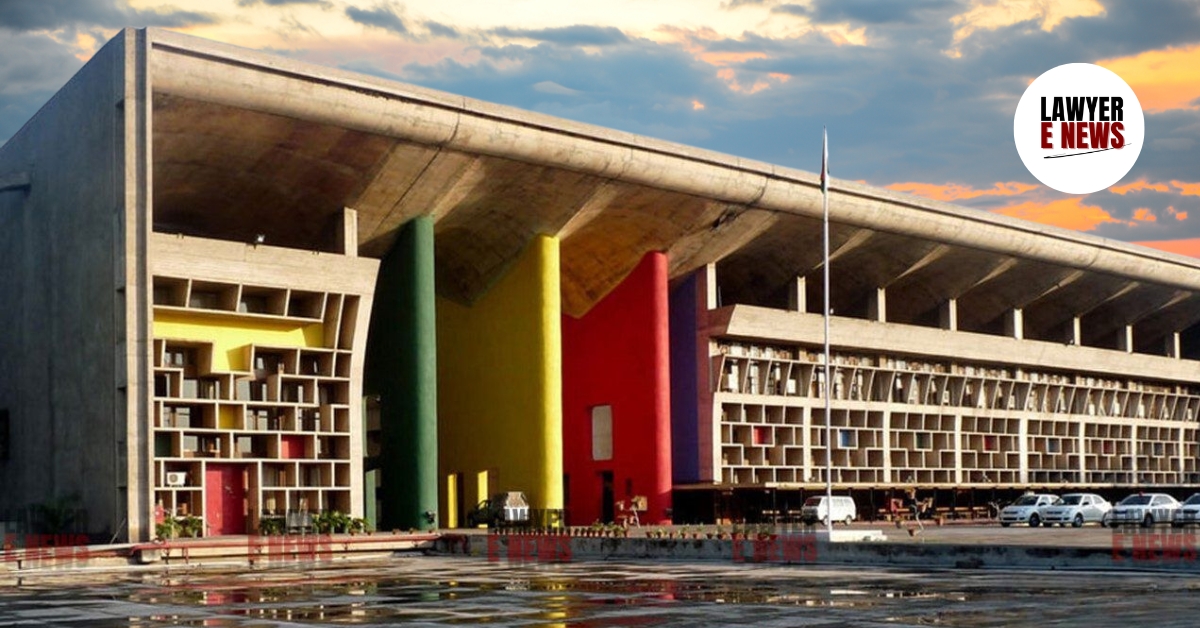
“Documents Cannot Lie, But Witnesses Might” - Punjab & Haryana High Court delivered a significant judgment that underscores the supremacy of documentary precision over oral testimony. Justice Virinder Aggarwal allowed the second appeal, reversing the concurrent findings of the Trial Court and First Appellate Court, which had granted permanent and mandatory injunction to the plaintiffs over a village street allegedly encroached by co-sharers.
Calling the lower courts' reliance on oral evidence “factually inaccurate and legally unsustainable,” the High Court emphasized that “documents cannot lie, but people might.”
“You Cannot Claim More Than What You Were Allotted and Then Cry Encroachment”: High Court Dismantles Plaintiffs’ Claim Based on Self-Contradictory Site Plan
The plaintiffs, successors of a co-sharer in a 4-kanal 4-marla land holding, had claimed that a street marked in red on their site plan (Ex.P1) had been encroached upon by the defendants, affecting their access to agricultural land and a Shamlat area. They relied on a memorandum of partition dated 08.11.1990 (Ex.P2) which they claimed proved their right to the space and the street.
However, the Court found the measurements in Ex.P1 and Ex.P2 irreconcilable. Justice Aggarwal observed:
“According to Ex.P2, the plaintiffs were allotted 17 x 11 Karams, the width being 60.5 feet. But the site plan prepared by the plaintiffs themselves (Ex.P1) shows their house as 68 feet 11 inches wide—this is an excess of over 8.5 feet.”
He further stated:
“Rather than proving encroachment, this discrepancy suggests that the plaintiffs themselves are in possession of more land than they were allotted and cannot turn around to allege obstruction by the defendants.”
“When You Draft a Site Plan That Ignores Your Own Title Document, You Cannot Expect the Court to Turn a Blind Eye”: Court Slams Lack of Evidentiary Fidelity
The Court was sharply critical of the lower courts for failing to reconcile documented dimensions in the memorandum of partition (Ex.P2) with the site plan (Ex.P1), both produced by the plaintiffs.
Justice Aggarwal noted: “A conjoint reading of Ex.P2 and Ex.P1 does not support the allegation that Rishi Ram or Jai Bhagwan encroached upon any portion of the street. The site plan upon which the suit is predicated was prepared without adhering to the foundational document of title.”
“An Oral Partition Memorandum Is Admissible—But You Cannot Selectively Use It to Claim Streets While Ignoring Its Boundaries”: Court Clarifies the Legal Status of Partition Memo
The appellants had also challenged the admissibility of Ex.P2, arguing it was unregistered and thus inadmissible. The Court clarified:
“Ex.P2 merely embodies a memorandum of an oral partition. It does not operate as a formal deed of conveyance requiring registration. Hence, its evidentiary use is valid—but only so long as its contents are consistently relied upon.”
The real issue, the Court emphasized, was not admissibility but selective interpretation: “You cannot rely on Ex.P2 to say a street was left open, and at the same time ignore the precise dimensions of land allotted under the same document.”
“Second Appeal Under Punjab Courts Act Is Not Limited Like Under Section 100 CPC—But Even Then, Perverse Findings Must Be Set Right”: High Court Exercises Corrective Jurisdiction
Justice Aggarwal pointed out that in Punjab and Haryana, a Regular Second Appeal (RSA) lies under Section 41 of the Punjab Courts Act, not under Section 100 CPC. Therefore, the scope is broader, and where gross factual errors or perverse findings exist, the High Court must intervene.
He held: “Both the courts below have failed to appreciate this factual position and relied solely on oral testimonies of witnesses… The findings are perverse and unsustainable.”
Both Lower Court Decrees Annulled, Plaintiffs’ Suit Dismissed
Declaring the judgments of the Trial Court and First Appellate Court as legally erroneous and factually flawed, the High Court allowed the appeal and dismissed the plaintiffs' suit in totality.
Justice Aggarwal concluded: “The concurrent findings and decrees rendered by the Trial Court as well as the First Appellate Court are hereby set aside. The appeal is allowed. The judgments and decrees passed by the Courts below stand vacated and annulled.”
This case is a powerful reaffirmation of a core judicial principle: "Factual precision and documentary consistency are the bedrock of civil adjudication." Oral testimony, however credible it may seem, cannot override the cold logic of measurements, boundaries, and documents signed by the parties themselves.
The High Court’s decision sends a clear message: “Justice cannot be built on a foundation of conflicting documents and speculative claims—especially when the plaintiff’s own papers betray their position.”
Date of Decision: 17 September 2025