-
by sayum
28 August 2026 2:11 PM







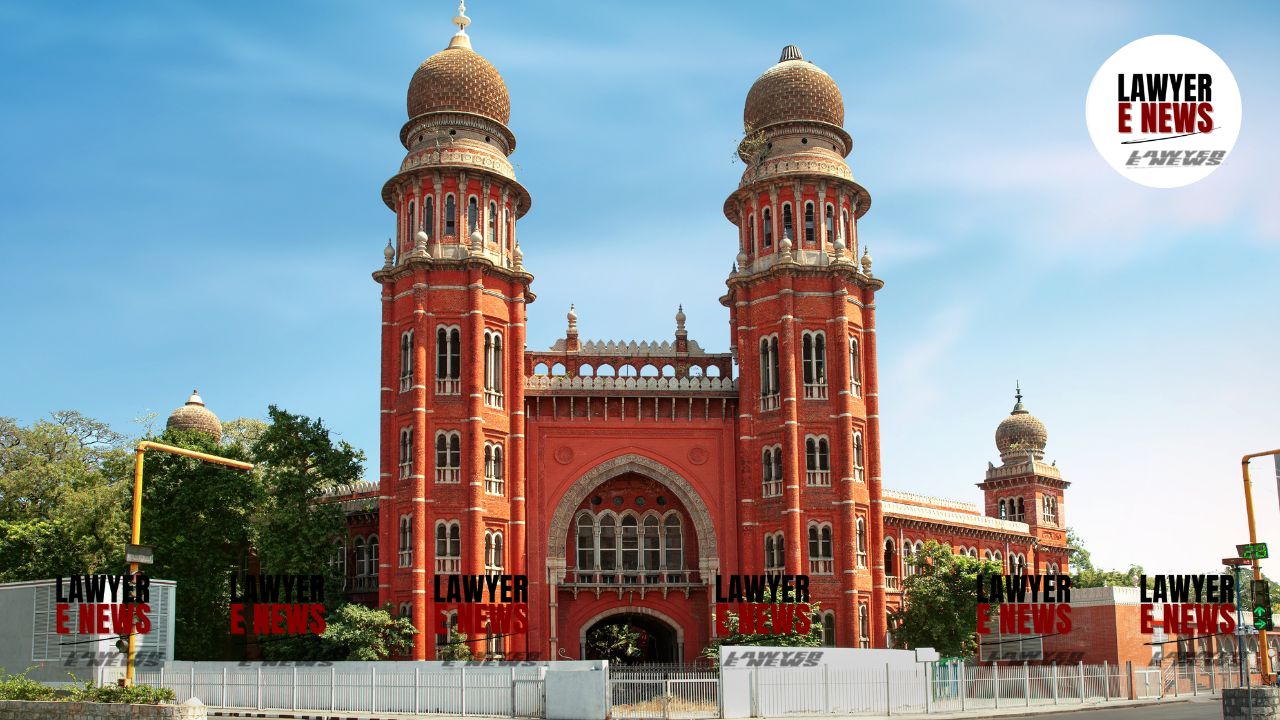
“Department Has Dropped Charges, Approver Has Died, Others Are Cleared—Then Why Drag One Man to Trial?” — Madras High Court quashed criminal proceedings pending for over three decades against a retired Assistant Executive Engineer of the Tamil Nadu Water Supply and Drainage Board (TWAD), holding that continuing the trial when the approver is dead, departmental charges are dropped, and similarly placed co-accused have been discharged, is a clear abuse of process.
Justice M. Nirmal Kumar declared that forcing the petitioner to stand trial now, at the age of 78, on the basis of a long-deceased witness’s statement, “would only amount to judicial harassment in the guise of prosecution.”
“Criminal Law Cannot Be Weaponised to Perpetuate a Case That Died with the Approver”—Court Rejects State’s Plea for Trial
The case arose out of alleged financial irregularities in the Rural Water Supply Scheme executed by the TWAD between 1982 and 1987. Somakumaran, then an Assistant Executive Engineer, was accused of facilitating forged tenders and fictitious payments. The FIR was filed in 1988, but the final charge sheet was submitted only in 2008.
The prosecution hinged entirely on the statement of one K. Elango, a former engineer who turned approver. However, by the time the case came up for trial, Elango had died, and most of the other accused had either been acquitted or had their cases quashed by the High Court—decisions which were upheld by the Supreme Court.
Justice Nirmal Kumar observed:
“The entire case hinges primarily on the statement of the approver, K. Elango. In this case, admittedly, the charges against multiple similarly placed co-accused have already been quashed. The petitioner cannot be singled out.”
“Departmental Exoneration May Not Always End Prosecution—But When Even the Criminal Case Has Lost Its Legs, What’s the Point?”
Though the State argued that departmental proceedings and criminal trials are independent, the Court clarified that where both proceedings collapse on the same evidence base, continuation becomes oppressive.
In this case, the TWAD Board had dropped all departmental charges, accepting the findings of the Enquiry Officer through a formal resolution in 2007. The disciplinary authority found no material to support the allegations against Somakumaran.
Quoting from its earlier decisions, the Court said:
“When no evidence survives except for the statement of a dead approver, and all similarly situated persons are exonerated, the continuation of the trial becomes not only futile but a travesty of justice.”
“Parity Is Not a Technical Doctrine—If All Others Are Cleared, Why Not This Man?”
Rejecting the State's claim that every accused should be treated independently, the High Court strongly affirmed the doctrine of parity. The Court emphasized that the petitioner stood on identical legal footing as his co-accused whose prosecutions were quashed, and there was no factual distinction.
“The petitioner is similarly placed as other Assistant Executive Engineers whose cases have already been quashed. The only distinction is his misfortune of not having approached the Court earlier.”
“A 78-Year-Old Retiree Facing a 37-Year-Old Case with No Surviving Evidence—It Would Be a Cruel Joke to Call This a Trial”
In one of the most striking lines of the judgment, the Court took note of the petitioner’s age and the staggering delay in prosecution:
“The petitioner is now 78 years old, one step short to the grave... There is no material evidence except for the now-deceased approver’s statement. Further prosecution is nothing but harassment.”
The FIR was registered in 1988. The charge sheet was filed two decades later, in 2008. The Court held this delay alone could defeat the prosecution under Article 21 of the Constitution, as it violates the right to a speedy trial.
“Let the Law Not Be a Noose—This Trial Was Dead Before It Began”
Justice Nirmal Kumar ultimately allowed the criminal original petition and quashed the proceedings in Special C.C. No. 27 of 2024 pending before the Chief Judicial Magistrate, Udhagamandalam. A connected petition seeking expeditious trial was declared infructuous.
The Court concluded:
“Continuation of proceedings against the petitioner would serve no purpose. It would only amount to abuse of process of court.”
Date of Decision: 10 September 2025