
-
by sayum
26 August 2026 1:49 PM







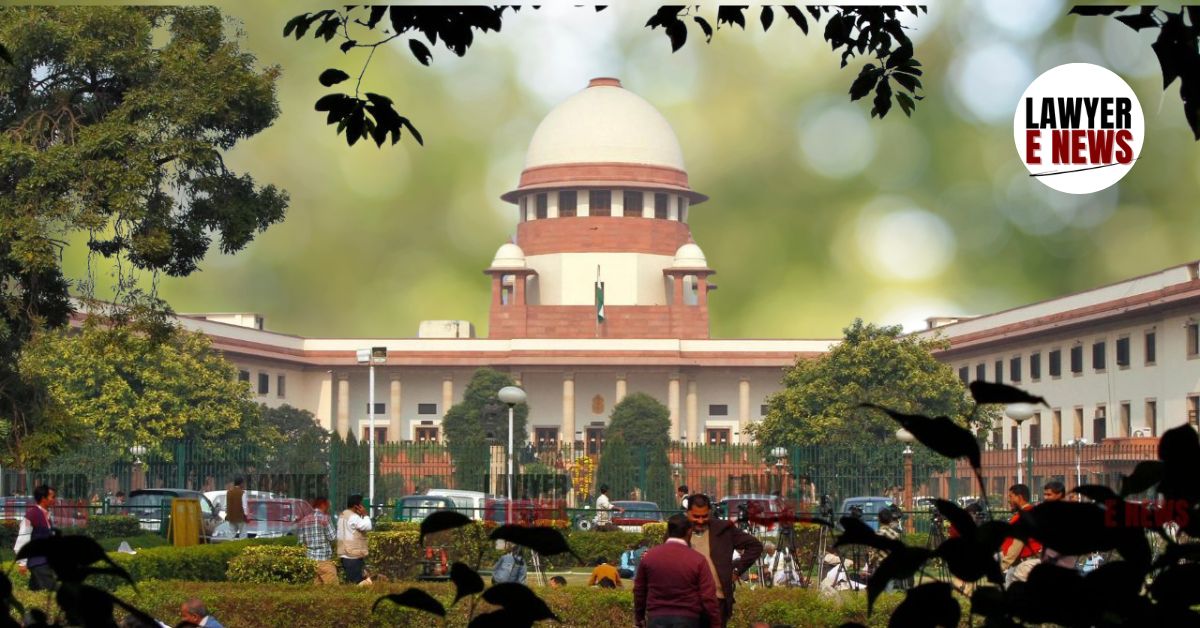
On October 14, 2025, the Supreme Court of India delivered a significant ruling reinforcing the evidentiary weight of a victim's testimony in cases of sexual violence, particularly when the victim is a minor. The two-judge bench comprising Justice Manoj Misra and Justice Vipul M. Pancholi upheld the conviction of the appellant under Sections 363, 366, 376, and 377 of the Indian Penal Code, rejecting his plea against a High Court order that had overturned his acquittal by the trial court.
The apex court held that once the minor's age is established, "her consent becomes legally irrelevant" and a clear, consistent, and detailed testimony of the victim is sufficient to sustain a conviction, even in the absence of conclusive medical proof.
"Victim's Version Is Trustworthy, Consistent, and Makes Her a Sterling Witness" – Court Emphasises Ocular Testimony Over Medical Gaps
In a judgment reinforcing the doctrine that a minor victim’s reliable and cogent deposition can independently form the basis for conviction in rape and unnatural offences, the Supreme Court dismissed an appeal filed by Varun Kumar alias Sonu. The appeal challenged his conviction for kidnapping, raping, and sodomising a 15-year-old girl. The Court affirmed the Himachal Pradesh High Court’s decision that had reversed the trial court's acquittal.
Holding that the victim qualifies as a "sterling witness", the Supreme Court found her account consistent, detailed, and supported by medical observations which, although not conclusive, did not contradict her allegations.
The matter arose from an FIR lodged on 28.02.2007 by the uncle of the victim girl, alleging that his 15-year-old niece was kidnapped. The subsequent investigation led to the addition of charges of rape and unnatural sex against the accused. Varun Kumar was charged under Sections 363, 366, 376, and 377 IPC, while the co-accused (his cousin) was charged under Sections 212 and 368 IPC for sheltering the accused and victim.
After a full trial involving 23 prosecution witnesses, the Sessions Court at Hamirpur acquitted both the accused on 05.12.2007, citing insufficiency of evidence and inconsistencies. The State appealed, and the High Court, vide its judgment dated 18.03.2015 and order dated 08.04.2015, reversed the acquittal of Varun Kumar and sentenced him to 7 years imprisonment and a fine of ₹20,000, with a default sentence of one-year simple imprisonment. The acquittal of the co-accused was upheld.
The Supreme Court was called upon to consider the following core legal questions:
Whether the High Court had correctly exercised its appellate powers in reversing an acquittal?
Whether the victim's testimony, in the absence of conclusive medical evidence, was sufficient to convict the accused?
Whether the inconsistencies alleged by the defence were material enough to discredit the prosecution case?
Reversal of Acquittal — Not Merely a Second Opinion:
The Court noted that the High Court had not simply substituted its own view but had found the trial court’s acquittal to be perverse, granting “undue benefit of doubt” despite “clear and cogent evidence”. The bench reaffirmed the principle that while interference with an acquittal is limited, it is permissible when the lower court’s view is not supported by the evidence:
“The High Court has reappreciated the entire evidence... and found only possible view was conviction... the trial court had given the benefit of doubt despite cogent evidence.”
Credibility of the Victim as a Sterling Witness:
The Court scrutinised the testimony of the minor victim (PW-4) and found no inconsistencies of material nature. Her deposition included a detailed and chronological account of events – from being taken to another city, being housed at the co-accused’s residence, and being subjected to forcible sexual and anal intercourse by the appellant.
The Court observed: “From the evidence given by the victim, we are of the view that the victim can be termed as a sterling witness.”
The term “sterling witness” implies a witness whose testimony is so cogent, consistent, and unimpeached that it alone can form the basis for conviction.
Medical Evidence Not Conclusive But Not Contradictory:
While the appellant argued that the medical reports did not establish rape or sodomy conclusively, the Court pointed out that:
PW-1 (Doctor) testified that the victim “may have undergone sexual intercourse within one week” and that there was “nothing to suggest that sexual intercourse had not taken place.”
PW-2 (Doctor), while stating that no evidence of anal intercourse was found, added that “possibility of sodomy cannot be ruled out.”
Thus, the medical opinion did not contradict the victim’s account, even if it did not decisively corroborate it.
Quoting from the judgment: “Even assuming that the victim had wilfully volunteered to sexual intercourse, this aspect becomes immaterial, as the victim was a minor on the date of the incident in question.”
The Court upheld the High Court’s conviction of the appellant under Sections 363 (Kidnapping), 366 (Abduction to compel marriage or illicit intercourse), 376 (Rape), and 377 (Unnatural offences) of the IPC.
The age of the victim (15 years) was undisputed, and hence, her consent was legally irrelevant.
The Court found no valid reason to interfere with the High Court’s appreciation of evidence and observed:
“Looking at the evidence led by the prosecution before the trial court, the view taken by the High Court was the only possible view.”
Accordingly, the appeal was dismissed, and the sentence of 7 years' imprisonment with ₹20,000 fine, along with one-year default sentence, was affirmed.
The Supreme Court’s judgment underscores the judicial approach in rape cases involving minors, where the testimony of the victim, if found credible and consistent, can form the sole basis for conviction, even in the absence of clinching medical corroboration. It reaffirms the judicial understanding that technical gaps in forensic evidence cannot overshadow truthful and trustworthy ocular testimony, particularly in sexual offence cases where such gaps are common due to delays, stigma, and trauma.
“Medical evidence need not conclusively prove offence if ocular testimony is credible.”
The Court’s reaffirmation of the victim as a “sterling witness” marks a critical assertion of the victim-centric approach in the criminal justice system.
Date of Decision: October 14, 2025





