-
by sayum
28 August 2026 2:11 PM







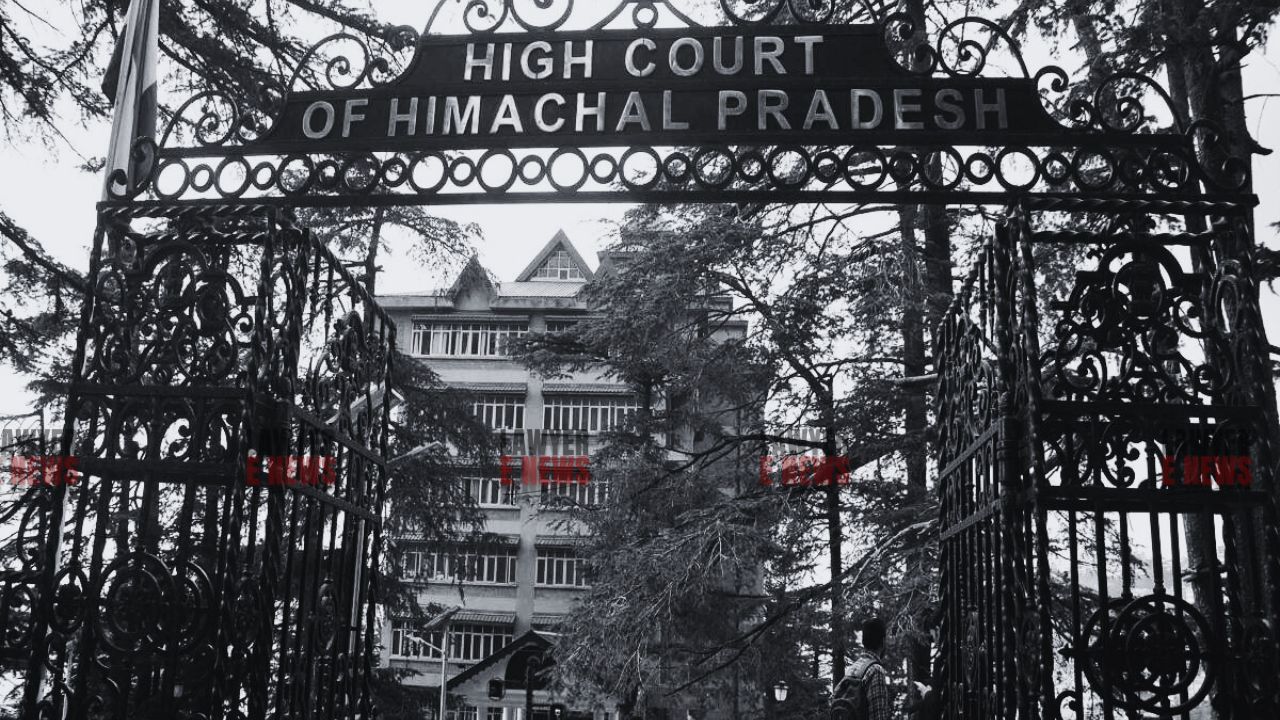
“Presumption Disappears the Moment Defence Proves Doubt—Requiring No Proof of a Negative…..Courts Cannot Blindly Apply Statutory Presumptions—Where Financial Capacity Is Dubious, Presumption Stands Rebutted”, In a detailed judgment High Court of Himachal Pradesh dismissed the complainant’s appeal against acquittal in a case under Section 138 of the Negotiable Instruments Act, 1881 (NI Act), emphatically holding that presumptions under Sections 118(a) and 139 of the NI Act do not override the requirement of proving financial credibility when it is seriously questioned.
Justice Rakesh Kainthla observed that when the complainant’s own evidence cast doubt on his capacity to lend the amount in question, the presumption in favour of the complainant stood displaced. The Court held:
“The moment evidence is led which makes the financial capacity doubtful, the presumption under Sections 118(a) and 139 disappears.”
The Cheque Was Signed—But Could the Complainant Have Given ₹2.5 Lakhs?
The complainant, Sanjeev Sood, filed a complaint asserting that he had loaned ₹2,50,000/- to the accused, Raj Kishore Sharma, who had issued a cheque to repay the debt. The cheque was dishonoured due to insufficient funds, and despite a legal notice, the payment was not made.
The accused admitted issuing the cheque but stated that he had taken only ₹50,000/- and had already repaid ₹30,000/- by deposit and ₹20,000/- in cash. He alleged that the complainant misused a blank cheque that was handed over as security.
Trial Court Had Dismissed the Complaint for Lack of Proof of Financial Capacity
The Trial Court had dismissed the complaint, noting that while the cheque issuance was not denied, the complainant’s financial capacity was suspect. In his cross-examination, the complainant admitted his monthly income was ₹20,000/- and had not produced any documents to show that he had advanced such a large amount. Though he claimed he had mentioned the loan in his income tax returns, he failed to produce a copy of the return.
Justice Kainthla observed: “The amount of ₹2,50,000/- was significant for a person with ₹20,000/- monthly income. It was not unreasonable for the Trial Court to insist on proof of capacity to lend such a sum.”
“Presumption Is Not a Cloak for Concealment—It Does Not Survive Cross-Examination”
Refusing to overturn the Trial Court’s decision, the High Court emphasized: “There is no dispute that a presumption arises by the admission of the signature on the cheque under the NI Act. However, the presumption is rebuttable, and the moment evidence is led, the presumption would stand rebutted.”
The Court relied on the Supreme Court’s ruling in Rajesh Jain v. Ajay Singh, (2023) 10 SCC 148, where it was held: “The presumption applies in the absence of evidence and disappears after the evidence is produced.”
Justice Kainthla reasoned that the cross-examination alone, in which the complainant failed to explain how he could afford such a loan, was enough to shift the burden back to the complainant, which he failed to discharge.
Financial Capacity is a Valid Defence—Accused Need Not Prove a Negative
The Court fortified its conclusions by citing the binding precedent in Tedhi Singh v. Narayan Dass Mahant, (2022) 6 SCC 735, where the Supreme Court held:
“The accused has the right to demonstrate that the complainant did not have the financial capacity to advance the loan… through cross-examination, independent material or complainant’s own documents.”
Similarly, in Basalingappa v. Mudibasappa, the Supreme Court had ruled that: “When financial capacity is seriously questioned, it is incumbent upon the complainant to explain it.”
In the present case, the complainant did not offer any such explanation or supporting documents.
“Acquittal Comes With Double Presumption—High Court Should Not Interfere Unless Finding Is Perversely Unreasonable”
The High Court reaffirmed its limited role in interfering with acquittals. Quoting Surendra Singh v. State of Uttarakhand, the Court stated: “There is a double presumption of innocence in favour of the accused—first from the law and second from the acquittal by the trial court.”
The Court reiterated that appellate interference is warranted only if the judgment is perverse or unsupported by material evidence, which was not the case here.
"Appeal Fails—Trial Court Took a Reasonable View Based on Totality of Evidence"
Dismissing the appeal, Justice Kainthla concluded “The learned Trial Court had taken a reasonable view while acquitting the accused, and this Court will not interfere with it while deciding an appeal against acquittal.
Date of Decision: 9 September 2025