-
by sayum
24 August 2026 10:50 AM







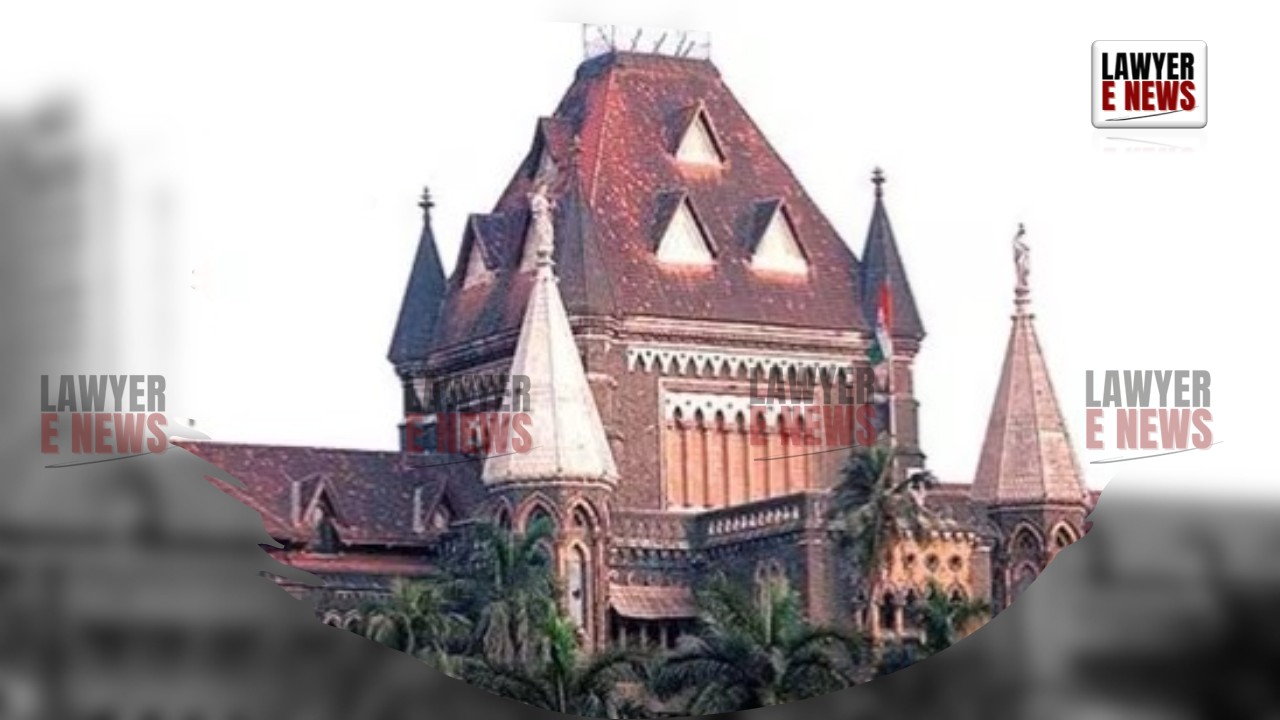
"Each Month's Default is a Fresh Cause of Action – Maintenance Dues are a Continuing Breach, Not Defeated by Passage of Time", Bombay High Court delivered a decisive ruling in Aspandiar Rashid Irani & Gustad Rashid Irani v. Pasayadan Cooperative Housing Society Ltd. & Ors., dismissing a group of writ petitions that sought to challenge the issuance of recovery certificates for unpaid maintenance charges dating back to 2005. The court, speaking through Justice Amit Borkar, upheld the power of the cooperative housing society to recover such dues from individuals occupying flats—even if they are not registered members—by invoking the summary mechanism under Section 154B-29 of the Maharashtra Cooperative Societies Act, 1960.
The Court made it unequivocally clear that statutory dues payable to a cooperative housing society are not extinguished merely by the lapse of time, and such claims cannot be stalled on the basis of limitation under the Limitation Act, 1963, especially when the dues arise from a recurring, continuing obligation linked to the enjoyment and occupation of the premises.
"Recovery Certificates Under Section 154B-29 Have Statutory Finality – Society Dues Are Not Personal Debts But Obligations Running With the Flat"
The dispute revolved around four flats in a building developed by a private builder, possession of which was handed over to the petitioners under an unregistered development agreement executed in 1996. While the cooperative society was formed and registered in 2005, the petitioners were never admitted as members. However, they continued to remain in possession and enjoy the use of common amenities. When the society initiated recovery proceedings in 2023 for unpaid dues from 2005 onwards, the petitioners contested the recovery on grounds of limitation, absence of membership, and lack of a registered agreement, asserting that they could not be held liable for dues raised after nearly two decades.
Rejecting these arguments, the Court upheld the findings of the Deputy Registrar and Revisional Authority, which had already issued recovery certificates under Section 154B-29 of the MCS Act. Justice Borkar emphasized that the legislative intent behind Section 154B-29 was to empower societies with a self-contained and effective tool for recovery, and that the section operates "notwithstanding anything contained in Sections 91, 93 or 98", thereby ousting the application of procedural hurdles applicable to civil disputes.
Referring to the statutory scheme, the Court observed: “When the society asks for money under Section 154B-29, it is only asking a member to pay his share of money that the society already spent for everyone’s benefit. That is why the Act treats this section as compensatory.”
The Registrar's issuance of recovery certificates was held to be final and enforceable as arrears of land revenue, underscoring the special nature of the statutory mechanism created under the 2019 amendment introducing Chapter VIII-A of the Act.
Maintenance Charges Are Recurring Liabilities; Each Month’s Non-payment Is a Continuing Wrong
The Court firmly dismissed the plea of limitation under Article 137 of the Limitation Act, holding that Section 154B-29 neither prescribes a limitation period nor implies one, and that the recurring nature of maintenance dues inherently defies such limitation arguments. Referring to the Supreme Court’s analysis in CWT v. Suresh Seth (1981) 2 SCC 790, the Court explained the legal doctrine of “continuing wrong” in the context of maintenance dues:
“The obligation to pay society dues is not a one-time obligation. It is a recurring and continuing obligation... Non-payment is therefore not a completed wrong like eviction or dispossession. Here, the breach itself repeats. Each month of non-payment is a fresh omission to perform a positive duty.”
Further, relying on the Constitution Bench decision in M. Siddiq v. Suresh Das (2020) 1 SCC 1, the Court clarified that the breach of paying maintenance constitutes a continuous failure to fulfill a legal duty, as long as the occupant continues to enjoy the society’s amenities.
Hence, the concept of "reasonable time" or "stale claims" was held to be inapplicable to such recurring claims, and the petitioners’ arguments based on judgments concerning service matters, tax assessments or compensation were held to be legally distinguishable.
Promoter Status and Ownership Implied by Conduct – Registered Agreement Not a Precondition for Liability
Significantly, the Court took note of the petitioners’ own conduct—including possession of flats, payment of property taxes, and enjoyment of common facilities—to conclude that they could not escape the liability for dues merely because the development agreement was unregistered. The petitioners’ role was analogized to that of a "promoter" under Section 2(c) of the Maharashtra Ownership Flats Act, 1963 (MOFA), making them liable to act for the benefit of the society and bear corresponding financial responsibilities.
“If the petitioners acted as promoters under MOFA, they had a legal duty to form the society within time... Mere lack of a registered agreement does not by itself protect them. If they occupied the flats, paid taxes, and used the building, they represented the premises.”
This reasoning effectively closed the door on the petitioners’ attempt to draw a distinction between members and non-members in the context of liability for society dues.
Interest at 21% Not Illegal Without Proof of Statutory Violation
On the issue of interest charged at 21% per annum on unpaid dues, the Court refused to interfere, observing that society bye-laws, approved by the general body, permitted such a levy, and the petitioners had failed to demonstrate any legal bar or ceiling being breached. The Court found no arbitrariness or violation of any statutory provision in the interest component and upheld its enforceability.
Cooperative Societies Function on Collective Responsibility; Recovery Mechanism Cannot Be Paralyzed by Delay or Technicalities
In a strong affirmation of the principles of collective responsibility, the Court reiterated the foundational philosophy of cooperative housing societies. Justice Borkar remarked that failure by some members or occupants to pay their share “frustrates the very idea of a cooperative society,” as it burdens compliant members and compromises essential services.
The judgment not only affirms the statutory autonomy and authority of societies in recovering dues but also serves as a cautionary precedent to non-member occupants or developers who continue to enjoy the benefits of a cooperative setup while resisting their financial obligations.
The petitions were accordingly dismissed in their entirety, and a request for stay of the judgment was also rejected.
Date of Decision: 16 January 2026