-
by sayum
02 October 2026 8:27 AM







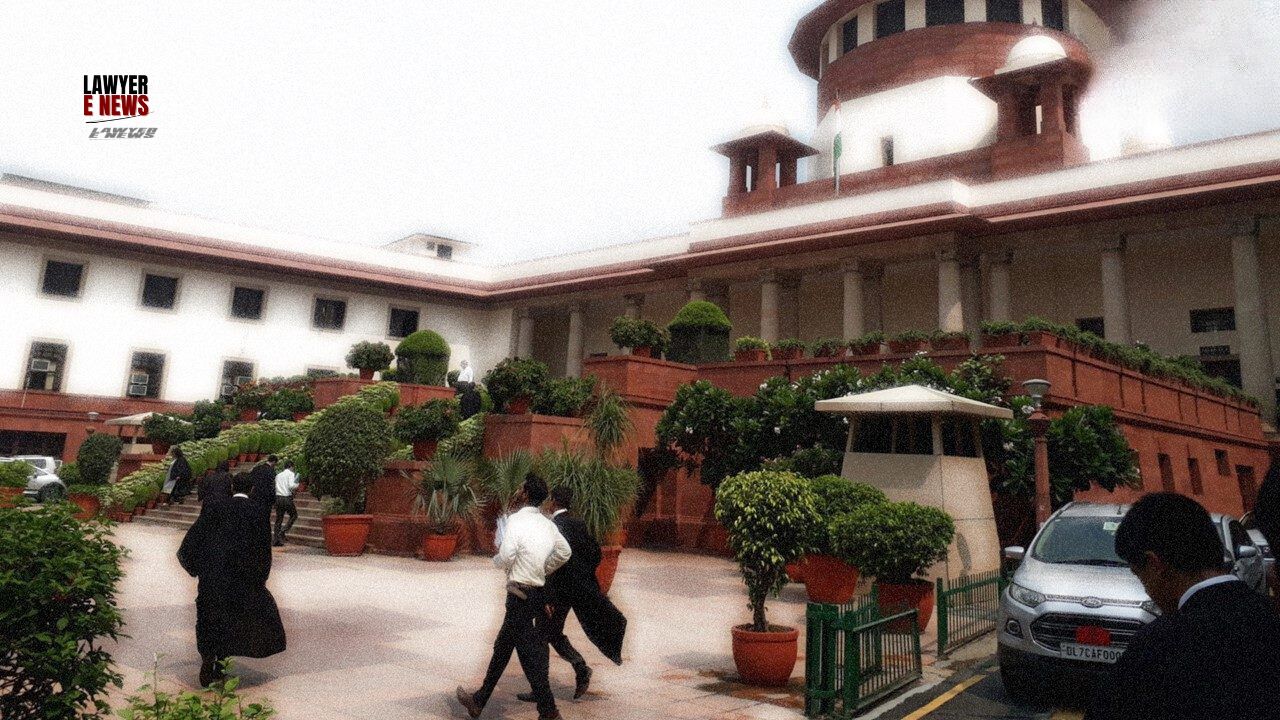
The Supreme Court has delivered a significant judgment ordering Tripura University to confirm the appointment of Maitreyee Chakraborty, who had been denied permanent status despite fulfilling all criteria. The Court's ruling emphasized the necessity for fairness and non-arbitrariness in the exercise of discretionary powers by public institutions.
Maitreyee Chakraborty, the appellant, was appointed as an Assistant Professor in Law at Tripura University in January 2017, filling a vacancy left by a faculty member who had taken a lien. Despite a promise of regularization contingent on satisfactory performance and the vacation of the lien, Chakraborty’s position was not confirmed even after the lien holder resigned, leading to her eventual filing of a writ petition.
The Court found the University’s reasoning flawed, particularly its claim that many eligible candidates might have avoided applying because the vacancy was a lien position. The Court clarified that the advertisement clearly included a regular vacancy, and hence, the reasoning was untenable.
The bench, comprising Justices K.V. Viswanathan and J.K. Maheshwari, criticized the University for exercising its discretion in an arbitrary manner by choosing not to confirm Chakraborty’s appointment. The Court noted that once the lien was vacated, and given the satisfactory performance of the appellant, the University was obligated to regularize her appointment.
The judgment underscored that the discretion vested in public authorities must be exercised fairly, non-arbitrarily, and with good reason. The Court cited precedents to affirm that when a candidate has undergone a regular selection process and performed satisfactorily, the expectation of confirmation is legitimate and should not be defeated by vague justifications.
The Court remarked, “The Respondent-University, being a statutory body, any such conduct would tantamount to an arbitrary and unreasonable exercise of power, apart from being unfair.” The judgment further stated, “The legitimate expectation of the appellant was not outweighed by any overriding public interest.”
This judgment is a stark reminder to educational institutions and public bodies about the importance of upholding fairness and transparency in their operations. By setting aside the High Court’s order and directing Tripura University to confirm Chakraborty’s appointment, the Supreme Court has reinforced the principle that discretionary powers must be exercised with caution and in accordance with established legal standards.
Date of Decision: August 22, 2024.
Maitreyee Chakraborty v. The Tripura University & Ors.