-
by sayum
26 August 2026 1:49 PM







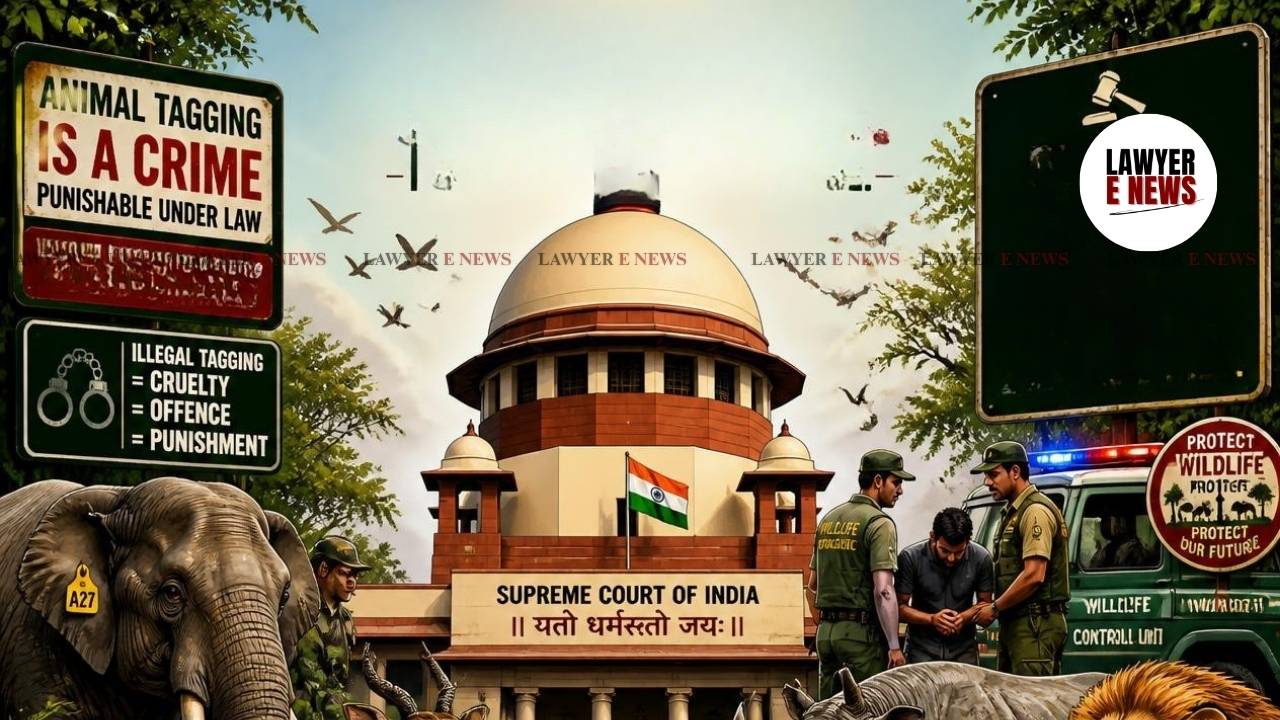
"The owners choosing to make such a decision should be held responsible and ensure safe transfer of such animals to the shelters run by the appropriate authority." Supreme Court of India, in a significant ruling dated July 31, 2026, underscored the urgent need for a comprehensive national mechanism to address the menace of stray cattle, which frequently cause accidents leading to human injury and death.
A bench comprising Justices Sanjay Karol and Nongmeikapam Kotiswar Singh highlighted the existing legal framework and constitutional duties concerning animal welfare, while making strong suggestions to both Central and State governments for implementation. The Court observed that "animals are not meant to be natural speed breakers, placed willy-nilly on the National Highways, roads and streets."
The appellant, Nisha, had sought compensation following the death of her husband, Vijay Kumar, who sustained a fatal head injury after being hit by a stray bull in September 2007. The learned Single Judge of the High Court of Punjab and Haryana had awarded compensation of Rs. 29,32,000/- with 6% interest, applying Motor Vehicles Act principles. However, the Division Bench set aside this order, citing "disputed questions of fact" and non-maintainability of the writ petition, directing the claimant to Civil Court. This appeal arose from the Division Bench's reversal.
The primary question before the Supreme Court was whether the High Court was justified in setting aside compensation on the ground of "disputed questions of fact" in a writ petition, especially given the significant lapse of time. The Court also comprehensively addressed the broader issue of stray cattle and the mechanisms for their management and human safety.
Addressing the Maintainability of the Writ Petition
The Supreme Court, acknowledging the long passage of time since the 2007 incident, held that sending the claimant to a Civil Court at this stage would render them remediless. The Court found all facts surrounding the incident, including the initial police report and subsequent applications for compensation, to be undisputed, thus negating the Division Bench's reasoning.
Recognizing the Widespread Problem of Stray Bovines
The bench observed that bovine-related incidents and accidents are not uncommon, necessitating a broader look at the issue beyond the specific case. It highlighted that Article 48 of the Constitution of India, a Directive Principle of State Policy, mandates organizing agriculture and animal husbandry and preventing cow slaughter, while Article 51-A(g) places a fundamental duty on citizens "to have compassion for all living creatures."
Citing Constitutional Duties and Precedents
The Court reiterated the principles enunciated in State of Gujarat v. Mirzapur Moti Kureshi Kassab Jamat, which linked the fundamental duty under Article 51-A(g) to the objectives of Article 48 regarding cattle protection. Furthermore, it recalled observations from Animal Welfare Board of India v. A. Nagaraja, stating that animals have an inherent right to live a dignified life without cruelty, and being injured or killed by roaming cattle constitutes "unnecessary pain and suffering."
Existing Legal Framework for Animal Welfare
The judgment detailed existing legislation such as the Cattle Trespass Act, 1871, which provides for the establishment of pounds and impounding of cattle, and the Prevention of Cruelty to Animals Act, 1960, which mandates 'all reasonable measures' for animal care, including the establishment of pinjraholes, sanctuaries, and shelters. The Court also referred to Section 11(h) of the PCA Act, which addresses owners failing to provide food, drink, or shelter.
State-Level Initiatives and Institutions (Gaushalas, Pounds)
The Court presented a tabular overview of legislations enacted by at least 24 States and Union Territories aimed at cattle preservation and protection. These laws provide for the establishment of institutions like Gaushalas, Gosadans, Pinjrapoles, and cattle pounds, often defining "uneconomic cows" and outlining procedures for their care, maintenance, and registration.
Mandatory Tagging and Owner Responsibility
Emphasizing that many animals are let go once their economic utility dwindles, the Supreme Court suggested that owners must be held responsible for ensuring the safe transfer of such animals to appropriate shelters. This transfer should be accompanied by a receipt, and the details entered into a tagging database. The Court explicitly suggested mandatory tagging of all animals to facilitate tracking, veterinary check-ups, and vaccinations.
Court's Suggestions to Centre and States:
Compensation Awarded in the Present Case Considering the specific facts and long pendency of the matter, the Court awarded a lump sum compensation of Rs. 15 lakhs to the appellant. This award, however, was explicitly stated not to be treated as a precedent for the amount, given the unique circumstances. The amount is to be remitted within four weeks.
While granting a lump sum compensation to the appellant due to the egregious delay and undisputed facts, the Supreme Court utilized this opportunity to issue a vital clarion call for systemic reform. Its robust suggestions for mandatory animal tagging, holding owners accountable for their cattle, and strict enforcement of Gaushala laws across states reflect a deep concern for both human safety and animal welfare, urging a proactive approach to a long-standing national problem.
Date of Decision: July 31, 2026