Kerala High Court Denies Relief To Petitioner Suppressing Facts, Orders Enquiry Into Allotment Of Govt Scheme Houses On Puramboke Land Candidate Missing Physical Test For Minor Illness Has No Enforceable Right To Rescheduling: Supreme Court Prolonged Incarceration And Parity Constitute Valid Grounds For Regular Bail: Supreme Court Accused In Cheque Bounce Cases Cannot File Evidence-In-Chief By Affidavit Under Section 145 NI Act: Orissa High Court Borrowers Have No Right To Personal Hearing Before Fraud Classification, But Full Forensic Audit Report Must Be Supplied: Supreme Court Pendency Of Matrimonial Dispute With General Allegations Not A Valid Ground To Deny Public Employment: Allahabad High Court Minimum Five Persons Mandatory To Prove 'Preparation For Dacoity' Under Section 399 IPC: Gujarat High Court Suit For Specific Performance Not Maintainable Without Prayer To Set Aside Termination Of Agreement: Madras High Court Trial Court Must Indicate Material Forming Basis Of Charge, Mechanical Framing Of Charges Impermissible: Madhya Pradesh High Court Voluntary Retirement Deemed Accepted If Positive Order Of Refusal Is Not Communicated Within Notice Period: Supreme Court Court Cannot Convict One Accused And Acquit Another On Same Evidence: Supreme Court Acquits Murder Convict Suspicion Cannot Replace Proof: Supreme Court Acquits Murder Convict Due To Unreliable Last-Seen Evidence And Principle Of Parity 138 NI Act | Accused Cannot Rebut Presumption Of Legally Enforceable Debt At Pre-Trial Stage In Cheque Bounce Cases: Supreme Court More Meritorious PWD Candidates From Reserved Categories Can Claim Unreserved PWD Posts In Open Competition: Supreme Court Meritorious Reserved Candidates Can Claim Unreserved Horizontal Vacancies Based On Merit: Supreme Court Employee Not Entitled To Gratuity Until Conclusion Of Both Departmental And Criminal Proceedings: Supreme Court Stamp Duty Recovery Against Legal Heirs Is Strictly Limited To The Extent Of Inherited Estate: Allahabad High Court Single Lathi Blow On Head During Sudden Altercation Amounts To Culpable Homicide Under Section 304 Part II IPC, Not Murder: Madhya Pradesh High Court Habeas Corpus Maintainable For Child Custody Against Father; Cannot Be Dismissed Merely Due To Alternate Remedy: Allahabad High Court "Plea Of Ignorance In Digital Era Inexcusable": Punjab & Haryana HC Imposes Rs 10K Cost On Accused For Hiding Prior Bail Dismissal Discrepancies In Name And Age On Monthly Pass Fail To Establish 'Bona Fide Passenger' Status In Railway Accident Claim: Delhi High Court "Last Seen" Theory A Weak Link If Time Gap Is Wide: Bombay High Court Acquits Man Sentenced To Life For Murder Failure To Conduct Pre-Anaesthetic Check-Up Prima Facie Amounts To Gross Medical Negligence Under Section 304A IPC: Kerala High Court Gujarat High Court Bans AI From Judicial Decision-Making, Lays Down Strict Policy for Court Use of Artificial Intelligence

Supreme Court Upholds Importance of Fair Investigation and the Scope of High Court's Powers in Bail Applications

07 May 2024 8:19 AM

By: Admin


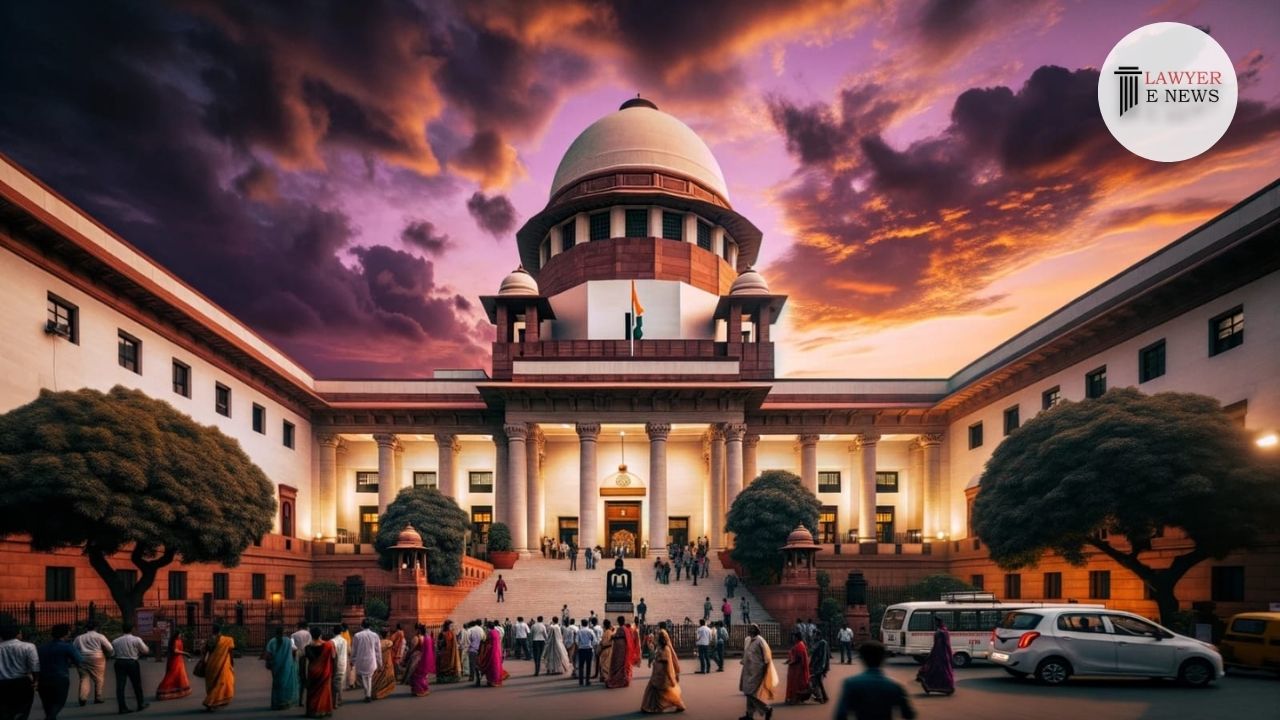
On May 11, 2023, New Delhi, In a significant judgment delivered today, the Supreme Court of India upheld the concerns raised by the High Court of Madhya Pradesh regarding lapses in the investigation of a sensitive criminal case. The Court, while dismissing the appeal against the Impugned Judgment, emphasized the crucial role of conducting a thorough and fair investigation to ensure justice is served and to prevent the possibility of a miscarriage of justice.

The case before the Supreme Court involved an appeal filed by Inspector Sanjay Dubey against the Judgment and Order rendered by a learned Single Bench of the High Court of Madhya Pradesh at Jabalpur. The High Court, in its Impugned Judgment, had found the appellant guilty of dereliction of duty and observed that he was unfit to hold any responsible post in the Police Department.

During the course of the proceedings, the High Court had expressed its dissatisfaction with the investigation conducted by the police officers, including the appellant. It noted that there were lapses in bringing all relevant materials on record, which could potentially lead to a miscarriage of justice. The High Court, being a Constitutional Court with powers under Articles 226 and 227 of the Constitution, sought to address these concerns in the interest of justice.

While delivering the judgment, the Supreme Court acknowledged that the High Court had exceeded its jurisdiction by issuing certain directions during the pendency of a bail application. However, the Court recognized that the concerns raised by the High Court were justified given the gravity of the case and the need to prevent any potential miscarriage of justice. The Court held that the High Court's observations should not be treated as findings against the appellant in the departmental proceedings that would be initiated against him.

Furthermore, the Supreme Court clarified that the jurisdiction of the High Court in a bail application is limited to deciding whether to grant or reject bail. However, it stressed that the High Court has broader powers under Articles 226 and 227 of the Constitution to intervene in exceptional cases where the interest of justice necessitates it.

The Court also highlighted the significance of examining acquittals and recording reasons for failures in prosecution cases. It emphasized the need for a procedural mechanism to ensure that the cause of justice is served, and the rights of the innocent are safeguarded.

Supreme Court dismissed the appeal, upholding the Impugned Judgment. It reiterated the importance of conducting a fair investigation and clarified the scope of the High Court's powers in bail applications. The Court emphasized that the observations made by the High Court should not prejudice the appellant in the departmental proceedings, where he would have the opportunity to raise all grounds and contentions.

CASE TITLE: SANJAY DUBEY VS THE STATE OF MADHYA PRADESH AND ANOTHER

DATE OF DECISION: May 11, 2023

Latest Legal News