-
by sayum
17 August 2026 3:17 PM







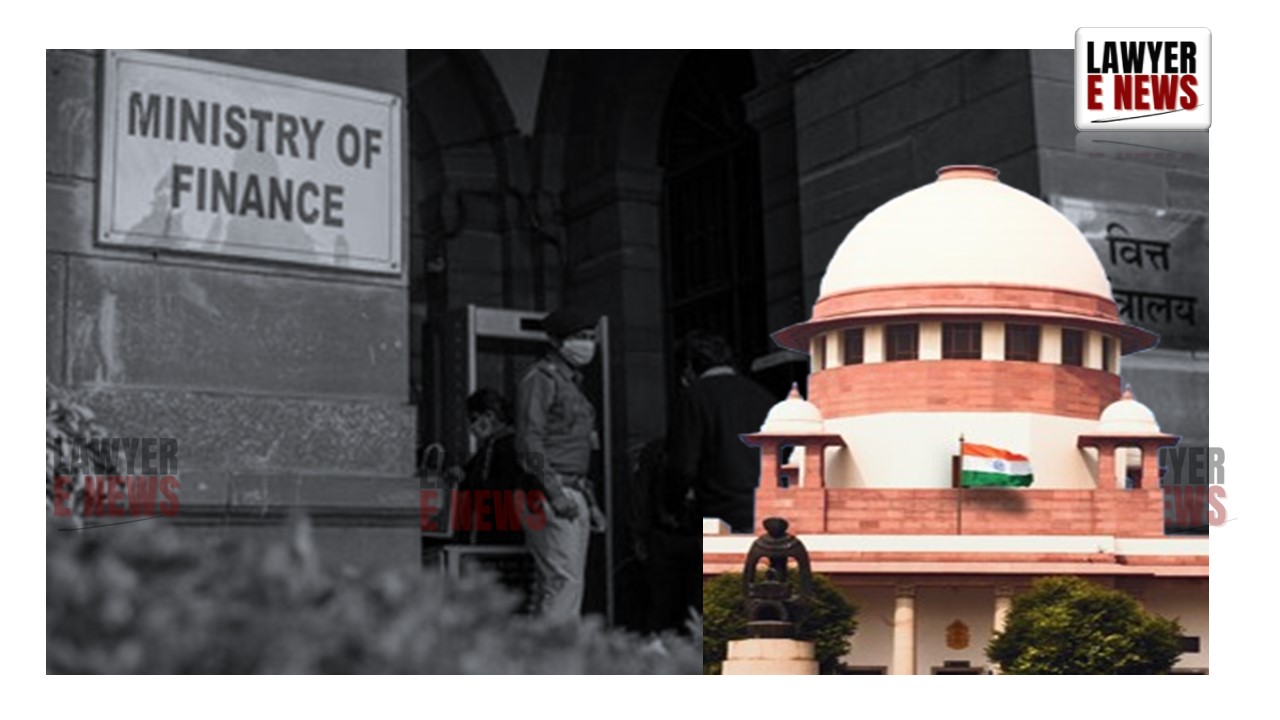
Today, On October 21, 2024, the Supreme Court of India expressed serious concerns over the Ministry of Finance directing Debt Recovery Tribunals (DRTs) across the country to collect data related to the amount recovered through their orders. A bench of Justices Abhay S. Oka and Augustine George Masih questioned the Ministry’s decision, emphasizing that judicial officers and staff of the DRTs cannot be treated as subordinates of the government.
The matter came up during the hearing of a case related to a lawyers' strike at the DRT Vishakhapatnam, where the tribunal had informed the Court that several cases were adjourned because the staff had been preoccupied with data collection as instructed by the Ministry. Taking exception to this, the Supreme Court had previously asked the Finance Ministry to file an affidavit, which was submitted on October 17, 2024.
"DRTs Are Not Subordinate to the Ministry": Supreme Court Criticizes Data Collection Demand
During the proceedings, Justice Oka expressed concern over the Ministry’s demand, asking:
"Is DRT expected to have the data of the amount recovered? How DRT will know? What kind of data you have sought? How DRT will tell you how much amount a bank has recovered based on its orders?"
Justice Oka criticized the Ministry for asking the DRTs to compile information such as the number of cases involving amounts of ₹100 crores or more, the total number of new cases filed, and the amount recovered. The bench found it unreasonable to expect the DRTs to gather such detailed financial information, questioning how tribunal officials could track the recoveries made by banks based on their orders.
The bench was further dismayed to learn that the Ministry had issued its directive via email on September 9, 2024, requiring DRTs to provide the requested data by September 12, within a short span of three days.
"We Expect an Apology from the Government": Court Rebukes Finance Ministry
Addressing the Ministry's actions, Justice Oka stated:
"You are treating judicial staff as if they are your subordinates. We expect an apology from the government. This extent of data collection within three days is unreasonable. If you want data to be collected, additional staff should be provided to the DRT. This will not be tolerated."
The Court emphasized that many of the DRT officers are judicial officers, and tasking them with such administrative work was improper. The Ministry’s explanation, which justified the request as necessary for a meeting with stakeholders to improve the system, did not satisfy the Court.
Supreme Court Questions Justification Based on Purported Oral Directions
In its affidavit, the Ministry also attempted to justify its actions by referring to purported oral directions issued by the Supreme Court on December 15, 2023, which allegedly instructed data collection from DRTs. The bench was unimpressed with this reasoning, stating that even if such oral directions were given, the Ministry had acted only after nine months, which raised further concerns.
In its order, the bench observed:
"We are not at all satisfied with the explanation offered by respondent number 1. The Secretary of the concerned department shall review the entire situation, refer to this Court’s orders and other materials, and ensure that a proper affidavit is filed in response to the order dated 30th September 2024."
The Court also questioned whether it was appropriate for the Ministry to call upon the DRT to collect such extensive data. If the data was indeed required, the Ministry should have provided additional resources to assist the DRTs.
The Supreme Court directed the Ministry of Finance to file a proper affidavit explaining the rationale behind the data collection order, ensuring that the DRTs are not overburdened with administrative work without the necessary support.
After dictating the order, Justice Oka remarked,
"It's good that the attention of the Court was drawn to this; otherwise, this practice would have continued."
The next step in the case will involve a further review of the Ministry’s affidavit and the justification for its directives.
Special Leave to Appeal (C) No. 11029/2024
Superwhizz Professionals Pvt. Ltd. v. Union of India & Ors.