-
by sayum
03 October 2026 9:56 AM







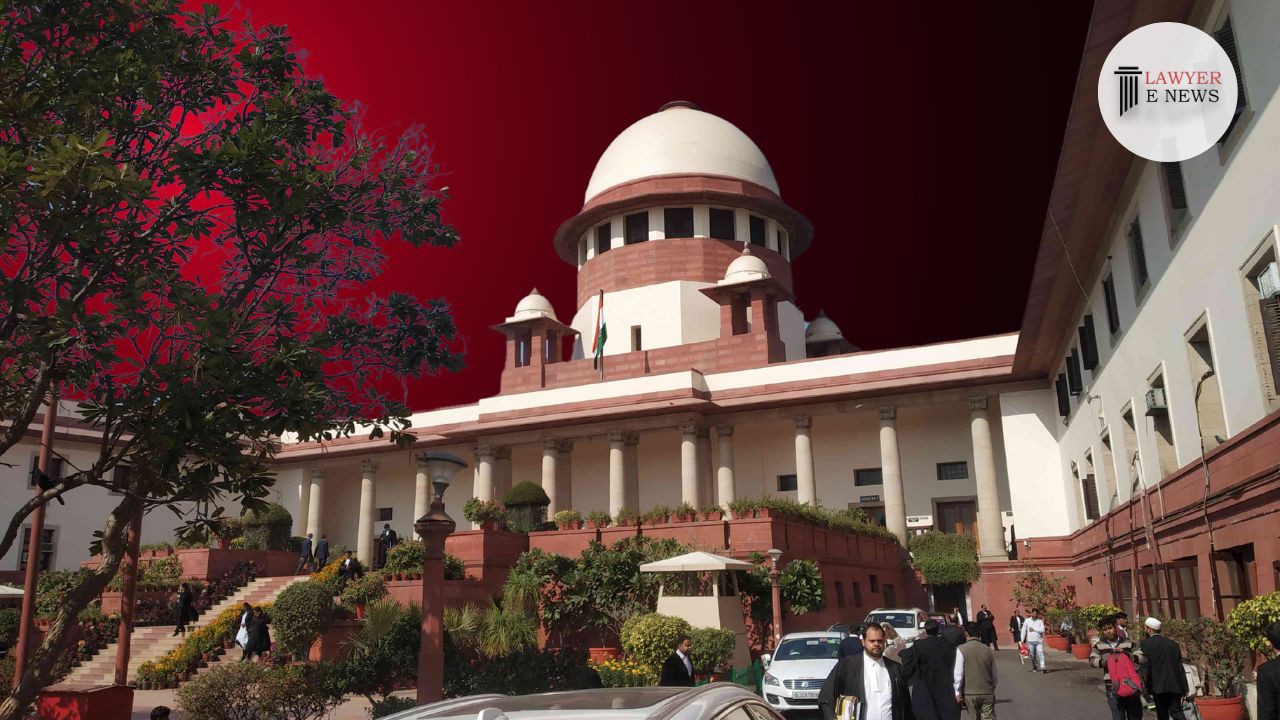
High Enrollment Fees Challenged in Supreme Court
In a recent plea challenging the exorbitant enrollment fees imposed by state bar councils on new lawyers, the Supreme Court of India has raised pertinent questions about the legality and fairness of such charges. The apex court, headed by Chief Justice DY Chandrachud and Justice PS Narasimha, has directed the state bar councils to submit detailed responses and affidavits outlining the amount of money collected by them annually.
The Chief Justice expressed his concerns about the exorbitant fees and highlighted the potential adverse impact on individuals from marginalized backgrounds, such as Dalit students and those hailing from rural areas. He stressed the importance of accessibility to legal education and questioned how individuals with limited financial means would be able to afford enrollment fees reaching as high as Rs. 42,000 in Odisha and Rs. 23,000 in Jharkhand.
The court further inquired about the number of advocates enrolled each year and the annual revenue generated by state bar councils. It sought clarity on the yearly cost incurred by multiplying the number of new enrollments with the bar council fee. The Chief Justice also expressed surprise at the significant variations in enrollment fees across different states and emphasized that the fees should only cover the cost of enrollment itself, without additional charges for services like books.
The Supreme Court drew attention to Section 24(1)(e) of the Advocates Act, 1961, which prescribes the enrollment fees as Rs. 600 for State Bar Councils and Rs. 150 for the Bar Council of India. It highlighted that this statutory provision has not been amended to allow for inflationary adjustments, and any deviation from the prescribed fees would require a legislative amendment.
In response to the court's concerns, the Chairman of the Bar Council of India, Manan Kumar Mishra, argued that the provision does not account for inflationary factors. However, the court firmly maintained that the statute does not provide any flexibility for charging fees higher than the prescribed amounts.
The PIL, filed by Gaurav Kumar, brought attention to the non-uniformity of enrollment fees across states, with fees ranging from Rs. 42,100 in Odisha to Rs. 20,000 in Kerala. The petitioner's case was further supported by a recent interim order from the Kerala High Court, which restricted the Kerala Bar Council from charging more than Rs. 750 as enrollment fees from certain petitioners challenging the fee structure.
The Supreme Court has granted a four-week period for state bar councils that have not yet responded to submit their replies. Failure to do so will result in the forfeiture of their right to reply, and the petition will proceed without further input from those councils.