-
by sayum
04 August 2026 1:39 PM







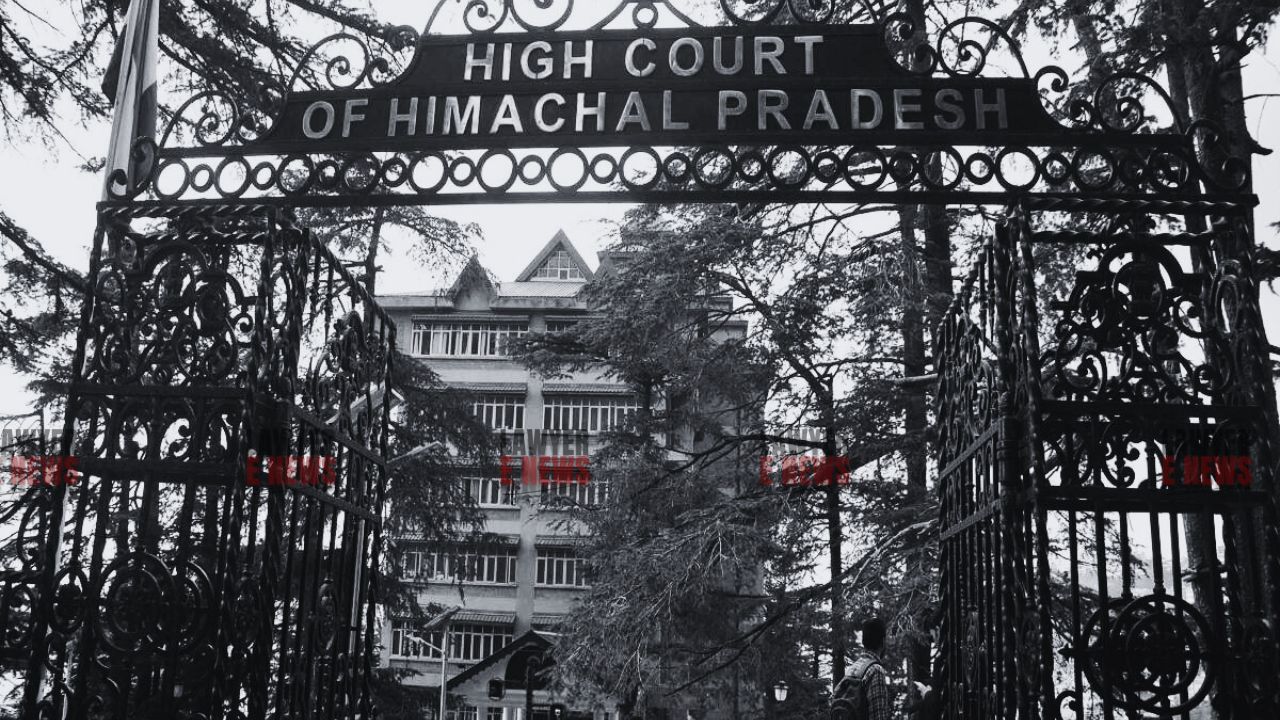
“Financing Must Mean Sustaining or Operationalising Drug Trade, Not One-Time Transfers” – Himachal Pradesh High Court granting regular bail to two individuals accused under the Narcotic Drugs and Psychotropic Substances Act, 1985, and Section 111(3) of the Bharatiya Nyaya Sanhita, 2023. The Court held that mere financial transactions, without direct recovery of contraband or admissible evidence linking the accused to drug trafficking, are insufficient to deny bail. This ruling reinforces constitutional protections and evidentiary thresholds required in serious criminal prosecutions, especially those invoking organised crime and drug financing charges.
The bail petitions were filed in connection with FIR No. 107 of 2024, dated 14 August 2024, registered at Police Station Sadar, Shimla. The FIR related to the recovery of 6.380 grams of heroin from Room No. 101 of a hotel occupied by co-accused Suraj and Rohit Pandey. During the investigation, these co-accused named one Sandeep Shah as the supplier. The police examined bank statements and call records, discovering financial transfers from the petitioners Aman Shobta and Abhay Shyam to Sandeep Shah and another alleged accomplice, Neeraj Kashyap. Based on these transactions and the co-accused’s statements, the petitioners were arrested under Sections 21, 27A, and 29 of the NDPS Act, and later, Section 111(3) of the Bharatiya Nyaya Sanhita was also invoked, alleging involvement in an organised crime syndicate.
The petitioners contended that there was no recovery from them, and that the statements made by co-accused and mere financial transfers could not form the basis of continued incarceration. The State opposed bail, asserting that the petitioners financed narcotics trade and were part of an organised drug syndicate.
The primary legal issues concerned whether statements of co-accused and financial transactions, without any recovery or direct evidence, were sufficient to invoke serious provisions like Section 27A of the NDPS Act (which deals with financing of drug operations), and Section 111(3) of the Bharatiya Nyaya Sanhita, 2023 (which pertains to organised crime).
The Court began by affirming well-established principles of law regarding the admissibility of evidence. It held that statements made by a co-accused to the police are inadmissible under Section 25 of the Indian Evidence Act and Section 162 of the Code of Criminal Procedure. Referring to the Supreme Court’s ruling in Tofan Singh v. State of Tamil Nadu (2021) 4 SCC 1, the Court reiterated that such statements, even if containing admissions, cannot be used as evidence. Similar reliance was placed on Dipakbhai Jagdishchandra Patel v. State of Gujarat (2019) 16 SCC 547 and Surinder Kumar Khanna v. Intelligence Officer, Directorate of Revenue Intelligence (2018) 8 SCC 271, where it was held that confessions of co-accused can at best be used to lend assurance to otherwise admissible evidence, but not as substantive proof of guilt.
On the financial transactions, the Court noted that the prosecution’s own case was that the petitioners had transferred certain amounts to Sandeep Shah and Neeraj Kashyap. However, no recovery of heroin or other contraband had been made from the petitioners. Citing the Kerala High Court’s decision in Amal E v. State of Kerala, 2023:KER:39393, the Court observed that financial transfers alone, unaccompanied by any evidence of their link to drug trafficking, cannot justify continued custody.
With respect to the invocation of Section 27A of the NDPS Act, which criminalises the financing of illicit traffic in narcotic drugs and psychotropic substances, the Court extensively relied on the Bombay High Court’s judgment in Rhea Chakraborty v. Union of India, 2021 Cri LJ 248. In that case, the Bombay High Court had held that the term “financing” must be interpreted to mean providing funds in a manner that sustains or operationalises the drug trade. A mere one-time transaction or monetary transfer, without proof that it supports or facilitates ongoing narcotics activity, cannot attract the offence under Section 27A. The Himachal Pradesh High Court observed that interpreting “financing” to include sale or purchase would render redundant the separate penal provisions under Sections 20, 21, 22, and 23 of the NDPS Act, which already criminalise such acts.
The Court further emphasized that the legislature had consciously used different terms—sale, purchase, and financing—across various provisions of the NDPS Act, and they must be interpreted to carry distinct meanings. It is a settled principle of statutory interpretation that no part of a statute should be rendered redundant, as held in Nathi Devi v. Radha Devi Gupta (2005) 2 SCC 271.
The prosecution had also invoked Section 111 of the Bharatiya Nyaya Sanhita, alleging that the petitioners were part of an organised crime syndicate. The Court undertook a detailed analysis of this provision, which defines “organised crime” to mean any continuing unlawful activity, such as drug trafficking, committed by a group or syndicate, provided that at least two charge-sheets have been filed against the accused in the preceding ten years. The Court found no such history in the case of either petitioner. Relying on Mohd. Hashim v. State of Kerala 2024 SCC OnLine Ker 5260 and the Supreme Court’s interpretation of similar provisions under MCOCA in State of Maharashtra v. Shiva alias Shivaji Ramaji Sonawane (2015) 14 SCC 272, the Court concluded that in the absence of previous charge-sheets and cognizance by courts, Section 111 could not be invoked.
The State's argument that the petitioners had not explained the purpose of the transferred funds was also rejected. The Court observed that the right to silence is a constitutional safeguard, and the burden of proof lies squarely on the prosecution. No inference of guilt can be drawn from the exercise of the right to remain silent. As held in Suraj Singh v. State of Punjab, MANU/PH/4288/2024, the prosecution must present admissible evidence before seeking to invoke organised crime provisions; mere suspicion or assumptions are insufficient.
After considering all materials on record and relevant legal precedents, the Court held that the petitioners could not be detained further merely based on statements of co-accused and financial transactions unconnected to any proven contraband activity. There was no prima facie material to justify charges under Sections 21, 27A, or 29 of the NDPS Act or under Section 111(3) of the Bharatiya Nyaya Sanhita.
Accordingly, the Court granted bail to both petitioners upon furnishing bail bonds of ₹1,00,000 each, with sureties in the same amount. It imposed conditions requiring the petitioners not to intimidate witnesses, to attend the trial regularly, to inform the police before leaving their place of residence, and to surrender any passports. They were also required to provide their mobile numbers and social media contact details to the police and the court. Any misuse of liberty would entitle the prosecution to seek cancellation of bail.
The Court made it clear that its observations were confined to the question of bail and would have no bearing on the merits of the case.
This judgment is a critical reaffirmation of procedural safeguards and constitutional protections in the context of narcotics prosecutions. It draws a clear distinction between suspicion and proof, upholding that criminal law must operate on the strength of legally admissible evidence. The Court's interpretation of Section 27A ensures that only those genuinely sustaining drug networks are prosecuted under the severe punishments prescribed therein. It also sets a precedent for cautious invocation of the new organised crime provisions under the Bharatiya Nyaya Sanhita, reminding law enforcement that a higher evidentiary threshold must be met before depriving individuals of their liberty.
Date of Decision: 4 June 2025