
-
by sayum
25 August 2026 12:32 PM







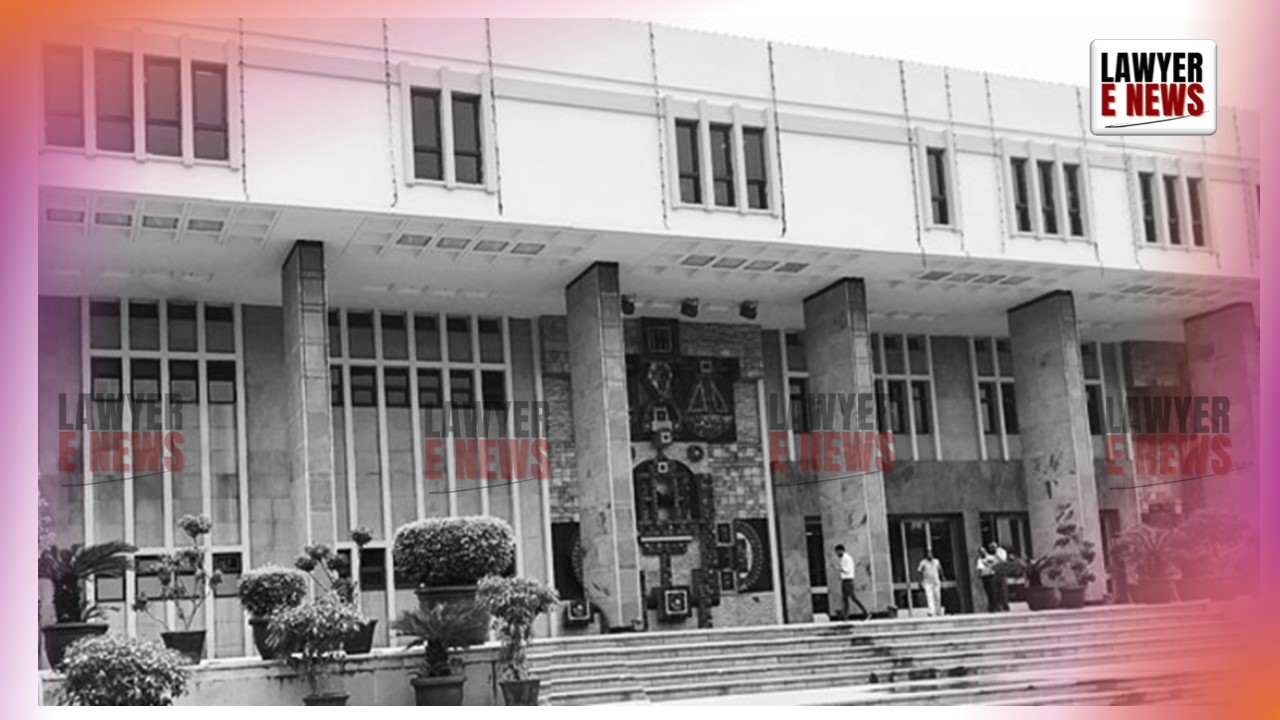
“In absence of reliable ocular and forensic evidence, and with critical witnesses withheld, the benefit of doubt was rightly extended” — Delhi High Court firmly rejected the State’s appeal against the acquittal of two men charged with murder, finding that the prosecution failed to prove guilt beyond reasonable doubt. The Court reiterated that an appellate court cannot reverse a well-reasoned acquittal merely because an alternative view is possible.
The Bench comprising Justice Vivek Chaudhary and Justice Manoj Jain refused to interfere with the trial court’s 2014 verdict, stating, “We fail to come across any perversity in any of the findings, necessitating any interference. The benefit of doubt was rightly given to the accused persons.”
“An Eye-Witness Must Inspire Confidence, Not Raise More Doubts” — Court Discredits Sole Testimony of Victim’s Mother
The prosecution’s case rested almost entirely on the statement of PW-3 Ved Mati, the mother of the deceased, who claimed to have witnessed the shooting from close range. She alleged that the accused Ravinder @ Kuku and Deepak @ Kala, along with a juvenile, shot her son in front of their house at around 11 PM, after which she rushed him to the hospital.
However, the High Court noted glaring inconsistencies in her version and observed, “In such a peculiar situation, if we reconstruct the entire scene, it may not look practicable for Ved Mati to see and identify the assailants… particularly when it was dark outside, the incident was over in a flash, and weather was rough.”
While the prosecution argued that Ved Mati was under emotional trauma and thus delayed in giving her statement, the Court was unconvinced. It found her absence from the hospital, where she claimed to have taken her son, significant. “Had she been at the hospital, the IO would have surely noted her presence. Her absence cannot be brushed aside casually,” the Court remarked.
“When Prosecution Withholds the First Informant, It Raises Presumption of Suppression” — Court Faults Non-Examination of Victim’s Wife
One of the most damning criticisms in the judgment was directed at the prosecution’s failure to examine the wife of the deceased, Sushma, who not only was allegedly present at the time of the incident but had also taken her husband to the hospital. The hospital record itself noted that the deceased had been brought by his wife “in injured condition due to a quarrel.”
The Court held this omission to be fatal: “Her non-examination has left a big hole in the case of prosecution which further compounds the miseries of prosecution. Her holding back, evidently, goes against the prosecution.”
“Forensic Trail Ends Before It Begins: No Blood, No Bullet, No Case” — Serious Lapses in Investigation Undermine Entire Prosecution Case
The Court noted with concern that despite the nature of the crime — a gunshot injury at close quarters — there was an “utter lack of forensic support”. No blood-stained clothing was seized. The car used to transport the injured was not examined. No bullet, no cartridge, and no bloodstains were recovered from the crime scene. Even the crime team report, which should have recorded critical on-site findings, was conspicuously missing from the record.
“The photographs are of very poor quality, captured without street lighting, using vehicle headlights,” noted the Court. It added, “The non-filing of any ‘spot inspection report’ and absence of physical evidence from the crime scene weakens the case from its very foundation.”
“Judicial Caution Is Not Judicial Cowardice” — Court Emphasises Limits of Appellate Review in Acquittal Appeals
Reiterating settled legal principles, the Court made it clear that “an appellate court can interfere with an order of acquittal only when it comes to the conclusion that conviction was the only possible outcome.” Referring to Puran v. Rambilas and Ajmer Singh v. State of Haryana, the Bench affirmed that “a mere possibility of a different view is not enough.”
The High Court found the trial court’s assessment of evidence to be legally sustainable and based on cogent reasoning. It noted that even the brief facts submitted for post-mortem on 15 May 2006 by the investigating officer mentioned “no eye-witness could be contacted”, which was inconsistent with the prosecution’s later claim that the mother had named all three assailants earlier that same morning.
“Juvenile Co-Accused Already Acquitted – A Chain With Missing Links Cannot Hold the Weight of Conviction”
The Court also gave weight to the fact that the juvenile co-accused, Bhura @ Sahid, was tried separately and acquitted by the Juvenile Justice Board. That acquittal was never challenged by the prosecution and had attained finality. This weakened the version of the eye-witness, who claimed that Bhura too had fired a shot.
“This assumes importance as according to PW-3 Ved Mati, such juvenile was also carrying fire-arm and had fired on exhortation of his co-accused,” the judgment noted, implying that the prosecution’s case was not just uncorroborated — it was fractured.
“Acquittal Was a Plausible and Legally Sound Outcome”
The judgment concluded with clarity: “This Court is conscious of the fact that the scope of interference in an appeal against acquittal is a restricted one… Here, we fail to come across any perversity in any of the findings, necessitating any interference. Resultantly, the present appeal stands dismissed.”
By affirming the acquittal, the Delhi High Court not only reinforced the burden of proof required in criminal trials but also sent a clear signal on the dangers of relying on solitary testimony without corroboration, the necessity of credible forensic evidence, and the perils of prosecutorial lapses in serious cases.
Date of Decision: 2 December 2025





