-
by sayum
04 August 2026 1:39 PM







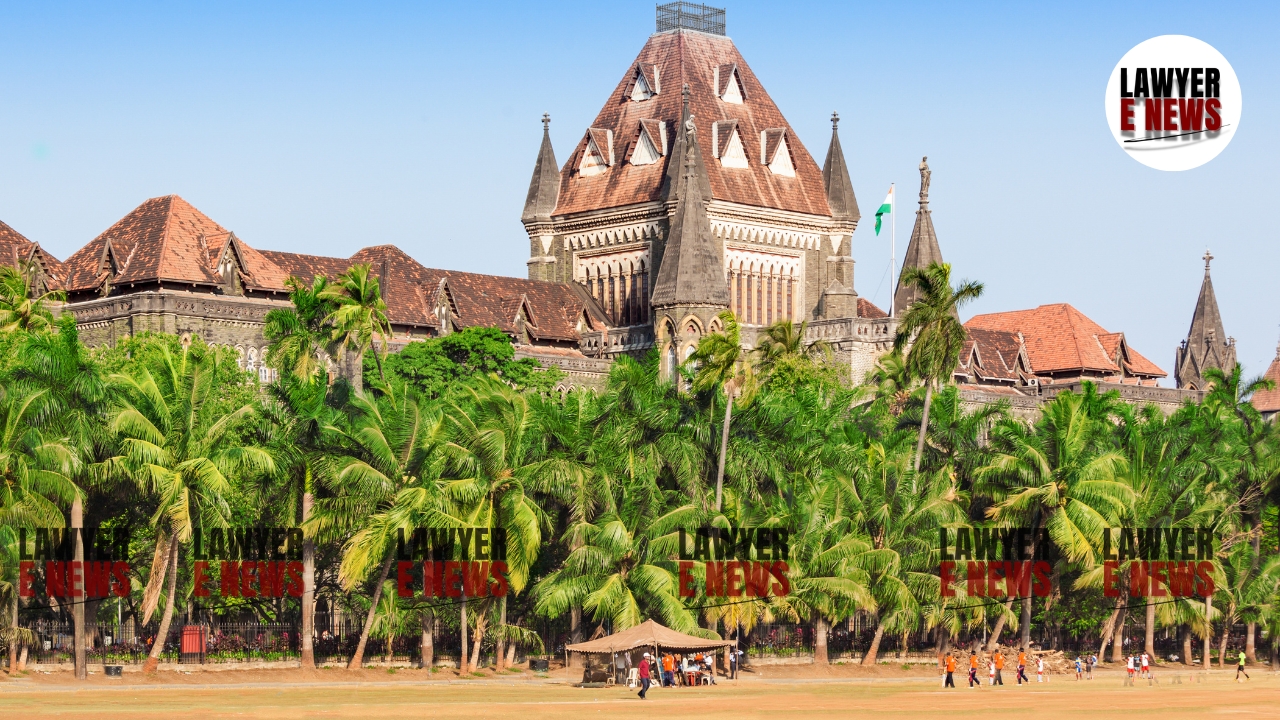
“Right Exists, Remedy Does Not Lie Here” – Landowners Entitled to Solatium, But Arbitration Appeal Dismissed Due to Jurisdictional Bar, in a significant pronouncement dealing with the intersection of land acquisition law and arbitral jurisdiction, the Bombay High Court (Justice Somasekhar Sundaresan) dismissed a batch of arbitration appeals filed by landowners who sought solatium on their compensation for lands acquired for a National Highway project. The court held that while solatium is undeniably payable, courts exercising jurisdiction under Sections 34 and 37 of the Arbitration and Conciliation Act, 1996 have no power to modify arbitral awards to include it, even if it results in denying a statutory right.
Refusing to interfere with the arbitral awards, the court emphasized: “The only reason the NHAI is not being directed to pay solatium in these proceedings is the inherent limitation of jurisdiction under Section 37 of the Arbitration Act.”
The decision came in the case of Sumanbai Shantaram Bachchav & Others v. Union of India & Others, where multiple petitioners challenged a common judgment of the District Court at Nashik, which had upheld arbitral awards passed under Section 3G(5) of the National Highways Act, 1956, excluding solatium from the compensation
Solatium Is Acknowledged, But Courts Under Section 34 and 37 Cannot Grant It
The petitioners argued that they were entitled to 30% solatium under Section 23(2) of the Land Acquisition Act, 1894, following the Supreme Court’s ruling in Tarsem Singh v. Union of India (2019), which had declared Section 3J of the Highways Act unconstitutional.
They contended that since Section 3J had been struck down, the arbitral awards which were rendered without granting solatium should be modified in line with the law declared by the Supreme Court. But the High Court made it clear that such modification was impermissible within the narrow confines of Section 37 of the Arbitration Act.
Justice Sundaresan, in a forthright observation, stated: “Recognition of entitlement to statutory amounts flowing from the determination of compensation would not permit modification of an award already passed so as to grant additional statutory relief in proceedings under Section 34 or Section 37.”
He further noted that although solatium is a “valid and legal entitlement”, it did not form part of the arbitral reference, and courts cannot insert such components ex post facto: “Any step to do so would constitute writing a new component into the arbitral award – a modification by way of new insertions.”
NHAI’s Concession on Solatium Not Enough to Vest Power in Court
Importantly, the NHAI itself conceded before the lower court that solatium was payable following Tarsem Singh, but the High Court observed that even such an admission cannot empower the court to modify an award. Citing the binding nature of decisions in M. Hakeem v. Union of India (2021) 9 SCC 1 and Rishabhkumar v. Union of India (2022 SCC OnLine Bom 2095), the court held:
“What is not permissible to be done under Section 34 cannot be done under Section 37. Recognition of the entitlement does not translate into jurisdiction to enforce it through award modification.”
The court reaffirmed that both Section 34 and Section 37 courts are bound by the statutory limits of arbitral review:
“The Section 34 Court may either set aside or uphold an arbitral award but cannot go about modifying awards to remedy errors, even if statutory entitlements like solatium were wrongly omitted.”
Tarsem Singh Declared the Right, But Enforcement Must Be Through Proper Proceedings
The central legal turning point was the Supreme Court’s decision in Tarsem Singh, which held that Section 3J of the Highways Act violated Article 14 and that solatium and interest under Sections 23(1-A), 23(2), and 28 of the Land Acquisition Act applied to all acquisitions between 1997 and 2015 under the Highways Act.
Quoting from Tarsem Singh, the High Court highlighted: “We declare that the provisions of the Land Acquisition Act relating to solatium and interest... will apply to acquisitions made under the National Highways Act.”
Yet, since the arbitral awards in question were passed before Tarsem Singh and did not contain solatium as an issue within the frame of reference, the court concluded:
“Had the Original Award been passed after Tarsem Singh and rejected solatium, a case could be made that the arbitral award was in conflict with the fundamental policy of Indian law. That is not the case here.”
Hope Expressed for Executive Resolution Without Further Litigation
While acknowledging the petitioners’ right, the court urged the NHAI to settle the matter outside the courtroom:
“NHAI could still consider resolving the issue outside the scope of these proceedings to put an end to wasteful expenditure of public resources in litigation.”
Calling prolonged legal fights to secure a statutorily admitted right unjust, the court remarked:
“Expensive litigation to simply get what is admittedly due to the land-losers is not appropriate.”
Legal Right Exists, But Section 37 Court Cannot Be Forum for Relief
Ultimately, while dismissing the appeals, the High Court preserved the landowners’ right to pursue appropriate legal remedies to recover solatium, stating:
“The petitioners are free to seek enforcement of their statutory entitlement to solatium in such manner as advised.”
This judgment reaffirms that judicial restraint in arbitration matters is not optional, even in the face of substantial justice, and that statutory rights must be pursued through appropriate legal channels, not through impermissible modifications of arbitral awards.
Date of Decision: 9 June 2025