
-
by sayum
26 August 2026 1:49 PM







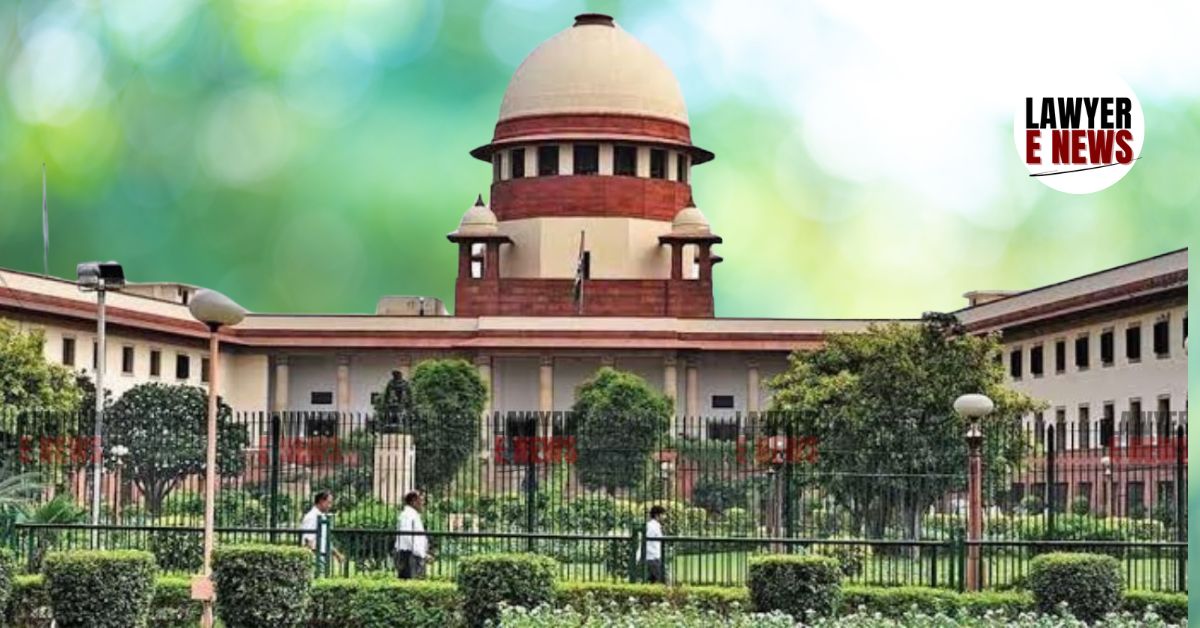
On this Tuesday, In a stinging observation that strikes at the heart of trial court practice, the Supreme Court of India has declared that the indiscriminate treatment of witnesses as hostile is an abuse of judicial discretion and cannot be permitted as a routine affair. Bench comprising Justice B.V. Nagarathna and Justice K.V. Viswanathan issued a clear warning against the mechanical invocation of Section 154 of the Indian Evidence Act, which allows courts to permit a party to cross-examine its own witness.
“This is an extraordinary phenomenon and permission should be given only in special cases,” the Court observed. “We are frequently coming across cases where the prosecutor, for no ostensible reason, wants to treat the witnesses hostile and the Court indiscriminately grants permission.”
At the heart of the case was a curious turn in trial proceedings where the victim’s own father, PW-1, who had lodged the initial complaint, was declared hostile, despite reiterating essential facts that supported the prosecution's case. The Court was unequivocal in its disapproval. “We are at a loss to understand why the witness was treated as hostile in the first place,” the judgment stated. “Small or insignificant omissions cannot be the basis for treating the witness hostile.”
The Court made it clear that the discretionary power under Section 154 is not a prosecutorial shortcut but a judicial tool of last resort. “The discretion must be judiciously and properly exercised in the interests of justice,” the judgment noted, drawing support from past precedent including Sri Rabindra Kumar Dey v. State of Orissa and Gura Singh v. State of Rajasthan. “A party will not normally be allowed to cross-examine its own witness and declare the same hostile unless the court is satisfied that the statement of the witness exhibits an element of hostility or that he has resiled from a material statement.”
The Court lamented the growing trend of prosecutors seeking hostile declarations even when witnesses affirm the main narrative. “Merely because a witness in an unguarded moment speaks the truth which may not suit the prosecution, the discretion to cross-examine cannot be invoked.”
Justice Viswanathan, delivering the opinion, underscored that once declared hostile, a witness’s testimony does not automatically become worthless. “The evidence remains admissible in trial and there is no legal bar to base a conviction upon his testimony if corroborated by other reliable evidence,” the Court reaffirmed, citing Bhagwan Singh v. State of Haryana.
In this case, the father’s statement had only a minor discrepancy about whether he had met the accused after the incident. That alone, the Court held, was never enough to justify treating him as adverse. “The Court must distinguish between a statement made by the witness by way of an unfriendly act and one which lets out the truth without any hostile intention,” the Bench noted.
With this decision, the Supreme Court has not merely adjudicated a criminal appeal — it has sent a loud and clear message to trial courts across the country. Judicial discretion is not a formality, and labeling witnesses as hostile should not be used to paper over weak prosecution strategies or as a reflexive litigation tactic.
In reminding courts of their gatekeeping responsibility, the Court has drawn a line: the “hostile” label is not a free pass — it is a serious legal determination that must be earned, not assumed.





