-
by sayum
29 August 2026 5:19 AM







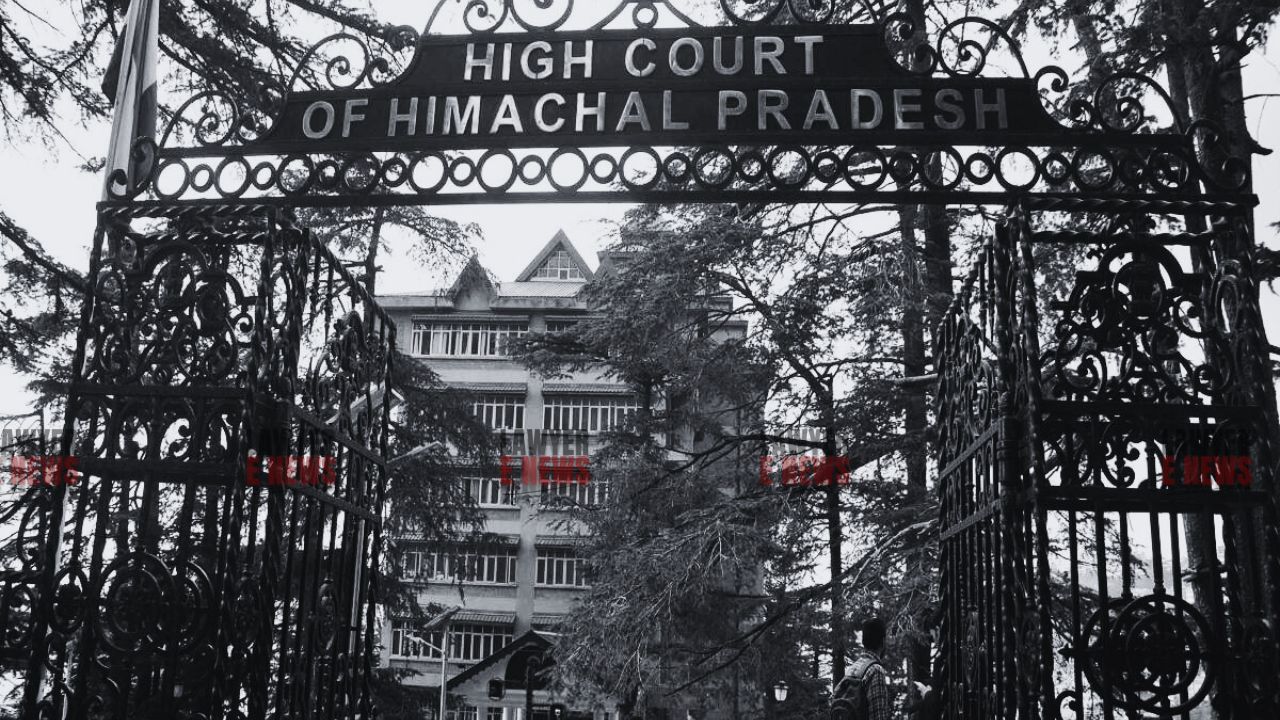
“Moral Obligation of Father Cannot Be Enforced Through Criminal Procedure Code Once Children Attain Majority” – In a sharply reasoned judgment High Court of Himachal Pradesh at Shimla refused to stretch the scope of Section 125 Cr.P.C. to grant maintenance to a daughter who had attained majority and was pursuing higher education, decl aring categorically that the statute does not entitle an unmarried major daughter to maintenance, even if she is financially dependent.
The Division Bench comprising Justice Vivek Singh Thakur and Justice Sushil Kukreja however, partly allowed the revision petition filed by her younger brother Suchet Kapur, granting him enhanced maintenance till he attained majority in March 2020, correcting what the Court termed as a “mistake” committed by the Family Court in rejecting his claim in toto.”
The judgment underscores the distinction between statutory rights under Section 125 Cr.P.C. and moral responsibilities that a father may still owe to his adult children pursuing education.
“After Majority, Only a Child With Mental or Physical Incapacity Can Claim Maintenance Under Section 125 Cr.P.C.”
The petitioners, Rishita Kapur, a Ph.D. scholar at H.P. Krishi Vishwavidyalaya, and Suchet Kapur, a B.Tech student at GNDU Amritsar, had moved the High Court challenging the dismissal of their plea for enhanced maintenance by the Family Court at Sarkaghat. Both children, along with their mother Neelam Kumari, had been receiving maintenance from father Vijay Kapur, initially granted in 2012 and later enhanced through a Lok Adalat settlement in 2017 to ₹4,000 per month.
On 02.07.2018, a fresh petition was filed under Section 127 Cr.P.C. seeking further enhancement. The Family Court granted enhancement to the mother from ₹4,000 to ₹8,000 but denied enhancement to both children solely on the ground that they had attained majority.
The High Court held that while the daughter had indeed become a major in August 2016, the son was still a minor when the enhancement petition was filed, and therefore, entitled to enhanced maintenance at ₹8,000 per month till he reached majority on 17.03.2020.
Referring to the scheme of Section 125 Cr.P.C., the Court observed: “A child (legitimate or illegitimate) is entitled for maintenance from father before attaining the age of majority and after attaining such majority, only that child shall be entitled who, because of physical or mental abnormality or injury, is unable to maintain itself.”
“Section 125 CrPC Does Not Provide for Maintenance to Unmarried Major Daughters – The Remedy Lies Elsewhere”
Though the daughter Rishita argued she remained dependent due to her ongoing education, the Court held her ineligible under Section 125 Cr.P.C., drawing a clear boundary between what the law provides and what society may expect. The Bench referred to Section 20(3) of the Hindu Adoptions and Maintenance Act, 1956, which does permit unmarried daughters to claim maintenance from parents irrespective of age if they are unable to maintain themselves. However, this right cannot be enforced under CrPC proceedings.
The Court remarked:
“Though under Section 20(3) of the Hindu Adoptions and Maintenance Act, an unmarried daughter, unable to maintain herself out of her own earnings or property, is entitled for maintenance from her father irrespective of her age… Section 125 Cr.P.C. does not have provisions for maintenance to a major daughter, even if she is unmarried.”
Thus, while acknowledging the moral case, the Court stood firm on the statutory limitations.
“Even if There’s No Legal Duty, There’s a Moral Obligation — But Moral Duty Cannot Be Enforced Through Criminal Procedure”
The Bench did not lose sight of the father’s moral responsibility, especially when the children are still pursuing education. In a compassionate yet legally restrained tone, the Court noted:
“Being a father, even if he has no legal duty, he has a moral obligation and duty to ensure maintenance to his children, particularly when they are at the verge of completing their education.”
However, it emphasized that such moral obligation cannot be converted into a legal right under Section 125 Cr.P.C.
In recognition of that sentiment, the Court further directed that any maintenance already paid by the father beyond the legal period shall not be refundable, stating:
“Even if he has no legal duty, any order to refund the amount paid in excess to the children would hamper the future prospects of the petitioners.”
“Family Court Committed a Mistake by Denying Enhancement to Minor Son Suchet Kapur”
The Court took particular issue with the Family Court’s outright dismissal of Suchet Kapur’s claim, observing:
“Family Court has committed a mistake by rejecting the claim of enhancement on behalf of petitioner No.2 (Suchet Kapur) in toto… He was entitled to enhanced maintenance till 17.03.2020.”
Accordingly, the Court directed that Suchet be paid ₹8,000 per month from 02.07.2018 to 17.03.2020, with all arrears to be cleared on or before 15.10.2025.
“Children May Claim Maintenance Under Other Laws, But Not Section 125 CrPC After Majority”
The judgment ended with a measured caveat:
“Rejection of prayer for maintenance after attaining the age of majority under Section 125 Cr.P.C. shall not debar them from claiming their right for maintenance or otherwise in the estate of their father… under other provisions of law.”
This reinforces that while Section 125 Cr.P.C. is limited to urgent and immediate relief, civil laws such as the Hindu Adoption and Maintenance Act remain open avenues for adult dependent children.
Judicial Balance: Legal Precision with Human Empathy
This decision elegantly balances the strict construction of criminal procedural law with the emotional and social realities of dependent adult children, especially those still in higher education. It upholds the principle that statutory rights cannot be stretched beyond the legislative intent, even in the face of sympathetic facts.
It also reaffirms that judicial sympathy must flow within statutory confines, and that morality, however compelling, is not always enforceable by law.
Date of Decision: 12 September 2025