-
by sayum
28 August 2026 2:11 PM







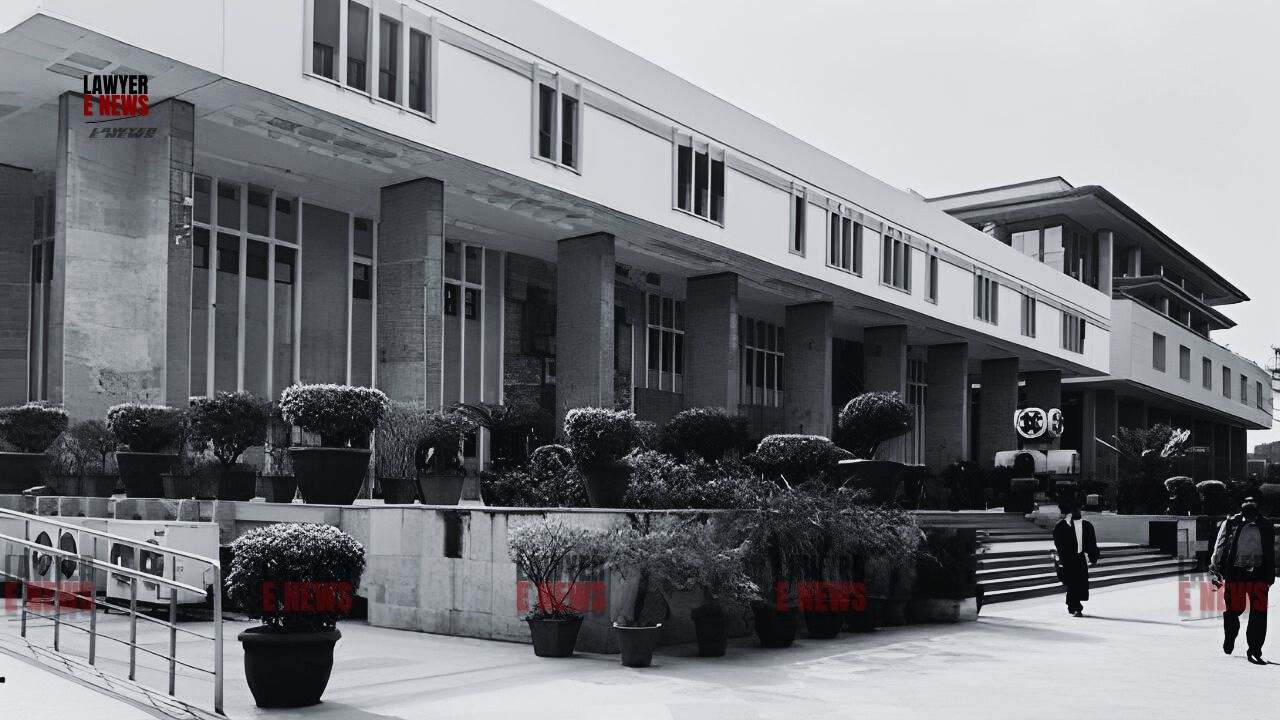
“Delay in trial cannot be the sole factor for granting bail where threat to life and law persists”— In a stern and contextually nuanced ruling Delhi High Court rejected the second Regular Bail Application filed by Umesh @ Kala, an alleged member of the infamous Sunil @ Tillu gang, invoking the Maharashtra Control of Organised Crime Act, 1999 (MCOCA). The Court held that despite prolonged incarceration, the "societal interest" in controlling gang-related organized crime outweighs individual liberty concerns, especially when the accused is allegedly part of an active criminal syndicate with a trail of violence, extortion, and murders.
The decision came in BAIL APPL, where the accused sought bail under Section 483 of the Bharatiya Nagarik Suraksha Sanhita, 2023, citing over six years of pre-trial custody, health emergencies in the family, and his claimed minimal involvement in the syndicate's affairs.
“MCOCA Requires More Than Just Delay—It Demands Disengagement from Organized Crime”
The Court firmly rejected the plea that delay in trial alone justified bail under MCOCA, emphasizing that the "twin conditions under Section 21(4) of MCOCA" must be met. These require that:
“(a) the Court must be satisfied that there are reasonable grounds for believing that the accused is not guilty of such offence; and
(b) that he is not likely to commit any offence while on bail.”
The Court noted that charges under Sections 3 and 4 of MCOCA had already been framed as of 24 August 2024, and about 10 out of 88 prosecution witnesses had been examined. Despite the accused's prolonged custody, the trial was progressing and "cannot be said to be stagnating".
Referring to Ranjitsing Brahmajeetsing Sharma v. State of Maharashtra (2005) 5 SCC 294, the Court observed:
“The duty of the Court at this stage is not to weigh the evidence meticulously but to arrive at a finding on the basis of broad probabilities... But under a special statute like MCOCA, the court may have to probe deeper.”
"Gang Wars Are Still Active; Bail Would Endanger Witnesses"— Court Refuses to Risk Further Violence
While acknowledging the constitutional right to speedy trial under Article 21, the Court gave weight to the continued threat posed by the Tillu gang, of which the petitioner was allegedly a core member. The State’s Status Report painted a chilling portrait of violent rivalries, witness intimidation, and the gang’s continued operation from within jails.
The Court recalled that: “More than 10 public persons have lost their lives in gang rivalry between Tillu gang and Gogi gang. The accused's gang has been involved in shootouts, extortion, and murder, even from behind bars.”
Citing the murder of a key witness Niranjan @ Master in FIR No.466/2015—where the petitioner and co-accused were convicted—the Court found this to be strong evidence of attempts to silence witnesses, justifying denial of bail.
“Acquittals Don’t Dismantle Syndicate Membership—Witness Intimidation Explains the Silence”
The defence had argued that Umesh @ Kala was acquitted in some earlier FIRs and granted bail in others, with no recovery made from him. But the Court dismissed this as inconsequential, noting:
“The requirement under MCOCA is of taking cognizance and does not talk about conviction or acquittal. Several cases may have ended in acquittal because witnesses are unwilling to testify due to fear.”
Even when the gang leader Sunil @ Tillu was killed in Tihar Jail by rivals, the gang reportedly continued its criminal activities, and the applicant, the Court said, could not be presumed reformed.
"Bail Cannot Be Granted Merely Because Trial Is Lengthy—There Must Be Safety in Release"
Rejecting the argument that 6+ years of custody violated Article 21, the Court cited several precedents—Union of India v. K.A. Najeeb (2021) 3 SCC 713, Mohd. Muslim v. State (2023), and Siddhant v. State of Maharashtra (2024)—to hold that delay in trial is relevant but not decisive, especially under special statutes like MCOCA or UAPA.
Justice Krishna emphasized: “Long incarceration or delay in trial cannot be the sole ground for granting bail in serious offences… it must be weighed alongside the gravity of offence, likelihood of witness intimidation, and continuation of criminal acts.”
In Gang Syndicate Cases, Liberty Must Yield to Law and Order
Ultimately, the Delhi High Court refused bail, holding that Umesh @ Kala, even after years in jail, posed a substantial risk to public safety and the integrity of the judicial process. His alleged deep-rooted involvement in an organized crime syndicate, multiple FIRs, and previous convictions convinced the Court that this was not a case where liberty should override law enforcement.
As the Court summed up: “This is one case where even though the Applicant is in Judicial Custody since 24.08.2020, the circumstances do not justify grant of Bail.”
Date of Decision: 18th September 2025