-
by sayum
04 August 2026 1:39 PM







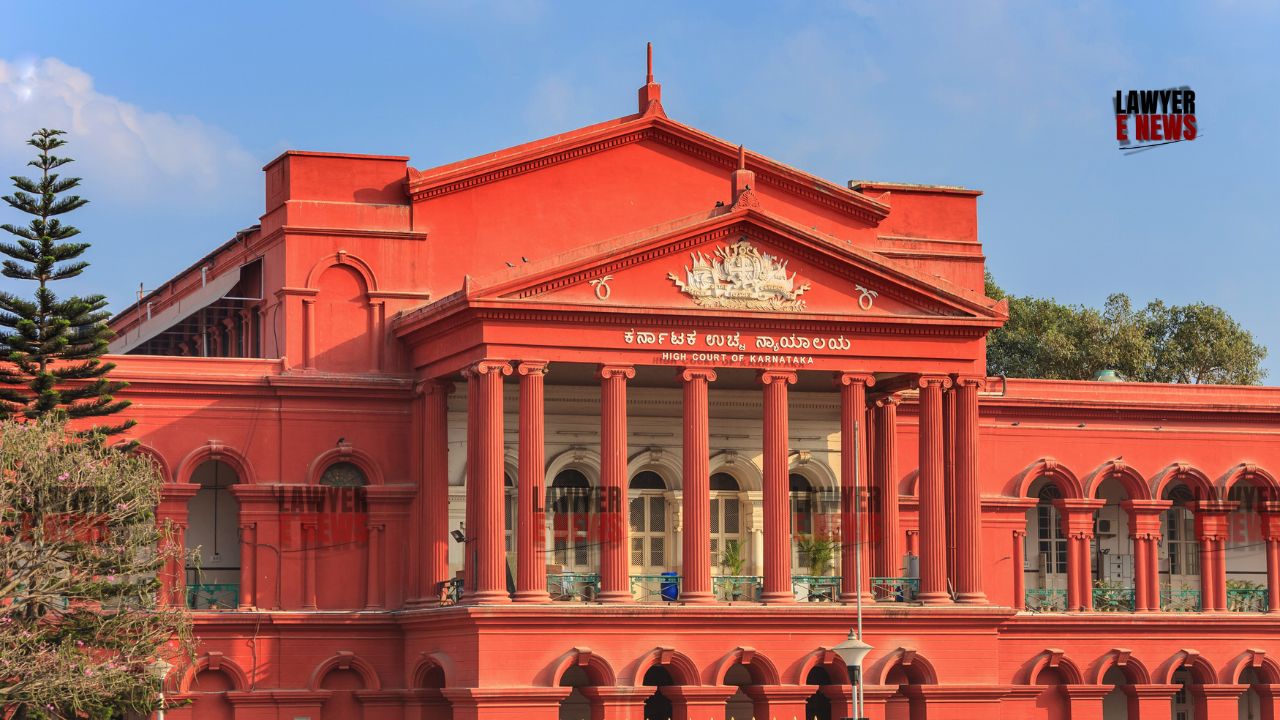
“Litigation Can’t Be an Excuse to Deny Basic Civic Amenities” — In a public interest litigation that exposed years of civic apathy and legal limbo, the Karnataka High Court, on 28 May 2025, addressed the plight of Byadgi Town residents in Shiddalingappa & Others v. State of Karnataka & Others, W.P. No. 35594 of 2019. The Court emphasized that the right to a clean and healthy environment, motorable roads, and safe drinking water is a component of Article 21 of the Constitution — the right to life. While acknowledging that legal challenges had delayed the progress of road widening and infrastructure work on State National Highway No.136, the Court declared that such litigation cannot become a perpetual justification for denying citizens their basic amenities.
The petition was filed by three residents of Byadgi Town — two advocates and a businessman — invoking public interest jurisdiction. They sought directions to the State authorities for restoration and provision of essential amenities including asphalted roads, proper drainage, covered gutters, and potable water, all of which had been disrupted or dismantled since 2016 due to the proposed construction of State National Highway No.136 from Gajendragad to Soraba, which cuts through Byadgi's main thoroughfare.
The petitioners claimed that in the process of laying the highway, telephone lines, water lines, electricity poles, gutters and storm drains were removed, leaving large stretches of the road dug up and unattended for years, thereby compromising public health and safety.
“It was submitted that the residents of Byadgi Town have Fundamental Right to Life under Article 21 of the Constitution to have a clean and healthy environment and have the public amenities including safe drinking water, durable and well-maintained roads and drainage facilities.” [Para 3.4]
Authorities’ Response and Status on Record
The respondent authorities admitted that the National Highway No.136 passes through Byadgi Town, and that in 2016, road widening activities were initiated which involved digging and partial dismantling of existing infrastructure. However, a series of legal setbacks stalled further progress. Notably, the initial land acquisition notifications were quashed by the High Court’s Dharwad Bench in 2022 on technical grounds, forcing the State to restart the acquisition process.
The Court noted from the records: “It appears that main roads of Byadgi were asphalted roads as well as cement concrete roads… The Government has given approval and sanctioned the amount of Rs.1560 lakhs for land acquisition and for construction of four lane road.” [Para 5.1]
Respondents claimed that once the land acquisition is completed, remaining works including permanent drainage, road laying, and civic restoration would proceed without delay. As of now, 350 meters of road had been completed, and 475 meters were already concrete roads.
However, the petitioners argued that years had passed since basic services were disrupted, and the State had made no tangible progress in many residential stretches of the town.
While acknowledging the complex factual background, the Court made clear that citizens cannot be left in infrastructural limbo due to administrative inertia or prolonged litigation:
“Once the litigation ends, it is expected and directed that the authorities concerned would act swiftly to leave no room for the grievance that basic amenities including roads are made available to the residents of Byadgi Town.” [Para 6.1]
It added with emphasis: “It is expected that any litigation is pending in this regard shall be expeditiously proceeded with and shall be decided so that the Byadgi Town does not suffer for roads and related civic amenities.” [Para 6.2]
In doing so, the Court drew a line between unavoidable legal delays and avoidable governmental inaction, urging the State, Public Works Department, and Town Municipal Council to be ready to act without hesitation once the acquisition is legally cleared.
While the Court refrained from issuing coercive directions — given that litigation around land acquisition was still active — it left no doubt about the constitutional obligation of the State to restore civic life in Byadgi. The message is clear: citizens have a right to safe infrastructure, and authorities must anticipate, plan, and act with urgency once legal impediments are removed.
This judgment reaffirms that basic civic services are not charity, but a constitutional guarantee, and that road, water, and drainage infrastructure must not be hostage to bureaucratic delay or technical litigation.
Date of Decision: 28 May 2025