-
by sayum
04 August 2026 1:39 PM







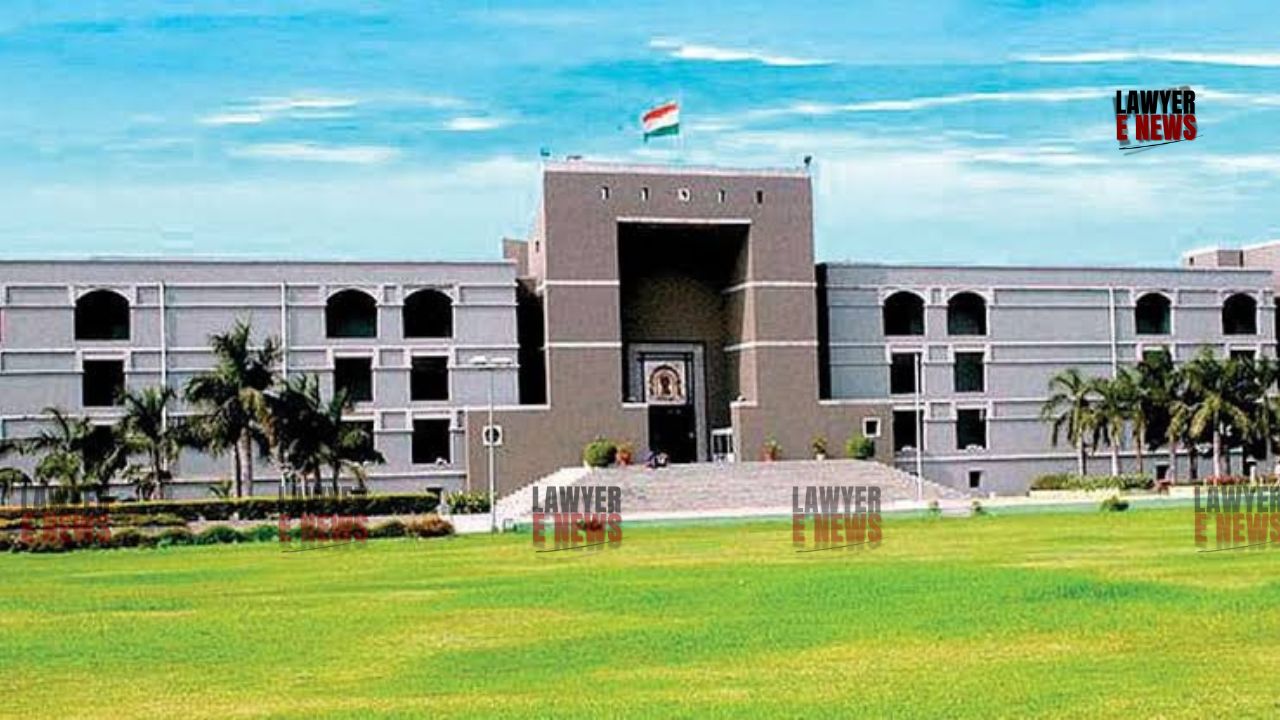
“Absent proximate instigation and cogent evidence, conviction cannot be sustained under Sections 376 or 306 IPC” — Gujarat High Court dismissed a Criminal Appeal filed by the State of Gujarat challenging the acquittal of Babubhai Ramjibhai Koli, accused of raping a 16-year-old girl under the false promise of marriage and abetting her suicide. The Division Bench of Justice Nisha M. Thakore and Justice Maulik J. Shelat affirmed the findings of the Trial Court (Rajkot Sessions Court), which had acquitted the accused in Sessions Case No. 256 of 1993, citing lack of credible and corroborative evidence.
While acknowledging the tragic circumstances of the girl’s death, the Court emphasized that "mere refusal to marry cannot amount to abetment unless accompanied by clear and proximate instigation" and reiterated the well-settled principle that in appeals against acquittal, interference is warranted only when the findings are perverse or wholly unsupported by evidence.
“In Absence of Medical and Forensic Evidence, Allegation of Rape Remains Unsubstantiated”
The prosecution’s case was that the accused had developed a sexual relationship with the deceased minor girl under a false promise of marriage, resulting in pregnancy. The girl, upon being refused marriage, died by suicide through self-immolation. Her mother alleged that the accused had provoked her by saying, “I used you, now go and die.”
However, the High Court noted several crucial deficiencies:
“There is no substantial evidence on record to implicate the accused under Section 376 of the IPC, apart from the oral testimony of the complainant, which itself contains several material contradictions.” [Para 13.1]
Notably, the prosecution failed to conduct a DNA test or establish any forensic link between the pregnancy and the accused:
“No DNA test of the fetus was conducted… No medical evidence to verify the blood group of the fetus vis-à-vis the accused was brought on record.” [Paras 13.2–13.3]
In the absence of such corroboration, the Court found that the charge under Section 376 IPC could not be proven beyond reasonable doubt.
“No Conviction for Abetment Without Clear and Proximate Instigation”
Regarding the allegation of abetment under Section 306 IPC, the Court held that while suicide by a pregnant minor is undoubtedly tragic, abetment requires proof of clear intent and causative provocation.
The Bench reproduced and relied upon the definition of abetment under Section 107 IPC, emphasizing the legal necessity of proximate incitement:
“There must be direct or indirect acts of instigation in close proximity to the suicide… Mere harassment or refusal to marry, without more, is insufficient to attract Section 306 IPC.” [Para 13.6]
Citing Prakash & Others v. State of Maharashtra, Criminal Appeal No. 5543/2024, the Court reiterated:
“The question of mens rea must be evaluated with reference to actual acts and deeds of the accused… unless the offending action is proximate to the suicide, the offence of abetment cannot be made out.” [Para 13.6]
The Court found no specific evidence of any instigating act in immediate connection with the suicide and hence, upheld the trial court’s finding that the charge under Section 306 IPC was not established.
Principles Reiterated: Limited Scope of Interference in Acquittal Appeals
The High Court began its analysis by reiterating the settled law on interference in appeals against acquittal:
“In case of acquittal, there is double presumption in favour of the accused… this presumption is strengthened by the trial court’s findings.” [Para 10]
Referring to Babu Sahebagouda Rudragoudar v. State of Karnataka, (2024) 8 SCC 149, the Court noted:
“Appellate court can interfere only if the trial court’s view is not possible at all, suffers from patent perversity, or is based on a complete misreading of evidence.” [Paras 10–11]
The Bench concluded that the Sessions Court's decision was plausible, based on appreciation of both oral and documentary evidence, and not perverse or arbitrary.
The High Court endorsed the Sessions Court’s observations:
The testimony of the deceased’s mother contained material contradictions.
No witness provided direct evidence of instigation or rape.
The prosecution failed to establish the date or location of the alleged instigation.
The timeline between the alleged provocation and the suicide was vague.
“The learned Trial Court rightly extended the benefit of doubt to the accused… such view was legally justified and based on sound reasoning.” [Paras 13.4–14]
The Gujarat High Court ultimately concluded: “After reappreciating and re-examining the evidence… we find no error of law committed by the Trial Court… the findings are neither perverse nor erroneous.” [Para 15]
Thus, the appeal was dismissed, and the acquittal of the accused was confirmed.
“The prosecution has failed to prove the charges… we are in complete agreement with the reasons assigned by the learned Sessions Court while acquitting the accused.” [Para 16]
Date of Decision: 12 May 2025