-
by sayum
21 October 2026 5:27 PM







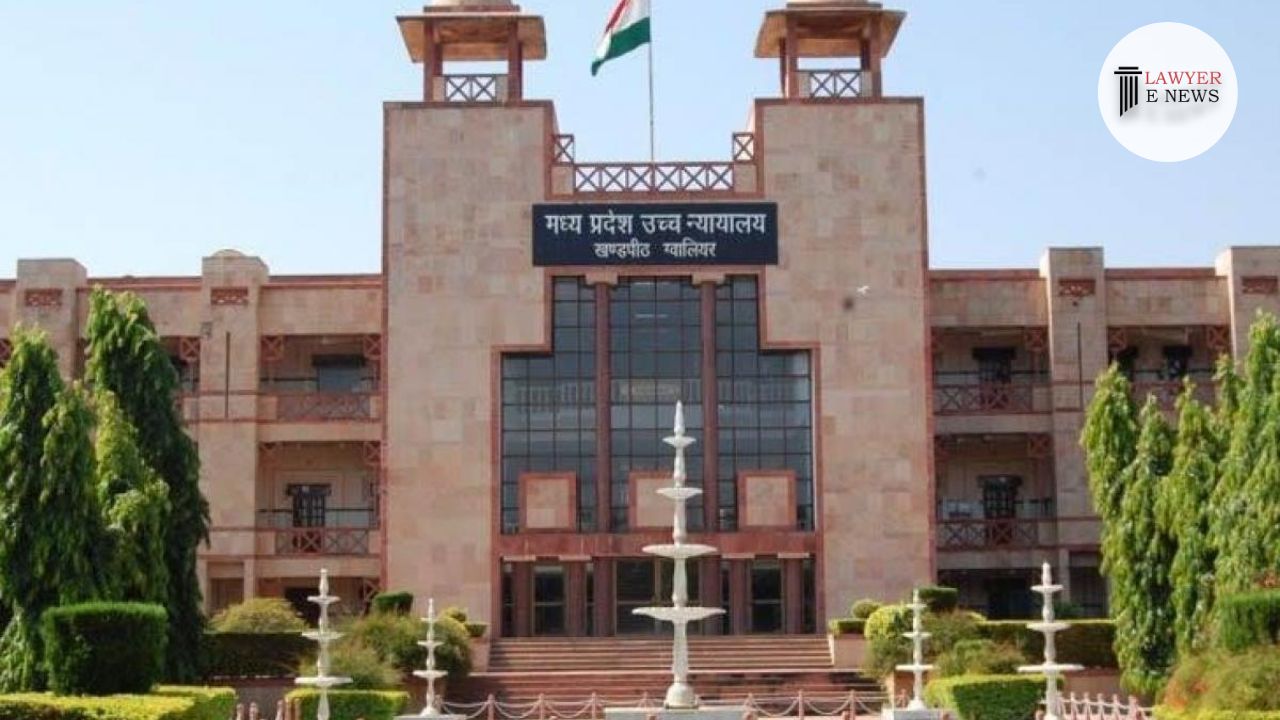
The Madhya Pradesh High Court recently observed [Ankit Vijayvargiya vs. State of Madhya Pradesh] that the Supreme Court has set the bar for cruelty for awarding the death penalty so high that it is nearly impossible for courts to award capital punishment to a convict, even if his actions are extremely heinous.
"This court is of the considered opinion that with the parameters of cruelty set so high today for an offence to fall under the ambit of rarest of rare, as has also been recorded by the Supreme Court in the case of Mohammad Firoz vs. State of Madhya Pradesh, it is, if not impossible, then extremely difficult for any person to receive the death penalty, no matter how heinous his actions," the 15-June-2016 ruling stated.
Justices Subodh Abhyankar and Satyendra Kumar Singh stated that even if a death sentence is imposed, it is not carried out within a reasonable amount of time, thus losing its deterrent effect.
"Even if the Supreme Court upholds the death penalty for an accused person, it would not be carried out, causing the victims of the heinous crimes to endure even more pain. The relatives of such victims, who are also victims, spend a lifetime hoping to receive some consolation and justice, but their hopes are dashed by the procedural system. This court is of the opinion that 'capital punishment' that is not awarded or executed within a reasonable time loses its effectiveness as a deterrent, as people have a very short memory and such offences tend to fade into oblivion, awaiting the next one to occur, according to the judgement. Therefore, the bench deemed it appropriate to direct the government to reconsider the provision of death sentence "as a mode of punishment as deterrence so that at least the victims of such crimes w"
The observations were made while commuting a 30-year-death old's sentence for the rape and murder of a minor girl.
The appellant, Ankit Vijayvargiya, a resident of Mhow, Madhya Pradesh, was convicted and sentenced to death on February 24, 2020 by a sessions judge.
The man was found guilty of violating Sections 363 (kidnapping), (366A) inducing a minor for sex, 376AB (raping the minor), 302 (murder), and 201 (destroying evidence) of the Indian Penal Code (IPC), as well as the offences of penetrative sexual assault and aggravated penetrative sexual assault under the Protection of Children from Sexual Offences Act (POCSO Act).
According to the prosecution, the appellant abducted the minor victim, who was sleeping on a sidewalk with her parents on December 2, 2019. He took her to an abandoned bungalow where he raped and strangled her to death because she was crying so much.
The court noted in its ruling that the appellant had strangled the minor girl, breaking her neck and damaging her windpipe and other organs. In addition, the court acknowledged that the evidence was sufficient to convict the appellant and thus upheld his conviction.
However, the court noted that the lower court did not consider mitigating circumstances before imposing the death penalty.
"The appellant was sentenced to death on the same day he was found guilty, depriving him of his valuable right to bring mitigating circumstances to the court's attention, the victim suffered severe injuries, and the appellant, who is a father of a minor daughter and is 30 years old with no criminal record, is a 30-year-old man with no prior convictions, chances of his rehabilitation cannot be ruled out. We find it appropriate to sentence the appellant to twenty years in prison instead of the death penalty "The bench did not move.
Therefore, the Court commuted his death sentence to 20 years in prison.
The appellant was represented by attorney S K Meena, while the State was represented by attorney Amit Singh Sisodiya.
D.D:01-07-2022
Ankit Vijayvargiya vs. State of Madhya Pradesh