-
by sayum
25 October 2026 7:42 AM







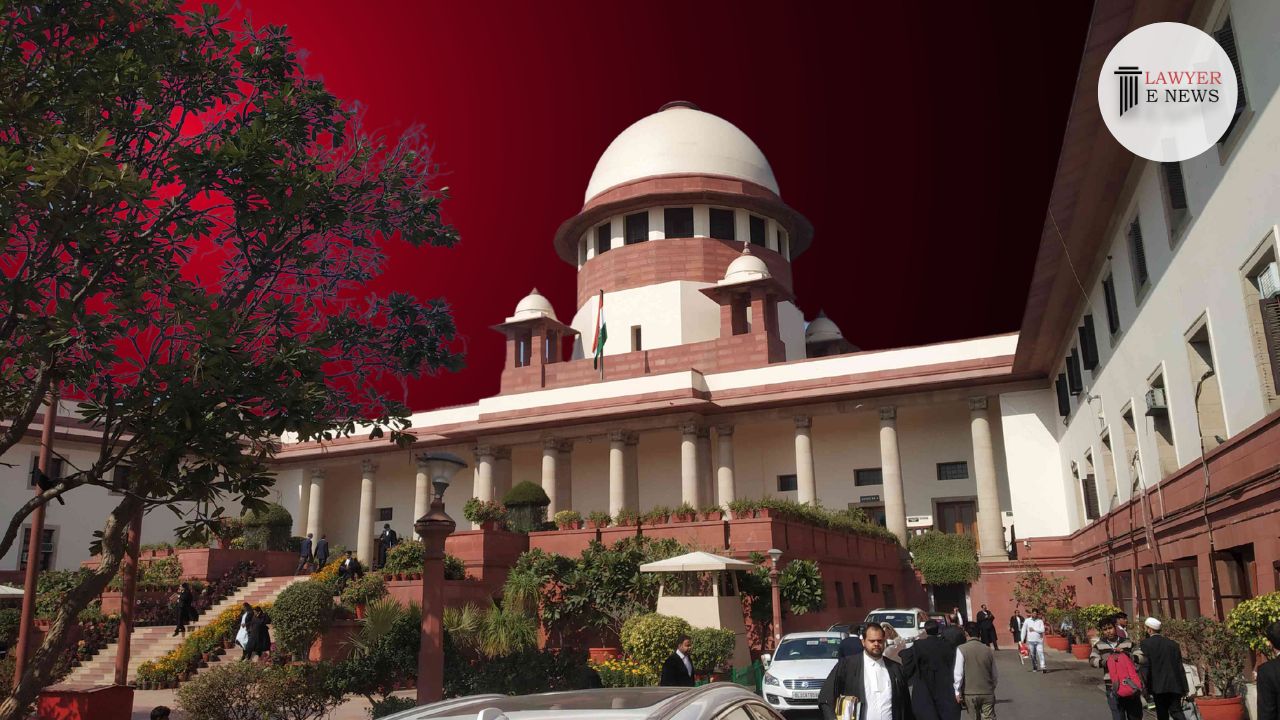
The Supreme Court reaffirmed that until a charge-sheet or final report is submitted, the statement of a rape victim made according to Section 164 CrPC should not be divulged to anyone, including the accused.
A contempt petition highlighting a breach of mandatory instructions issued in State of Karnataka by Nonavinakere Police vs. Shivanna alias Tarkari Shivanna - (2014) 8 SCC 913 and A vs. State of Uttar Pradesh - (2020) 10 SCC 505 was being considered by the bench of CJI UU Lalit and Justice Bela M. Trivedi.
The bench further recommended that the High Courts change or modify the Criminal Practice and Trial Rules in a way that incorporates provisions compatible with these decisions' directives.
According to the contempt petitioner, the accused in the case requested and received a copy of the daughter of the petitioner's statement that was recorded under Section 164 CrPC.
"Although the response provided by the relevant Court in response to the questions posed by this Court claims that no one was given such a copy, the papers currently on file show that the accused did request it and was given the copy with a stamp issued by the Copying Department.
Theoretically, the contempt petition's assertion that the accused received a copy of the document against the court's authorised announcements and directives is accurate. The copy of the statement made pursuant to Section 164 of the Criminal Procedure Code was also heavily cited during the Court proceedings. It is very sad that the relevant Court did not also observe a breach of the orders given by this Court "The bench declared.
However, the court declared that it will not use its jurisdiction over contempt in this case.
The petitioner's attorney emphasised that there are no provisions that go along with the directives in the aforementioned decisions in the Rules of Criminal Practice/Criminal Trial created by the High Courts of the nation. The Court consequently agreed with the counsel's opinion that the Practice Rules established by various High Courts must contain and incorporate clauses in line with the legal principles stated in the aforementioned decisions.
Shivanna alias Tarkari Shivanna is being sued by the State of Karnataka by Nonavinakere Police.
The investigating officer must take action right once to transport the victim to a Metropolitan Magistrate—preferably a Judicial Magistrate—so that her statement can be recorded in accordance with Section 164 of the Criminal Procedure Code. With the explicit instruction that the contents of the statement under Section 164 CrPC should not be divulged to anyone until a charge-sheet or report under Section 173 CrPC is filed, a copy of the statement under Section 164 CrPC should be promptly given to the investigating officer.
The investigating officer must take the victim as close to the Lady Metropolitan or Lady Judicial Magistrate as practicable.
The investigating officer must specifically note the date and time that he first became aware that the crime of rape had been committed, as well as the day and time that he took the victim to the Metropolitan/preferably Lady Judicial Magistrate as stated above.
The investigating officer shall note the reasons for the delay in the case diary and give a copy of it to the magistrate if the victim's transportation to the magistrate takes longer than 24 hours.
victim's medical examination: Section 164-
A CrPC that was added to the CrPC by Act 25 of 2005 requires the investigating officer to arrange for the rape victim to undergo an immediate medical examination. The Magistrate who records the victim's statement in accordance with Section 164 of the Criminal Procedure Code should receive a copy of the report of such a medical examination as away.
In A v. State of Uttar Pradesh, the court determined that unless the proper orders are issued by the court following the filing of the charge-sheet, no individual is entitled to a copy of a statement made under Section 164 CrPC.
It was noted that the right to acquire a copy of such a statement will not become available prior to the taking of cognizance and at the level envisioned by Sections 207 and 208 CrPC.
X vs M Mahender Reddy