-
by sayum
24 August 2026 11:13 AM







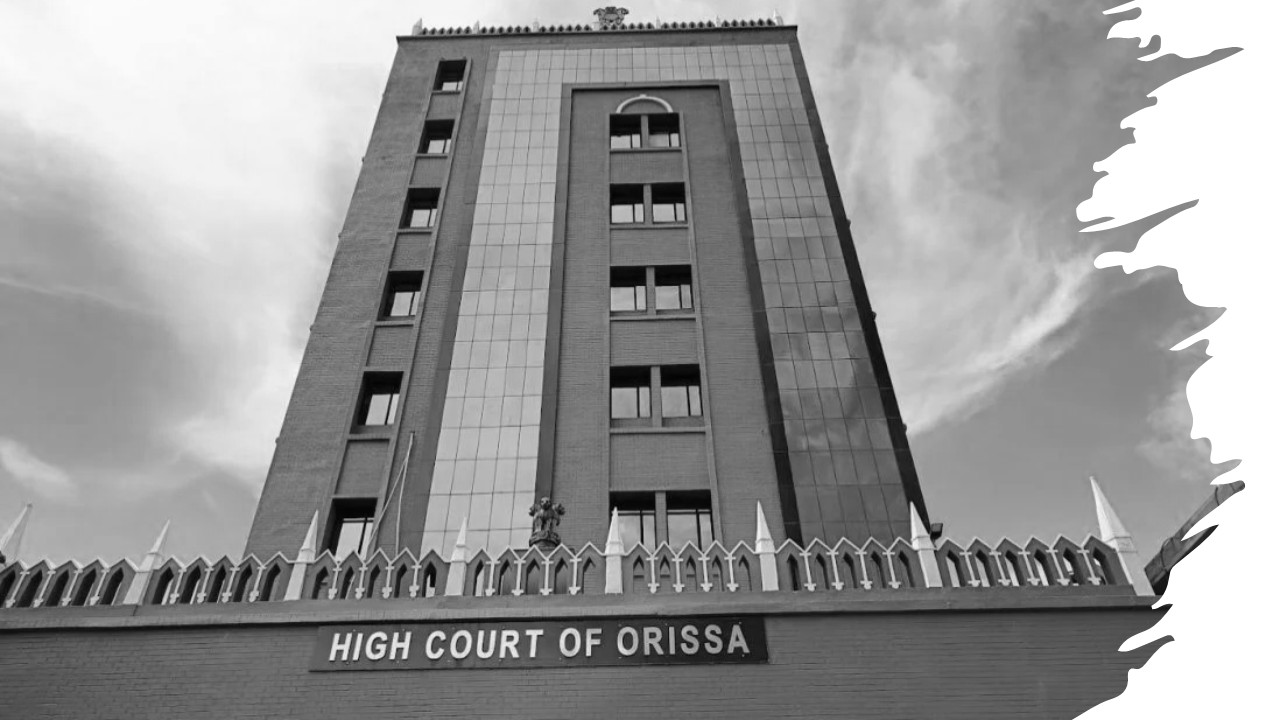
“Where no prima facie case is made out, continuation of prosecution amounts to abuse of process of law” – In a significant application of the Supreme Court’s celebrated Bhajan Lal guidelines, the Orissa High Court quashed criminal proceedings against several individuals accused of offences arising from a protest at the BSE Office, Cuttack, for lack of prima facie evidence. The Court, while deciding CRLMC held that the continuation of proceedings against petitioners not named in the FIR and not identified by witnesses would constitute an abuse of judicial process.
Justice Aditya Kumar Mohapatra, while invoking inherent powers under Section 482 CrPC, observed: “Even after seven years of the occurrence, nothing has been advanced from the side of the Prosecution which would clearly implicate the Petitioners beyond any reasonable doubt… The allegations in the FIR are largely omnibus in nature.”
The Court allowed the petitions in part, quashing the proceedings only against those petitioners not named in the FIR, while permitting the trial to proceed against Petitioner Nos. 1, 2, 9, 11 and 16, who were specifically named.
“No Identification, No Medical Evidence, No Direct Role – Court Calls for End to Perpetuation of Prosecution”
The case stemmed from a demonstration allegedly carried out by members of the ABVP on 27.02.2018 in front of the Board of Secondary Education (BSE), Odisha, over a question paper leak. As per the FIR, the protest turned violent, resulting in alleged assault, vandalism, and outraging of modesty of women staff. The FIR led to charges under serious sections including Sections 307 (attempt to murder) and 354 IPC, among others.
However, the Court found that while the FIR was registered against 21 persons, only five were named, and the rest were added later without credible basis. The Prosecution failed to offer medical evidence for alleged injuries, and the testimonies of witnesses failed to identify the unnamed petitioners. PW-3, the complainant herself, admitted she could not recognize any of the accused and could not see the spot of the protest from her office.
“There is nothing on record which clearly links the acts of vandalism, or the items recovered, to the accused-Petitioners,” the Court said.
The acquittal of a juvenile co-accused by the Juvenile Justice Board on the same evidentiary record also weighed heavily with the Court.
“Public Employment Must Not Be Jeopardized in Absence of Proof” – Court Protects Right to Career and Dignity
The judgment gives special attention to the case of Rajendra Majhi, Petitioner in CRLMC No. 1017 of 2024, who had been selected for several public posts including Assistant Section Officer in Odisha Secretariat Services but was unable to join due to pendency of the criminal case.
Referring to this, the Court held: “Continuation of the present criminal proceeding is bound to have a negative impact on his service career… In absence of concrete evidence, continuation of proceedings would unfairly jeopardize future.”
It noted that Majhi had no other criminal antecedents, and that the IIC, Mangalabag Police Station had confirmed the same in a letter dated 09.09.2025. The Court emphasized that the inherent powers under Section 482 CrPC can and should be exercised to “secure the ends of justice” in such cases.
Reiterating that High Courts must not engage in appreciation of evidence under Section 482, the Court clarified that interference is warranted only when the FIR and accompanying material fail to disclose any offence or are manifestly abusive.
“Selective prosecution without direct or circumstantial evidence offends the constitutional guarantees of fairness,” the Court warned.
The Orissa High Court’s judgment is a timely reaffirmation of the principle that criminal law must not be weaponized against individuals where no foundation exists for prosecution. It underscores the responsibility of courts to protect not just procedural rights, but the dignity and career of young individuals in the face of vague, unsupported, and delayed prosecutions.
The Court has directed that the trial against the remaining petitioners — Petitioner Nos. 1, 2, 9, 11 and 16 — be expedited and concluded within six months, while sparing others the trauma of unnecessary litigation.
Date of Decision: 16 January 2026