-
by sayum
29 August 2026 5:21 AM







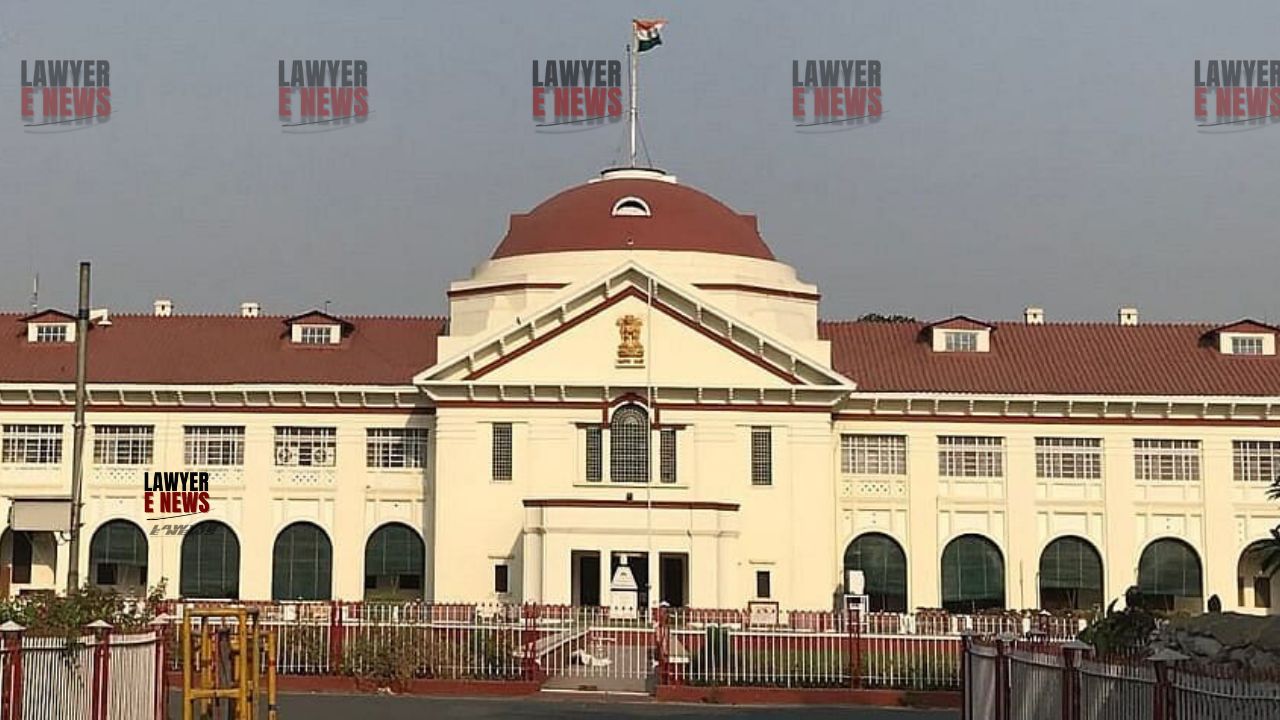
"There is absolutely no evidence that the persons standing outside the house shared the common object of murder. Section 149 IPC cannot be invoked in such a vacuum… Unlawful Assembly Must Be Proven; Vicarious Liability Cannot Rest on Assumptions' - Patna High Court delivered a crucial ruling that reasserts the legal sanctity of Section 149 IPC and its strict evidentiary threshold. The judgment stemmed from an appeal challenging a conviction handed down by the 2nd Additional Sessions Judge, Bhojpur at Ara, in Sessions Trial No. 271 of 1991, which had resulted in life imprisonment for two accused under multiple sections, including Sections 302/149 IPC and Section 27 of the Arms Act.
This case revolved around a gruesome incident in 1990 in which two men were murdered and three others severely injured due to gunfire. The primary legal question, however, came down to the doctrinal application of Section 149 IPC, which governs vicarious criminal liability arising from acts committed by members of an unlawful assembly.
“Section 149 Cannot Be Used as a Catch-All Provision”: Court Draws Clear Limits on Constructive Liability
The Court declared with precision that constructive liability under Section 149 IPC must not be stretched to implicate individuals unless there is concrete evidence that five or more persons formed an unlawful assembly with a shared object.
"The prosecution witnesses were absolutely silent about the role of the persons who were standing outside the house. The Investigating Officer also failed to identify and arrest those persons to ascertain as to whether the said persons also shared a common object with the appellants," the Bench observed.
Consequently, the Court refused to invoke Section 149 IPC against Binod Singh, who was convicted primarily on the basis of his alleged participation in a larger group. The Court held that his individual act—shooting one of the victims in the arm—could be prosecuted under Section 307 IPC, but not under Section 302 read with Section 149 IPC.
“Vicarious Liability Must Be Grounded in Proven Intent, Not Presumed Association”
The Court noted that only four persons were said to have entered the house with firearms, while the others remained unidentified and passive.
"In the instant case too, the appellants cannot be roped in with the aid of vicarious liability described in Section 149 of IPC on the ground that four suspected persons were standing outside the house of the victim. There is absolutely no evidence that the said suspected persons had common object to commit the offence of murder."
This nuanced approach demonstrates the Court’s firm commitment to preventing misuse of group liability statutes in criminal law.
“Injured Eyewitnesses Are Not to Be Dismissed as Interested Witnesses”
On the evidentiary front, the Court considered the testimonies of five family members, including three injured eyewitnesses, as credible and reliable. Rejecting the contention that these witnesses were biased or interested, the Bench referred to landmark rulings, including Paresh Kalyandas Bhavsar v. Sadiq Yakubbhai Jamadar, stating:
"Their presence during the occurrence cannot be doubted. The injured witnesses would be the last persons to leave out the real culprits and implicate others falsely."
“FIR Is Not Substantive Evidence; It Cannot Be Used to Contradict Non-Makers”
In another significant legal observation, the Court clarified the limited evidentiary role of an FIR, emphasizing that it cannot be used to contradict witnesses who did not make the statement.
"An FIR is not a substantive piece of evidence... it can only be used to corroborate the statement of the FIR maker under Section 157 of the Evidence Act or to contradict it under Section 145 of the Evidence Act. It cannot be used to contradict other witnesses."
The Bench thus dismissed arguments seeking to impeach prosecution witnesses based on inconsistencies between the FIR and their statements.
“Defective Investigation Cannot Nullify Credible Testimony”
While the investigation in the case was criticized for being “perfunctory”, including failure to draw a sketch map or seize lanterns (the light source cited for identification), the Court made it clear that investigative lapses do not absolve culpability when direct evidence is strong.
"We are not in a position to discard the evidence of the injured witnesses merely because the investigation was lackadaisical."
“Specific Overt Acts Must Determine Guilt”
Drawing a line between generalized participation and specific individual acts, the Court concluded:
"Specific act alleged against Binod Singh is causing gun shot injury to Baleshwar Prasad on his right hand."
Accordingly, Binod Singh’s life sentence under Section 302/149 IPC was set aside, and he was instead convicted under Section 307 IPC for attempt to murder, with a reduced sentence of seven years’ rigorous imprisonment.
Meanwhile, Kamakhya Singh’s conviction under Section 302 IPC was upheld, as he was found to have fired the fatal shot at Jagannath Kahar, a fact confirmed by consistent eyewitness accounts and corroborating medical evidence.
“Sterling Witnesses Need No Corroboration”
Reinforcing the reliability of the prosecution witnesses, the Court referred to the test laid down in Rai Sandeep v. State (NCT of Delhi) on the qualities of a “sterling witness”:
"The witness should be in a position to withstand cross-examination of any length and under no circumstance should give room for any doubt... The said version should consistently match with every other supporting material."
The testimonies of P.Ws. 1 to 5, particularly the injured ones, were found to withstand this test.
Vicarious Liability Requires Rigorous Proof, Not Presumption
The judgment is a reminder of the rigorous evidentiary thresholds required for invoking collective criminal responsibility. By separating individual liability from presumed group intent, the Patna High Court has ensured that Section 149 IPC is not transformed into an instrument of overreach.
The decision affirms that criminal liability must flow from actions and intention—not from association alone.
Date of Decision: 11th September 2025