-
by sayum
28 August 2026 2:11 PM







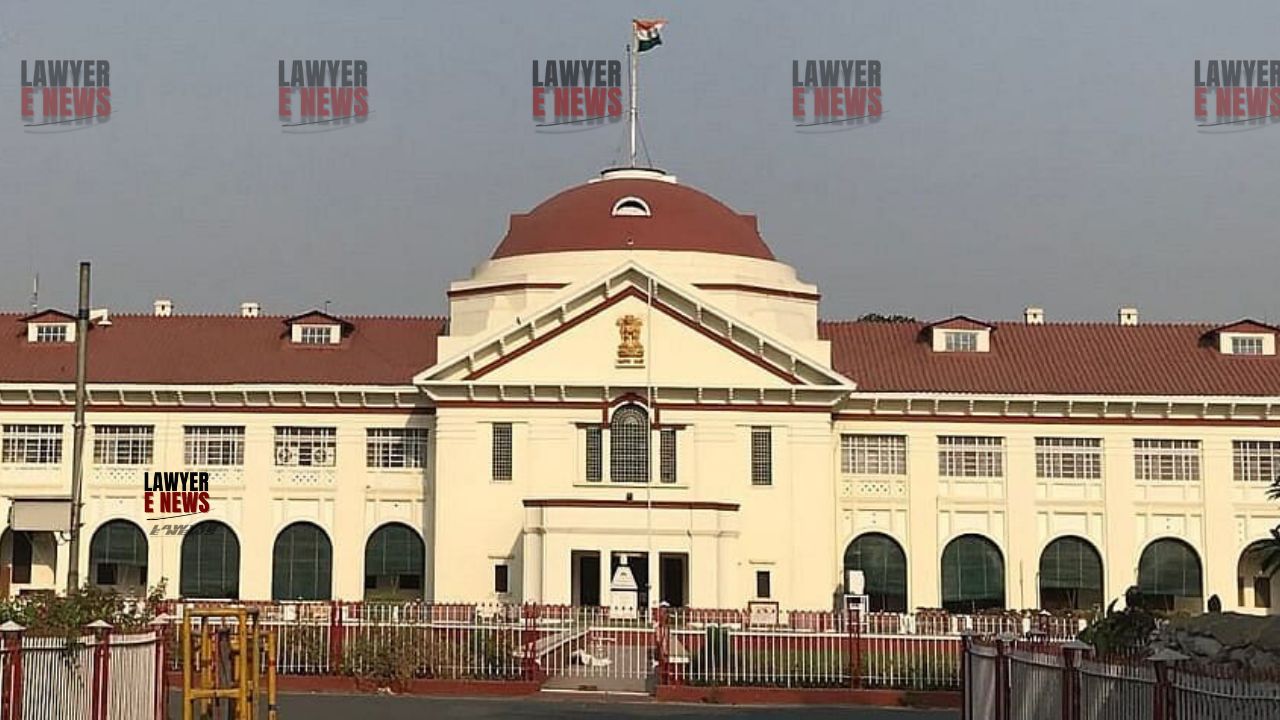
"Foundational trigger for Section 319 must be the evidence produced on oath in the trial itself. To the understanding of this Court Section 164 is not a substantive evidence. They can only be used after the witnesses testified during trial to corroborate or contradict their statement and nothing more," Patna High Court, in a decisive ruling, quashed a trial court's order summoning an individual as an additional accused under Section 319 of the Code of Criminal Procedure (CrPC).
A single bench of Justice Ansul held that the power to summon a person not named in the charge-sheet is an extraordinary discretion that cannot be triggered by investigation materials like Section 164 statements or hearsay testimony. The Court observed that such power must be exercised sparingly and only when the evidence led during the trial is "strong and cogent" enough to likely lead to a conviction.
The case originated from the murder of one Bishwanath Kumar Gupta in 2012, where the petitioner, Deepak Kumar, was not named in the initial First Information Report (FIR). His name transpired nearly three months later through allegedly coerced confessional statements, leading to a complex history of investigation transfers and departmental actions against the investigating officers. Despite the police filing a final form in his favor, the Additional District Judge-VII, Bhagalpur, summoned the petitioner to face trial under Section 319 CrPC during the sessions trial.
The primary question before the court was whether statements recorded under Section 164 CrPC during investigation constitute "evidence" for the purpose of invoking Section 319 CrPC. The court also examined whether the testimony of a witness based entirely on newspaper reports meets the high threshold of satisfaction required to summon an additional accused to stand trial for murder.
Section 164 Statements Are Not Substantive Evidence
The High Court clarified the legal position regarding what constitutes "evidence" under Section 319 CrPC, relying heavily on the Constitutional Bench judgment in Hardeep Singh v. State of Punjab (2014). The bench noted that the word "evidence" in this context refers strictly to oral or documentary evidence brought before the court during the trial itself. The Court emphasized that materials collected during the investigation stage, including Section 164 statements, lack the status of substantive trial evidence.
The Court observed that Section 164 statements are recorded during the investigation and are intended only for the purpose of corroboration or contradiction once the witness testifies during the trial. The trial court's reliance on the statements of five witnesses under Section 164 to invoke Section 319 CrPC was characterized as a "complete illegality." Justice Ansul noted that the foundational trigger for this extraordinary power must be evidence produced on oath in the trial itself, subjected to the court's scrutiny.
High Threshold For Summoning Additional Accused
The bench reiterated that the degree of satisfaction required for invoking Section 319 CrPC is significantly higher than the prima facie satisfaction required at the stage of framing charges. The Court noted that the test to be applied is one that is more than a prima facie case but short of a certainty of conviction. This distinction is vital because summoning a person entails a de novo trial, which can prejudice the prosecution and cause significant delays.
Court Explains Satisfaction Level Under Section 319 CrPC
The bench highlighted that the court must be satisfied that the evidence, if it goes unrebutted, would likely lead to the conviction of the person sought to be added. In the absence of such strong and cogent material, the trial court must refrain from exercising its discretionary power. The Court warned against the "casual and cavalier" exercise of this jurisdiction, noting that it should not be turned into a tool for a "fishing inquiry."
Reliance On Hearsay Testimony And Newspaper Reports
The High Court took strong exception to the trial court's reliance on the deposition of P.W. 11, the mother of the deceased. While she alleged in her examination-in-chief that the petitioner paid to have her son killed, she admitted during cross-examination that this information was gathered solely from a newspaper report. The Court held that such hearsay material is wholly insufficient to even frame charges, let alone satisfy the higher standard required under Section 319 CrPC.
The Bench observed that when ten out of eleven witnesses stated nothing against the petitioner, the trial court erred in focusing on a single witness whose testimony was based on hearsay. The Court noted that the trial judge failed to look at the deposition in its entirety, specifically the admission that the information came through a newspaper, which rendered the testimony legally fragile.
"The allegation that from a newspaper report one witness come to know that a person has paid someone to kill her son is a material which in any case is not going to get even the charges framed. Thus, the materials... are wholly insufficient for issuance of a summon under Section 319 to face the trial."
Evidence Of Malafide In Prosecution
The High Court also noted that the case appeared to be "actuated by malafide" from its inception. It took cognizance of the fact that the investigating officer had been penalized by the National Human Rights Commission and through departmental proceedings for wrong investigation. Furthermore, the Court mentioned that the judicial officer who passed the summoning order was himself facing disciplinary proceedings for alleged corruption, adding to the suspicious nature of the petitioner's implication.
The Court concluded that there was a complete absence of credible material to proceed against the petitioner. By quashing the order dated August 22, 2019, the High Court held that the trial court's action was not only based on insufficient evidence but was also tainted by apparent malafides. The petition was allowed, and the summoning of the petitioner under Section 319 CrPC was set aside.
Date of Decision: 27 May 2026