-
by sayum
04 August 2026 1:39 PM







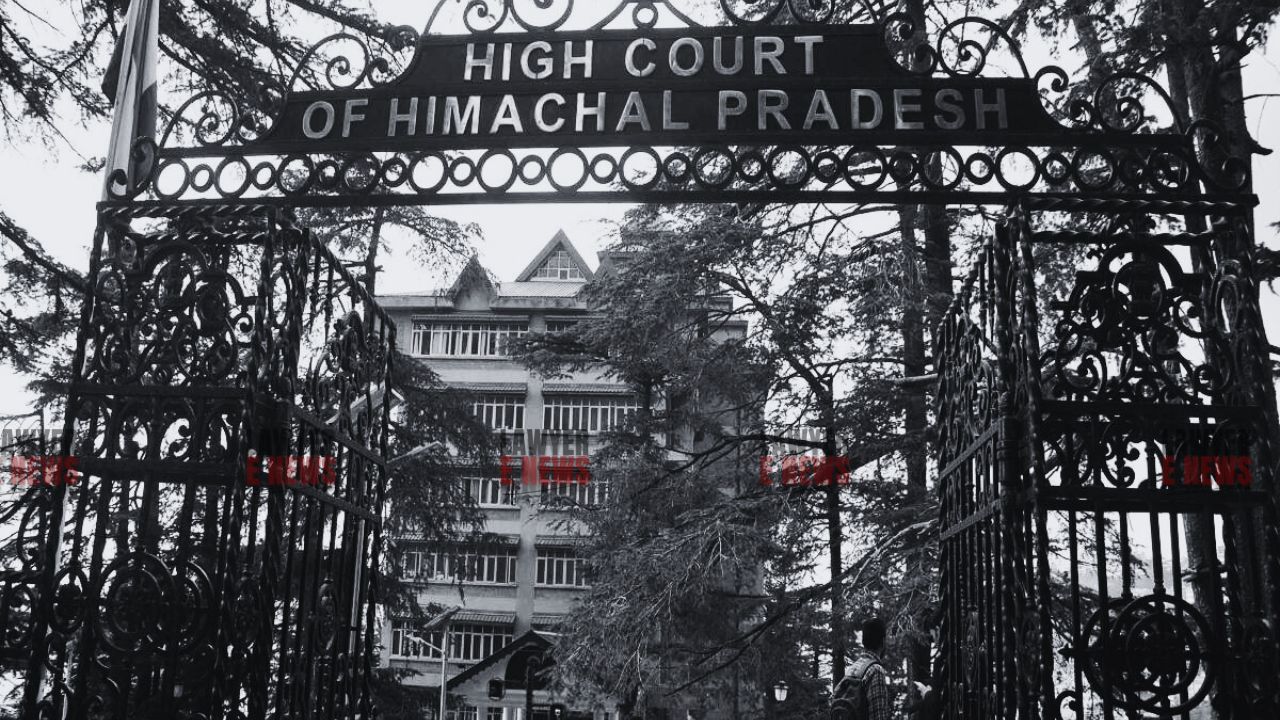
“When the disability certificate itself mentions the disability as temporary and there is no reassessment after the prescribed period, compensation for loss of future earning cannot be granted beyond a reasonable time” — Himachal Pradesh High Court partly allowed an appeal filed by the insurance company by modifying the compensation awarded by the Motor Accident Claims Tribunal, Mandi. The Court held that mere pain or discomfort without medical substantiation of permanent functional disability cannot form the basis for awarding long-term loss of income.
Justice Vivek Singh Thakur held that “the loss of future income must be proved by material on record. Pain in leg may not be a substitute for proof of permanent disability or loss of 100% earning capacity.”
The claimant, Nitya Nand, had suffered injuries in a road accident and was awarded ₹4,53,047 by the Tribunal. The insurance company contested the award on grounds that the 25% disability certificate was temporary in nature and that the claimant had himself admitted that he had recovered.
The Court noted from the claimant’s own statement that, “यह ठीक है की अब मैं ठीक हो गया हूँ” (“It is true that now I am cured”), though he added he still experienced pain in the leg. However, there was no subsequent medical reassessment, as mandated by the certificate itself.
Justice Thakur ruled that “the certificate itself states that disability is temporary in nature and is to be reassessed after a period of one year,” and in absence of reassessment, the presumption of permanent disability cannot be sustained.
On Proof of Disability and Future Income Loss:
The High Court clarified that a disability certificate must be followed by clinical reassessment or corroborative evidence to justify compensation under future income loss. It observed: “Without such reassessment, and in absence of functional disability proof, the Tribunal could not have assumed continuation of loss of earning capacity.”
It further emphasized that even though some discomfort may persist, that does not amount to continued disability that prevents a person from resuming work. The Court said: “The Tribunal is not expected to award compensation based on speculation or assumptions, but on objective material — some conjecture is inevitable but it must be based on a factual premise.”
Accordingly, the Court allowed compensation for future loss of income only for two years, and limited the earning disability to 25% as per the original certificate.
On Reimbursement and Medical Bills:
The insurer contended that since the claimant had submitted forms indicating reimbursement of medical expenses, he was not entitled to claim the same from the insurer. The High Court rejected this argument, holding: “Had there been reimbursement, the original bills and verification forms would have been deposited with the employer… their possession with the claimant proves otherwise.”
Similarly, the Court noted that expenses on an attendant were reasonable, but should be recalculated based on realistic market wages in 2007. It held: “An attendant could not have been available for ₹4,000/month in 2007… a reasonable rate of ₹6,000/month is applicable for the 7-month treatment period.”
The Himachal Pradesh High Court's ruling underscores a key legal principle in motor accident compensation law: temporary or unsubstantiated disability cannot justify a speculative award under future income loss. Claimants must demonstrate functional disability and its economic impact through tangible evidence. At the same time, just compensation must be fair both to the injured and to the insurer, and courts must strike that balance with objectivity.
Justice Thakur concluded: “Claimant is entitled to just compensation — no more, no less. The tribunal must be cautious in not turning sympathy into largesse. A rational, fact-based approach is necessary.”
Date of Decision: 06 May 2025