-
by sayum
28 August 2026 6:47 AM







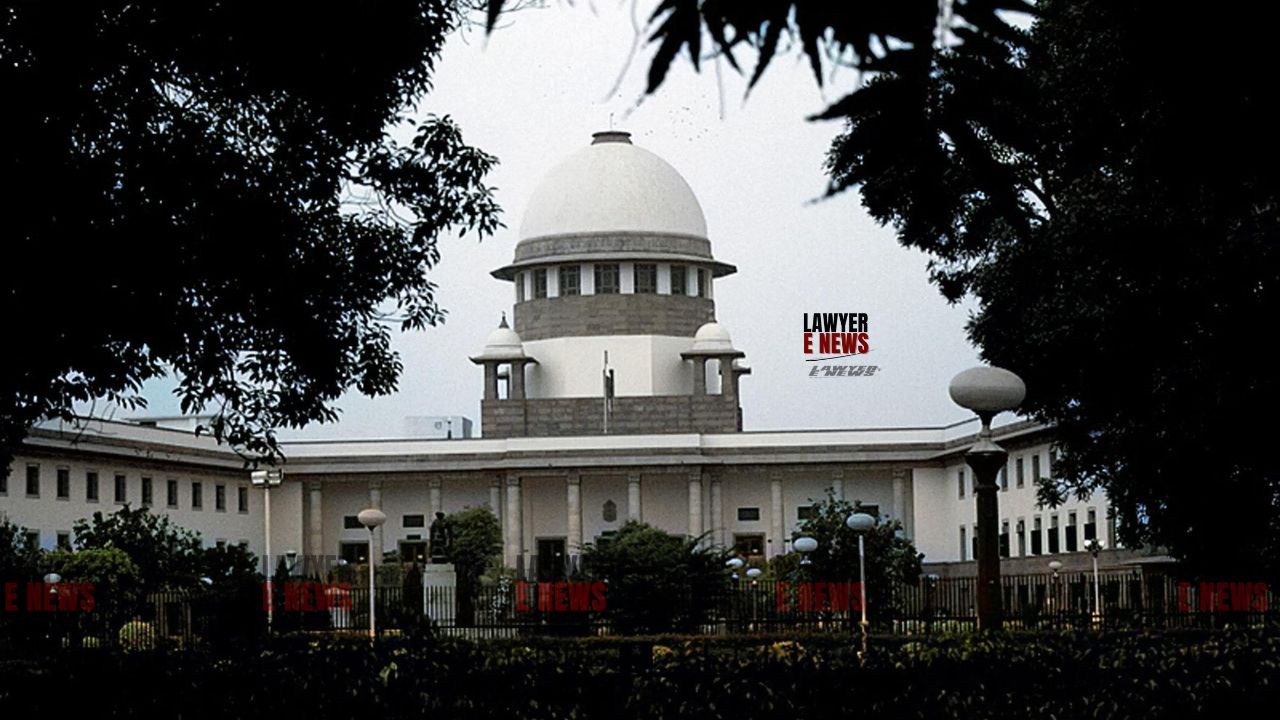
“Declaration as OGAS Not Confined to NFFU — Government Cannot Pick and Choose Benefits”, In a landmark decision with far-reaching consequences for the nation’s paramilitary forces, the Supreme Court of India held that the Central Armed Police Forces (CAPFs) including CISF, BSF, CRPF, ITBP, and SSB must be treated as full-fledged Organised Group-A Services (OGAS). The Court categorically stated that once a service is declared as OGAS, all benefits associated with that status must follow, not merely selective implementation like the grant of Non-Functional Financial Upgradation (NFFU).
Justice Ujjal Bhuyan, delivering the judgment on behalf of the Bench comprising himself and Justice Abhay S. Oka, ruled:
“Now that CAPFs have been declared as OGAS, all benefits available to OGAS should naturally flow to the CAPFs. It cannot be that they are granted one benefit and denied the other.”
The Court also addressed long-standing concerns of stagnation, inequality, and excessive IPS deputation, and issued binding directions to overhaul recruitment rules and progressively limit deputation of IPS officers in CAPF leadership posts.
The appeals arose from a common judgment of the Delhi High Court dated July 27, 2020, in a batch of writ petitions filed by Group-A Executive Cadre officers of CAPFs. These officers sought full implementation of OGAS status, parity in promotional norms, and an end to the domination of senior command posts by deputed IPS officers.
Though the High Court recognized the entitlement to NFFU, it denied relief regarding recruitment rules, cadre review, and elimination of deputation, treating the Supreme Court’s earlier ruling in Harananda as confined to financial benefits.
The appellants, however, argued that the 2019 Harananda ruling granted full OGAS status, and the 2019 Office Memorandum (OM) from the Department of Personnel and Training (DoPT) conclusively recognized the CAPFs as OGAS for “cadre review and other related matters.”
The Supreme Court agreed with the appellants and ruled against the restrictive interpretation adopted by the High Court.
The Court traced the genesis of the dispute to the Sixth Central Pay Commission (2008), which recommended parity in promotion and pay progression for officers of organized services, especially to address stagnation at higher ranks. The Government accepted these recommendations and issued a series of OMs.
The DoPT’s OM dated 12.07.2019 was found to be pivotal. It unambiguously declared: “The RPF and Group-A Executive Cadres of the following CAPFs have been treated as Organised Group A service (OGAS) by this Department for cadre review and other related matters.”
The Court criticized the High Court for failing to consider this OM: “Failure to consider this OM has materially affected the adjudication by the High Court.”
On the attempt by the Centre to restrict the effect of OGAS recognition only to NFFU, the Court firmly stated: “It cannot be that they are granted one benefit and denied the other.”
In a constitutional context, the Court held: “Disparity in promotional norms and denial of OGAS benefits to CAPF officers despite equal standing violates Articles 14 and 16 of the Constitution.”
On Deputation of IPS Officers and Service Stagnation:
A central grievance was the high percentage of command posts being held by IPS officers on deputation, leaving very few avenues for promotion within the CAPFs. The Court recognized this concern and noted:
“There is a great deal of stagnation. Such stagnation can adversely impact the morale of the forces.”
The Court acknowledged the importance of IPS officers for coordination with states but ruled that this should not be at the cost of career progression for CAPF officers:
“The number of posts earmarked for deputation in the cadres of the CAPFs up to the level of Senior Administrative Grade (SAG) should be progressively reduced… within an outer limit of two years.”
It added: “This will bring in a sense of participation of the cadre officers belonging to the CAPFs in the decision-making process… thereby removing the long-standing grievances.”
Directions Issued by the Court:
The Court laid out a strict and time-bound action plan to be followed by the Ministry of Home Affairs and DoPT:
Cadre Review Due Since 2021 must be completed within six months from the date of judgment.
Review and Amendment of Recruitment Rules for each CAPF must be carried out within the same timeframe, with hearing given to cadre officers.
DoPT is directed to take appropriate action within three months of receiving the cadre review reports from MHA.
Deputation posts up to SAG level in CAPFs must be progressively reduced over two years.
The Court also lifted the stay on cadre review imposed earlier and disposed of all civil appeals.
This judgment marks a watershed moment in the service jurisprudence for India’s paramilitary forces. It restores dignity and equity to thousands of officers who have served the nation under difficult conditions for decades.
In the Court’s words:
“Their dedicated service upholding the security, integrity and sovereignty of the nation... cannot be ignored or overlooked.”
The ruling ensures not just financial parity but also institutional justice, granting long-overdue recognition and career mobility to CAPF officers by affirming their full Organised Group-A status, demanding structural changes, and curtailing IPS overreach.
Date of Decision: May 23, 2025