-
by sayum
28 August 2026 2:11 PM







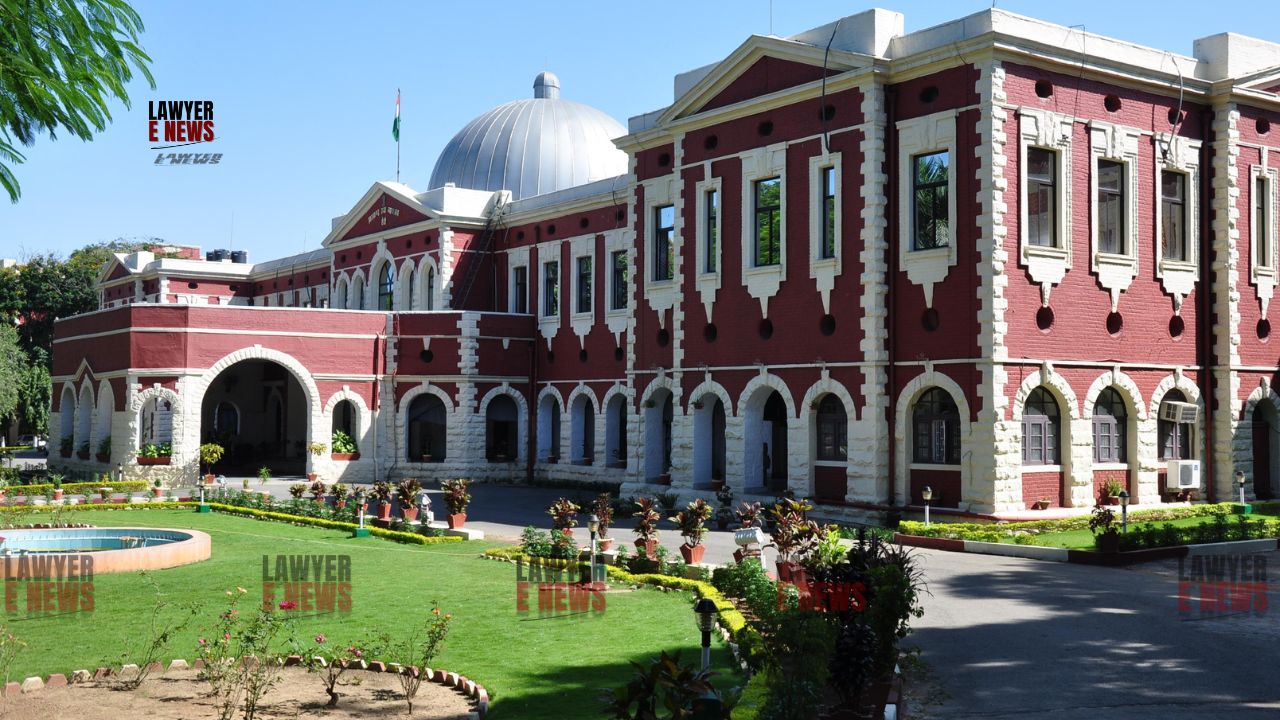
"Even If There is Good Evidence, Delay of Over Two Decades Is Fatal—No Court Can Aid Those Who Sleep Over Their Rights" — Jharkhand High Court dismissed appeals filed by two former employees of Bharat Coking Coal Limited (BCCL) who had challenged their dates of birth recorded in service documents, seeking correction based on Matriculation Certificates.
Despite claimants presenting school certificates to show later dates of birth—allegedly entitling them to 3–5 more years of service—the High Court held that the long delay of 20+ years in raising such disputes rendered their claims inadmissible. The Court stressed that “correction of date of birth cannot be claimed as a matter of right”, even if supported by evidence, if the employee has failed to act within a reasonable time.
“The High Court Cannot Interfere in Disputed Questions of Fact Arising After Decades of Service”
“Even in Absence of Rule Limiting Time, Two-Decade Delay Is Ex-Facie Unreasonable”—Court Upholds Employer’s Right to Finalize Service Records
The appeals stemmed from two nearly identical cases:
Uma Ram, appointed in 1986, claimed his date of birth was 05.10.1965 (per Matric Certificate) instead of 07.05.1962 recorded in service records. He approached the Court in 2007, after over 21 years of service, only after being forced to retire in 2022.
Shiv Kumar Paswan, employed since 1990, claimed his correct date of birth was 07.06.1966, not 27.06.1964 as in official records. His first representation was made only in 2013, after more than 23 years in service.
In both cases, the respondents (BCCL) argued that the employees never submitted their matriculation certificates at the time of joining, and their ages were accordingly assessed by the Medical Board, then recorded in Form-B. Both employees had signed these records and never objected for decades.
“Even Strong Evidence Cannot Justify Relief If You Slept Over Your Rights” — Court Heavily Relies on SC's Ruling in Shyam Kishore Singh
The Division Bench of Chief Justice Tarlok Singh Chauhan and Justice Rajesh Shankar squarely applied the Supreme Court's precedent in Bharat Coking Coal Ltd. v. Shyam Kishore Singh, (2020) 3 SCC 411, where it was held:
“Even if there is good evidence to establish that the recorded date of birth is erroneous, the correction cannot be claimed as a matter of right… the court or the tribunal should be loath to issue a direction for correction of the service book if the claim is made after long delay.”
High Court held: “If the delay in applying for correction of date of birth is of more than two decades, then the same is regarded as fatal… the burden lies on the employee to prove timely submission of matriculation certificate. Both appellants failed to discharge this burden.”
The Court further quoted: “No court or the tribunal can come to the aid of those who sleep over their rights.” (Union of India v. Harnam Singh, (1993) 2 SCC 162)
Matric Certificate Is Not Enough Without Timely Action: NCWA-III Instruction No. 76 Not Automatically Enforceable After Long Delay
The appellants had relied heavily on Implementation Instruction No. 76 of the National Coal Wage Agreement (NCWA-III), which stipulates that if a Matric Certificate exists before joining, it should be treated as valid proof of age.
But the High Court clarified: “Instruction No. 76 is subject to procedural compliance and timely invocation. Both appellants had appeared before Medical Board, signed the records, and never objected until much later.”
The Court ruled that while the Matric Certificate may have evidentiary value, its delayed invocation without proof of timely submission cannot override procedurally verified entries.
Distinction from Chhota Birsa Uranw’s Case: No Timely Protest, No Relief
The appellants invoked the Supreme Court’s earlier ruling in Chhota Birsa Uranw v. BCCL, (2014) 12 SCC 570, where the Court had directed correction of date of birth based on school records.
But the High Court rejected the comparison:
“In Chhota Birsa Uranw, the employee had immediately availed the opportunity to seek correction under NCWA-III implementation process. The same is not the case here. These appellants did not seek correction even when that process was available.”
Thus, the Court ruled the Uranw precedent was distinguishable, and inapplicable where the delay was unexplained and excessive.
“Age Finalized by Medical Board, Signed Without Protest, Cannot Be Challenged After Retirement”
The Court underscored the finality of Form-B, the official service record document, stating:
“Both appellants signed their Form-Bs, which clearly recorded their age, and did not raise any dispute for over two decades. These facts suggest full awareness and acquiescence.”
There was no clerical or typographical error alleged. Instead, the appellants argued factual discrepancy, which the Court held could not be examined in writ jurisdiction under Article 226 of the Constitution, especially when disputed facts are involved.
In a decision reinforcing administrative discipline and judicial restraint, the Jharkhand High Court dismissed both LPAs, holding that correction of date of birth in service records cannot be sought as a right, particularly at the fag end of service or post-retirement, without irrefutable proof and timely action.
The judgment will serve as a crucial precedent for public sector undertakings and government departments, drawing a strict line against delayed age correction claims, even when supported by documents like matriculation certificates.
Date of Decision: 01 August 2025