-
by sayum
26 August 2026 12:18 PM







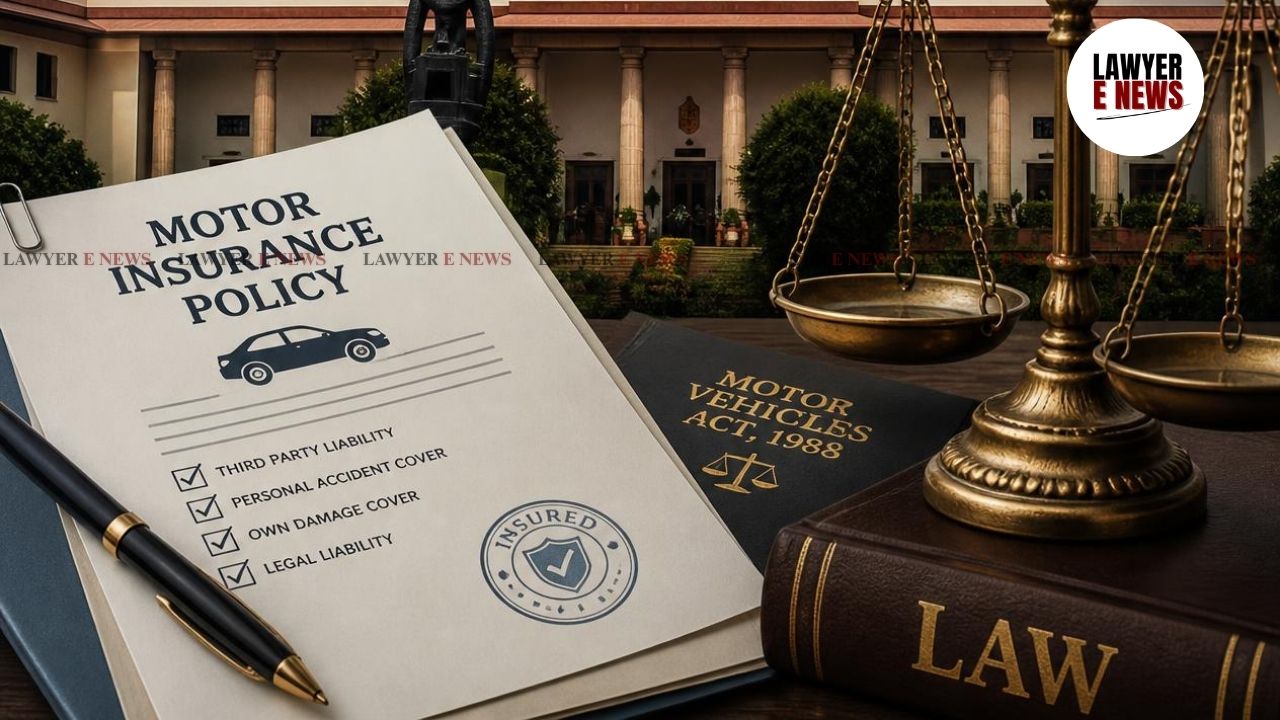
“In the absence thereof, the vehicle concerned would be refused fuel at petrol pumps, until such time that valid insurance is obtained.” Supreme Court of India, in a significant ruling dated August 04, 2026, mandated a comprehensive, technology-driven enforcement framework to tackle the alarming non-compliance with mandatory third-party motor vehicle insurance in India.
A Bench of Justices Sanjay Karol and Prashant Kumar Mishra issued wide-ranging directions to the Ministry of Road Transport and Highways (MoRTH), the Insurance Regulatory and Development Authority of India (IRDA), and State Police, emphasizing the intrinsic link between road safety and the 'Right to Life' under Article 21 of the Constitution of India.
The present appeal, National Insurance Co. Ltd. v. Smt. Thungala Dhana Laxmi & Ors., originated from an accident claim before the MACT, L.B. Nagar, Hyderabad, challenging a High Court judgment that awarded compensation to the legal representatives of a deceased owner-driver under a comprehensive policy. While addressing the specific appeal, the Supreme Court broadened its scope to consider critical issues of widespread non-compliance with Section 146 of the Motor Vehicles Act, 1988 (MVA) and the need for a uniform motor-vehicle policy structure.
The primary issues before the Court were the lack of compliance with Section 146 of the MVA, which mandates third-party insurance, and whether a uniform motor-vehicle policy structure covering all occupants should be implemented alongside the statutorily required third-party risk coverage. The Court also delved into broader concerns of road safety and timely victim compensation.
Alarming Statistics Highlight Road Safety Crisis
The Supreme Court highlighted the dire state of road safety in India, noting that victims of motor accidents often face prolonged litigation for compensation due to a lack of insurance compliance. The Court cited the Standing Committee on Finance Report 2024-25, which revealed that a shocking 56% of vehicles plying on Indian roads, amounting to 16.54 crore vehicles out of 30.48 crore, remain uninsured.
Supreme Court Links Road Safety To Article 21 'Right To Life'
The bench reiterated the fundamental connection between road safety and the 'Right to Life' guaranteed under Article 21 of the Constitution. Drawing on its previous observations in In Re: Phalodi Accident v. National Highways Authority of India and Ors., the Court underscored that the State has a "positive mandate" to ensure a safe environment where human life is preserved and valued, asserting that "no pecuniary or administrative constraint can outweigh the sanctity of human life."
Technological Integration Mandated For Enforcement
Recognizing the need for a robust enforcement mechanism, the Court stressed the imperative to integrate existing offline challan systems with e-models. It observed a consensus among all stakeholders for a technology-enabled framework to ensure compliance with mandatory insurance.
ANPR Cameras To Issue Auto E-Challans
The Court directed that ANPR cameras, already deployed on highways and roads for other traffic violations, must be integrated with data from the Insurance Information Bureau (established under IRDA) and the VAHAN portal. This integration is aimed at facilitating the automatic issuance of e-challans to uninsured vehicles, aligning with the SOP for Electronic Monitoring and Enforcement of Road Safety.
State Police Empowered With Real-time Insurance Data
To enhance on-ground enforcement, the Supreme Court directed that State Police be provided with handheld devices or downloadable applications. These tools will be linked to the Insurance Information Bureau and VAHAN portal, enabling real-time verification of vehicle insurance status and the imposition of challans for violations, thereby ensuring compliance with the statutory mandate.
Fuel Supply To Be Linked With Valid Insurance
In a significant and practical enforcement measure, the Court directed the IRDA, in consultation with MoRTH, to evolve a pilot project linking fuel for vehicles with valid insurance status. This initiative would entail refusing fuel at petrol pumps to uninsured vehicles until valid insurance is obtained, serving as a dual benefit: identifying uninsured vehicles and prompting owners to secure insurance. The Ministry of Petroleum and Natural Gas, in principle, has expressed no objection to this proposal.
Amended Section 196 MVA For Stricter Fines
The Court also called for strict compliance with the soon-to-be-notified amendment to Section 196 of the MVA, which imposes progressive and substantially higher fines for driving uninsured vehicles. For a first offence, the fine is set at three times the basic premium or ₹5,000, whichever is higher, escalating to five times the basic premium or ₹10,000 for subsequent infractions.
New Four-Layer Insurance Policy Structure For Clarity
For private vehicles, the IRDA proposed, and the Court directed, a broad four-layer insurance structure to offer clarity and informed choices to vehicle owners. This structure includes:
Mandatory Third-Party Insurance Tenure Extended
Acknowledging that despite previous directions in S. Rajaseekaran v. Union of India, a large number of vehicles remained uninsured, the Court directed an enhancement of the mandatory third-party insurance tenure. New cars will now require a four-year policy (up from three years), and new two-wheelers will require a six-year policy (up from five years) at the time of purchase/registration. The IRDA is tasked with issuing immediate necessary directions.
Comprehensive Policy Covers Owner As Passenger
Addressing the specific appeal, the Supreme Court upheld the High Court's judgment, which had awarded compensation to the legal representatives of the deceased owner-driver. The Court clarified that under a comprehensive/package policy, insurance companies are liable to compensate for any occupant in the vehicle, including the owner when travelling as a passenger. The Court emphasized that a hyper-technical approach should not be adopted in motor accident claims, citing the IRDA circular dated 16.11.2009.
Speedy Disposal Of MACT Cases Also Directed
Recognizing the continued pendency of MACT cases, the Court issued directions for speedy disposal of cases relating to accidents prior to March 31, 2022. State Police were mandated to promptly file Detailed Accident Reports (DAR) with all relevant documents and assist with the service and production of witnesses before the concerned MACTs.
The Supreme Court's directives mark a pivotal shift towards technologically robust enforcement of motor insurance laws in India, aiming to significantly reduce the number of uninsured vehicles and streamline compensation for accident victims. By mandating the integration of ANPR, mobile applications, and even linking fuel supply to insurance validity, the Court has provided a comprehensive framework to ensure compliance with the MVA and uphold the constitutional right to a safe environment for commuters. The dismissal of the appeal also reinforces the principle that comprehensive motor insurance policies cover owner-drivers as passengers.
Date of Decision: August 04, 2026