
-
by sayum
26 August 2026 1:49 PM







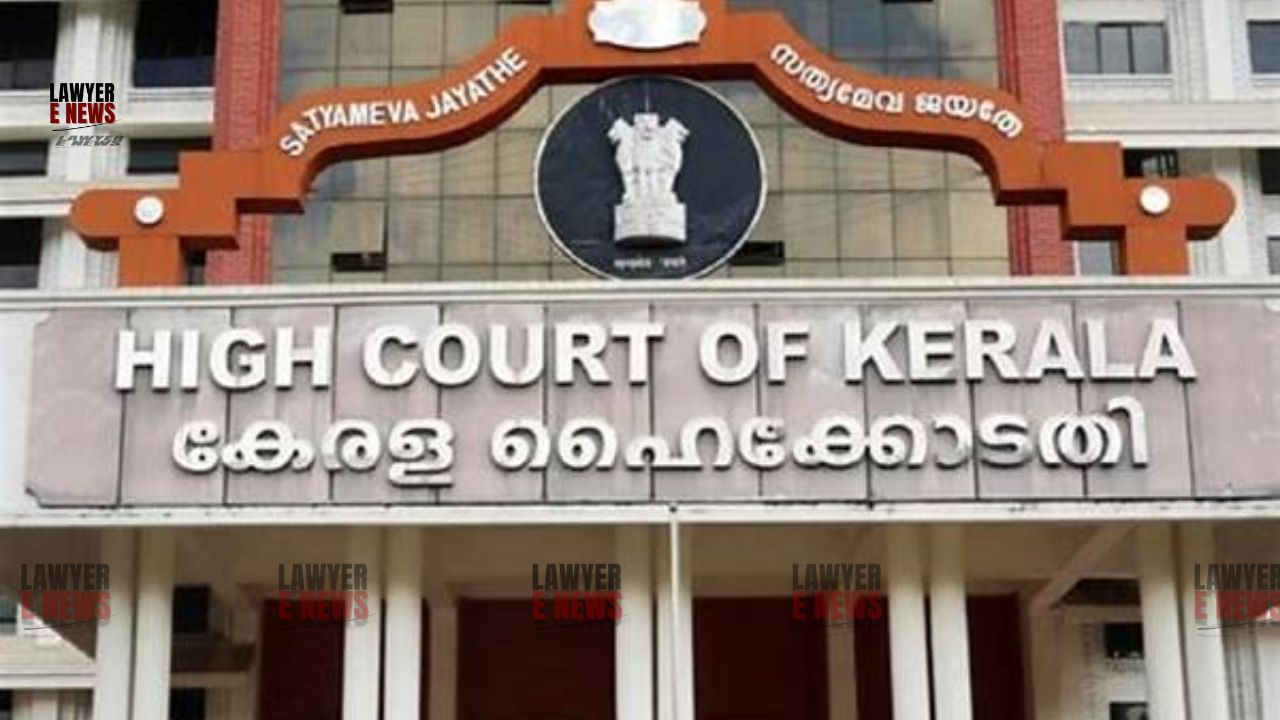
"No burden is cast upon the complainant to prove his financial capacity to advance the said amount, and the same cannot be a reason to disbelieve or non-suit the complainant." Kerala High Court, in a significant ruling , held that a complainant in a cheque dishonour case is not required to independently prove their financial capacity to advance a loan unless the accused specifically challenges it during the trial.
A single-judge bench of Justice A. Badharudeen observed that in the absence of such a dispute, the statutory presumptions operate in favour of the complainant, noting that "no burden is cast upon the complainant to prove his financial capacity to advance the said amount, and the same cannot be a reason to disbelieve or non-suit the complainant."
The appeal was preferred by a complainant challenging an order of the Judicial First Class Magistrate Court-II, Karunagappally, which had acquitted the accused in a cheque dishonour case involving an amount of Rs. 2,50,000. The trial court had dismissed the complaint primarily on two grounds: first, that the complainant's Power of Attorney holder was not explicitly named in the initial witness schedule, and second, that the complainant failed to adduce evidence proving his financial capacity to lend the money.
The primary question before the court was whether the omission to name a witness in the preliminary witness schedule renders their subsequent testimony unreliable in a private complaint prosecution. The court was also called upon to determine whether the burden of proving financial capacity rests on the complainant even when the accused raises no such dispute during the trial.
Discussing the trial court's rejection of the Power of Attorney holder's testimony, the High Court termed the lower court's approach as hyper-technical and legally erroneous. The bench noted that the witness, examined as PW1, had direct knowledge of the transaction and his testimony remained completely unshaken during cross-examination. The court clarified that while a Power of Attorney holder must possess personal knowledge of the transaction to avoid their testimony being discarded as hearsay, a mere procedural omission in the initial filing does not invalidate substantive evidence. "…in a prosecution generated on a private complaint, if there is omission in giving the name of one among witnesses in the initial witness schedule, the same is not a reason to disbelieve the evidence of such a witness for the said reason alone, who got examined and his evidence was not shaken even during cross examination."
> "[F]ailure to challenge the same would stand to hold that the accused was convinced of the financial capacity of the complainant to advance the cheque amount involved in the case."
Addressing the issue of financial capacity under Section 138 of the Negotiable Instruments Act, 1881, the court observed that an accused is entirely within their rights to challenge the financial soundness of the complainant to make the prosecution story disbelievable. However, the court categorically stated that such a challenge must be mounted during the trial stage itself. Since the accused in the present case never disputed the complainant's ability to lend the sum of Rs. 2,50,000 on the material date, the statutory presumptions under Sections 118 and 139 of the N.I. Act operated firmly in favour of the complainant. "…there must be a challenge by the accused during the trial stage and failure to challenge the same would stand to hold that the accused was convinced of the financial capacity of the complainant to advance the cheque amount involved in the case."
Concluding that the trial court's findings required interference, the High Court set aside the acquittal and convicted the accused under Section 138 of the N.I. Act. The court sentenced the accused to imprisonment till the rising of the court and imposed a fine of Rs. 4,00,000, carrying a default imprisonment stipulation of six months.
Date of Decision: 12 March 2026





