-
by sayum
23 August 2026 2:56 PM







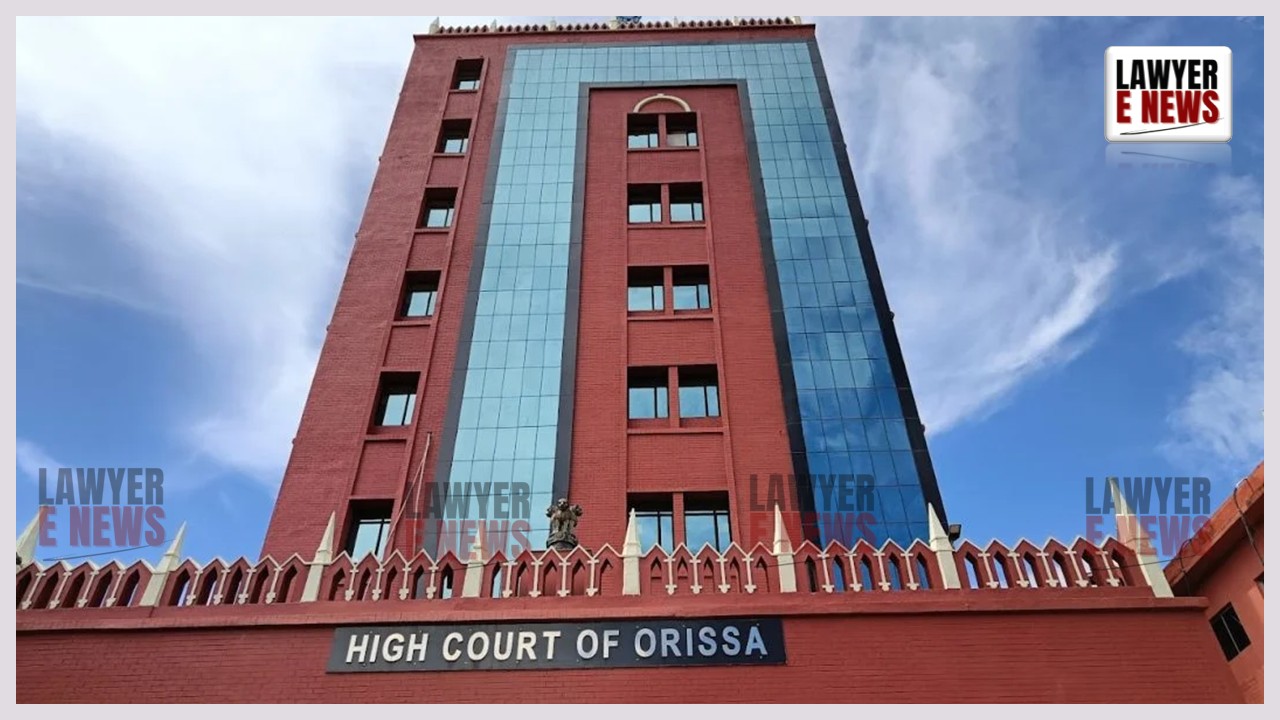
“Even a Third Party Cannot Challenge Lok Adalat Award Through Appeal – Only Writ or Application Before Same Court Permissible,” In a significant ruling Orissa High Court decisively reaffirmed the bar on maintainability of appeals against compromise decrees passed by Lok Adalats, even when allegations of fraud are raised. Justice Ananda Chandra Behera set aside the impugned order dated 06.03.2023 passed by the District Judge, Cuttack in RFA No. 40 of 2006, holding that the first appeal filed under Section 96 of the CPC challenging a Lok Adalat decree was not legally maintainable.
Compromise Decree in Lok Adalat Final and Binding – No Appeal Maintainable
The principal legal question before the Court was whether a party could challenge a compromise decree passed in a Lok Adalat by filing a regular first appeal under Section 96 of the Code of Civil Procedure, 1908.
Justice Behera held that:“The RFA No.40 of 2006 filed by the Opposite Party No.1 in this revision was not entertainable/maintainable under law. The bar contained in Section 21(2) of the Legal Services Authorities Act, 1987 is absolute and applies equally to all parties, including those claiming to be third parties.”
The Court explained that an award passed by a Lok Adalat is deemed to be a decree of a civil court under Section 21(2) of the Legal Services Authorities Act, 1987, and that “no appeal shall lie from the award”.
First Appeal Filed in 2006 Against 1993 Lok Adalat Decree
The dispute stems from a compromise decree passed on 21.03.1993 in T.S. No.110 of 1993 by a Lok Adalat. Nearly 13 years later, one Prabhat Kumar Swain (Opposite Party No.1 in the revision), filed RFA No.40 of 2006, alleging the compromise was obtained through fraud.
During the pendency of the appeal, the petitioner (Baman Charan Swain) moved an application on 21.03.2016 seeking rejection of the appeal as not maintainable. This application was rejected by the District Judge, who ruled that since the appellant was not a party to the original suit, he could maintain the appeal.
Justice Behera found this reasoning flawed and reversed the lower court’s ruling.
Court Emphasizes Bar Under Section 21(2) LSA Act and Order XXIII Rule 3-A CPC
The High Court reiterated the well-settled legal position that a compromise decree passed in a Lok Adalat cannot be challenged through a separate appeal or suit, regardless of whether the challenge is based on fraud.
The Court quoted extensively from settled case law and summarized the legal position as follows:
“A compromise decree passed in a suit in Lok Adalat can be challenged only by filing a petition under Order XXIII Rule 3-A of the CPC in the same court, or through a writ petition under Articles 226 or 227 of the Constitution, and that too on limited grounds.”
Justice Behera observed: “Even a third party to the suit cannot maintain a regular appeal against a Lok Adalat compromise decree – remedy lies only under limited supervisory jurisdiction or before the same court.”
District Judge Failed to Exercise Jurisdiction – Revisional Intervention Justified
The High Court found that the District Judge erred in law by holding the appeal maintainable and refusing to reject it. The Court held that such an error constituted “failure to exercise jurisdiction vested in law”, thereby justifying interference under Section 115 of the CPC.
“The learned 1st appellate court should not have rejected the petitioner’s application dated 21.03.2016 seeking dismissal of the first appeal, as the appeal itself was not legally maintainable,” the Court stated.
Judgment: Civil Revision Allowed, Appeal Dismissed, Liberty to Seek Proper Remedy
Concluding the matter, the Orissa High Court allowed the revision petition and made the following directions:
“The impugned order dated 06.03.2023 passed in RFA No.40 of 2006 by the learned District Judge, Cuttack is set aside.”
“The application dated 21.03.2016 filed by the petitioner is allowed.”
“The first appeal vide RFA No.40 of 2006 is dismissed as not entertainable under law.”
However, the Court preserved the appellant’s right to challenge the Lok Adalat decree through appropriate legal means, stating: “The appellant in RFA No.40 of 2006 may approach an appropriate forum as per law to challenge the compromise decree dated 21.03.1993.”
This judgment is a strong reaffirmation of the binding and final nature of Lok Adalat awards, and underscores the narrow procedural avenues available to challenge them. The Orissa High Court has made it unequivocally clear that appeals under Section 96 CPC are barred against compromise decrees passed in Lok Adalats — even third parties cannot bypass the statutory framework.
The ruling will likely prevent further attempts to disturb settled compromises reached in Lok Adalats, thereby upholding the objective of speedy and final resolution of disputes through alternative dispute resolution mechanisms under the Legal Services Authorities Act, 1987.
Date of Decision: January 5, 2026