-
by sayum
05 August 2026 5:12 AM







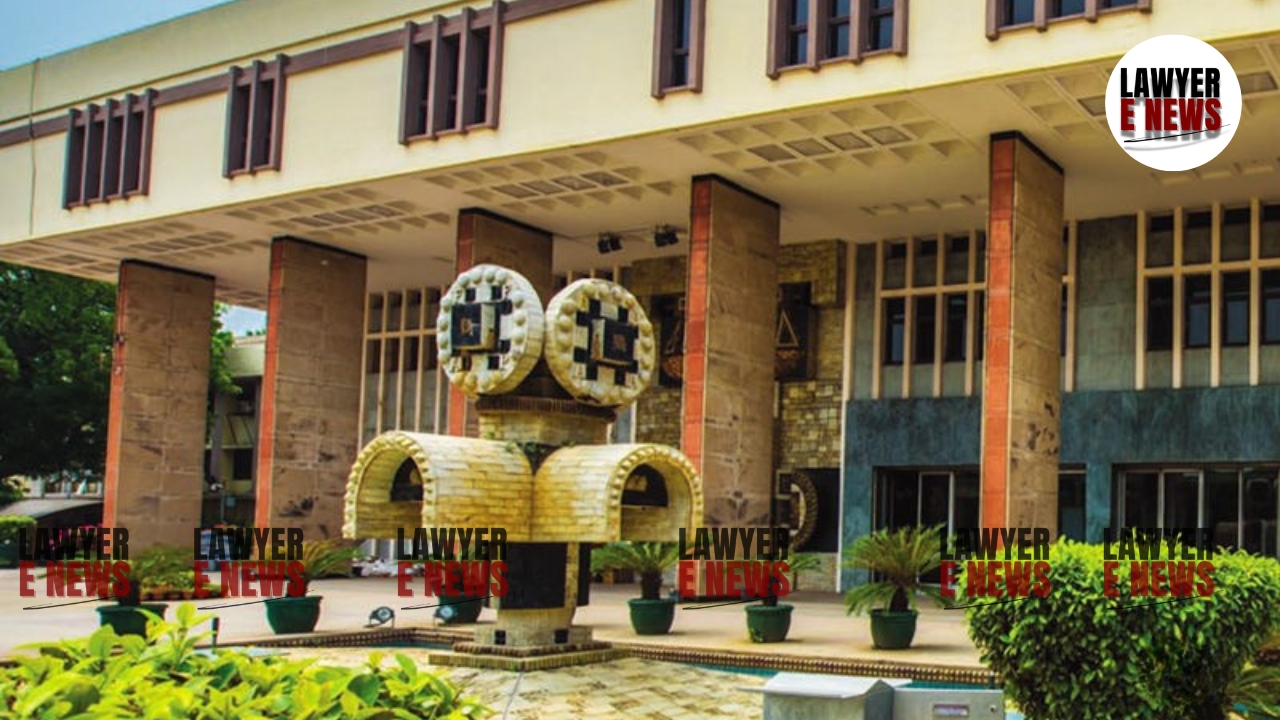
“No Prior Conspiracy, No Common Intention—Prosecution Failed to Prove Collective Guilt”: Delhi High Court, in a joint judgment delivered by Justices Prathiba M. Singh and Dharmesh Sharma, acquitted Anil Kumar Vats (A-4) who had been convicted for murder under Section 302 read with Section 34 of the Indian Penal Code, in connection with the 2016 fatal shooting of Nikhil, a young man from Dwarka.
Setting aside the life sentence imposed by the Trial Court, the Division Bench held: “Possession of the firearm, without proof of shared criminal intent or conspiracy, cannot attract conviction under Section 302/34 IPC.”
Simultaneously, the Court also dismissed the appeal filed by the deceased's father, challenging the acquittal of three other co-accused, finding no evidence of premeditated common intention or criminal conspiracy.
The incident occurred on February 1, 2016, when Nikhil, son of Satya Prakash, was fatally shot near Maxfort School, Sector-7, Dwarka. The key accused Manish Solanki @ Chola (A-5), who allegedly fired the two fatal shots, had died during the trial, and proceedings against him were abated.
Anil Kumar Vats (A-4) was convicted by the Trial Court on February 28, 2024, for allegedly supplying the weapon to Chola and was sentenced to life imprisonment. The other three accused—Joginder Solanki @ Ravi (A-1), Dheeraj Vats @ Rinku (A-2), and Amit @ Rocky (A-3)—were acquitted.
Two appeals were heard together:
CRL.A. 434/2024: Appeal by Anil Kumar Vats against his conviction.
CRL.A. 720/2024: Appeal by Satya Prakash challenging acquittal of A-1 to A-3.
“No Prior Meeting of Minds — No Basis to Sustain Conviction Under Section 34 IPC”
The Court noted the absence of evidence indicating that Anil Kumar Vats shared any common intention with Manish Solanki to commit the murder:
“There is no iota of evidence that A-4 had any deliberation or meeting of mind with A-5 prior to or during the incident. The conversation between the victim and accused appears spontaneous.” [Para 50]
Referring to Supreme Court precedents, the Bench reiterated:
“Common intention must be proven through a pre-arranged plan or conduct from which a clear inference may be drawn. A solitary act of one accused cannot be used to impute collective guilt without evidence.”
“Attempt to Restrain the Shooter Indicates Absence of Criminal Intent”
The CCTV footage, which was carefully analyzed by the Bench, revealed that Anil Kumar Vats attempted to restrain Chola after the first shot was fired:
“After the first shot was fired, A-4 is seen forcibly pushing A-5 away in what appears to be an attempt to dissuade him. He is later seen drifting away, visibly disengaged.” [Para 38]
The Court held that this conduct was inconsistent with complicity or endorsement of the killing:
“Had there been a common intention, A-4 would not have attempted to restrain A-5. His physical withdrawal from the scene indicates lack of criminal agreement.”
Hostile Witness Testimony: Partially Reliable but Corroborated
The Court addressed the prosecution’s reliance on PW-1 Gaurav Bhardwaj, an eye-witness who turned hostile:
“Hostile testimony is not ipso facto unreliable. Courts are entitled to rely on parts of it, particularly where corroborated by objective evidence.” [Para 27]
Relying on Neeraj Dutta v. State (2023) 4 SCC 731, the Bench held:
“Even where a witness is declared hostile, their testimony may be believed in part if credible and consistent with other material.”
In this case, CCTV footage corroborated essential portions of PW-1’s testimony.
No Evidence of Conspiracy — Acquittals Upheld
The Court found no evidence of conspiracy involving A-1 (Ravi), A-2 (Rinku), and A-3 (Rocky). Rejecting the complainant's appeal, it held:
“Presence at the spot does not by itself prove a conspiracy. There was no overt act, communication, or conduct linking them to the fatal act.” [Paras 46–47]
The Bench also noted that the Investigating Officer failed to retrieve call records or establish any coordinated action, stating:
“There is no evidence of any shared plan or intent amongst A-1 to A-3. The findings of the Trial Court in this regard are sound and require no interference.” [Para 53]
CCTV Footage Accepted as Reliable Electronic Evidence
The High Court affirmed the admissibility and evidentiary value of the CCTV footage, which was supported by Section 65B certificate and validated by two forensic experts:
“There is no challenge to the integrity or authenticity of the CCTV footage. It clearly captures the sequence of events and the limited role of each accused.” [Paras 34–36]
Having carefully re-evaluated the evidence, the Court concluded:
“The prosecution has left a huge gap in its case against A-4. There is no direct or inferential evidence of his participation in the crime.” [Para 52]
Accordingly, the Bench issued the following order: “The appeal by Anil Kumar Vats (CRL.A. 434/2024) is allowed. His conviction and sentence are set aside. He shall be released unless required in any other case.” [Para 54]
The appeal by the deceased’s father (CRL.A. 720/2024) was dismissed:
“The Trial Court rightly acquitted A-1, A-2, and A-3. No perversity or illegality in that finding.” [Para 53]
This judgment reinforces the principles of criminal liability based on common intention and conspiracy, stressing that collective guilt cannot be inferred without cogent evidence. It also reiterates the judicial responsibility to distinguish between presence and participation, ensuring that criminal convictions are grounded in law, facts, and fairness.
“Courts must ensure that while the guilty are punished, the innocent are not sacrificed at the altar of suspicion.”
Date of Decision: May 27, 2025